Language
Best time to visit Turkey: Season by season guide
Spring (April to May) and autumn (September to October) are the best times to visit Turkey for mild weather, fewer crowds, and lower prices. This guide covers every season so you can plan around your priorities.

Spring (April to May) and autumn (September to October) are the best times to visit Turkey. Both seasons offer mild temperatures, manageable crowds, and lower prices compared to the summer peak. If a beach holiday is your priority, June to August delivers the warmth and sunshine you need. Winter works well for budget travelers and anyone drawn to Turkey’s historic sites and city breaks.
Turkey is a large and varied country, so the best time to visit also depends on where you plan to go and what you want to do. This guide covers every season, the main regions, and answers the most common planning questions so you can choose the right time for your trip.
Wherever your trip takes you, a Holafly eSIM for Turkey gives you unlimited data and peace of mind from the moment you land.

Stay online, not in line
Skip the queues. Purchase and activate your Turkish eSIM in minutes with Holafly.
Turkey’s climate: What to expect
Turkey sits at the crossroads of Europe and Asia, and its climate reflects that variety. The Aegean and Mediterranean coasts enjoy hot, dry summers and mild winters.
Ankara and the central Anatolian plateau experience colder winters with occasional snow. Istanbul, straddling two continents, gets four distinct seasons with warm summers and cool, sometimes wet, winters. Cappadocia, in central Turkey, has warm, dry summers and cold winters that can be sharp overnight even in autumn.
Rainfall is highest in winter across most of the country, particularly in Istanbul and along the Black Sea coast, which stays green and damp year-round. The Aegean and Mediterranean coasts see almost no rain between June and September.
Turkey weather by season
Spring (April to May)
Spring is the best overall time to visit Turkey. Temperatures in Istanbul and along the Aegean coast typically sit between 15 and 22 degrees Celsius, and the countryside is at its greenest. Crowds are noticeably smaller than in summer, and accommodation prices reflect that.
The Istanbul Tulip Festival takes over the city’s parks throughout April, and the Aegean coast is warm enough for walks, hikes, and outdoor dining without the intense heat of July.
Cappadocia is particularly good in spring. Hot air balloon flights run reliably, the landscape is clear, and you can explore the valleys and cave churches without competing with large tour groups. May is arguably the single best month in Turkey: temperatures are ideal almost everywhere, the sea begins to warm along the southern coast, and Istanbul is lively without being overwhelmed.

Summer (June to August)
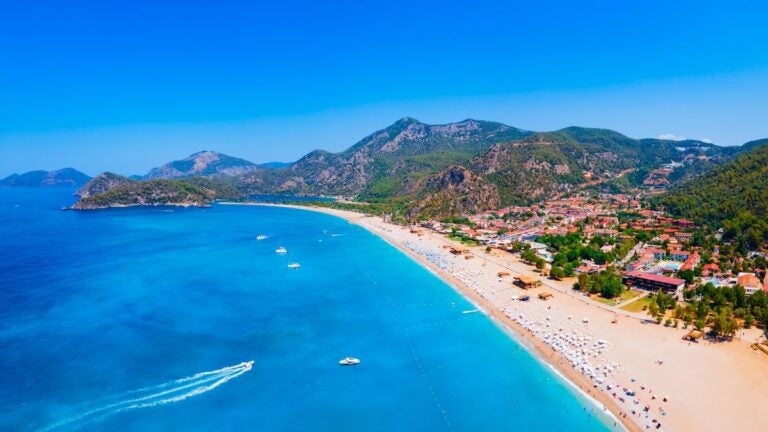
Summer is peak season, and for good reason. Average daily temperatures on the Aegean and Mediterranean coasts reach 30 to 35 degrees Celsius, and the sea temperature is perfect for swimming. Resorts such as Bodrum, Antalya, and Fethiye are at their liveliest, and the beaches are packed.
The downside is the heat and the crowds. Istanbul in July and August can be stifling, and popular sites like the Blue Mosque and Topkapi Palace draw long queues. Inland regions, including Cappadocia, are also hot, and the midday sun makes hiking uncomfortable. If your trip is primarily a beach holiday, summer delivers exactly what you want. For sightseeing and exploring, spring and autumn are a better fit.
July also brings the Istanbul Jazz Festival, one of the city’s most popular annual events. If you are planning to attend, book accommodation well in advance.
Autumn (September to October)
Autumn is the second-best window and, for many visitors, the preferred one. September still feels like summer along the coast, with sea temperatures warm and the sun reliable. By October, temperatures drop to a more comfortable 18 to 25 degrees Celsius in coastal areas, and crowds thin out considerably. Prices for flights and hotels fall from their summer peaks, making autumn one of the more cost-effective times to visit.
October is a strong month for Istanbul. The city is cooler, cultural life picks up after the summer lull, and the Antalya International Film Festival usually takes place in late October or early November. Cappadocia is excellent in both September and October, with good balloon flying conditions and warm days suitable for hiking.

If you are sorting out connectivity before you travel, check your options for roaming in Turkey to understand what your current plan covers before you commit to anything.
Winter (November to March)
Winter is the quietest and most affordable time to visit. Most coastal resorts close or scale back significantly, but Istanbul, Cappadocia, and Turkey’s historic sites remain fully open. Average temperatures in Istanbul range from 8 to 10 degrees Celsius, and rain is common. Cold, yes, but rarely severe enough to disrupt travel.

The upside is access without the crowds. The Hagia Sophia, the Grand Bazaar, and Ephesus are far more enjoyable in February than in August. Cappadocia occasionally sees snow in December and January, which creates a striking landscape and remains one of the more memorable times to visit the region. Accommodation prices drop significantly, and many hotels offer good value during this period.
Istanbul’s street food scene is also worth exploring in winter, when the city feels most like itself. For ideas on what to try, the Turkish street food guide covers the staples you should not miss. If you are packing for a winter visit, the Turkey packing list covers what to bring for each season.
Best time to visit Istanbul
Istanbul is a year-round destination, but the best months are April, May, September, and October. Spring brings the Tulip Festival in April, pleasant temperatures for walking between neighborhoods, and daylight that stretches into the evening. The city’s café culture and food scene are at their best in these months.
Summer in Istanbul is busy and hot. June through August brings large numbers of tourists, and the most popular sites can feel crowded from mid-morning onward. Early mornings help, but the heat can still be draining by afternoon. Autumn, particularly October, strikes the best balance between comfortable weather and a manageable number of visitors.

Winter in Istanbul has its own appeal. The city quiets down, locals reclaim their favorite neighborhoods, and the roasted chestnut vendors that line the streets from November onward are a genuine pleasure. Snow is rare but does fall occasionally, and the views of the Bosphorus in cold, clear weather are hard to beat.
For a full overview of Istanbul and the rest of the country, including cities, regions, and entry requirements, the Turkey travel guide is a good starting point.
Best time to visit Cappadocia
Spring (April to May) and autumn (September to October) are the most reliable seasons for hot air balloon flights in Cappadocia, which are the main reason most people make the trip. Balloon flights are weather-dependent and can be cancelled at short notice in winter and during summer storms, so visiting in the shoulder seasons reduces the risk of missing out.
Summer in Cappadocia is warm and dry, which is good for hiking the Rose Valley, Red Valley, and the trails around Göreme. However, midday temperatures between July and August can reach 30 degrees Celsius, so early morning starts are essential. The region is also busiest in summer, and the small towns of Göreme and Üçhisar can feel crowded.

Winter in Cappadocia is cold, with temperatures dropping below freezing overnight. Snow transforms the fairy chimneys and cave landscapes into something genuinely spectacular, and a handful of hot air balloon flights still operate on clear days. If you are flexible and willing to accept a higher chance of a cancelled flight, a winter visit to Cappadocia offers a quieter and visually striking experience.
Mobile coverage in Cappadocia is generally good, but it is worth getting a local option sorted before you head inland. A Turkey SIM card or eSIM keeps you connected across all regions, including more remote areas.
Turkey month-by-month weather guide
| Month | Istanbul avg. temp | Antalya avg. temp | Notes |
|---|---|---|---|
| January | 3–10°C | 5–15°C | Quietest month. Budget travel. Possible snow in Cappadocia. |
| February | 4–11°C | 7–17°C | Low season continues. Great for historic sites without crowds. |
| March | 6–13°C | 10–19°C | Shoulder season begins. Weather improving steadily. |
| April | 9–17°C | 13–22°C | Tulip Festival in Istanbul. Cappadocia excellent. Highly recommended. |
| May | 14–22°C | 18–26°C | Best overall month. Warm, uncrowded, sea warming on the south coast. |
| June | 18–26°C | 23–31°C | Beach season opens. Istanbul Jazz Festival. Crowds building. |
| July | 21–29°C | 27–35°C | Peak season. Hottest month. Beaches at their best. |
| August | 21–29°C | 27–35°C | Peak crowds and prices. Beach holidays ideal. Sightseeing is demanding. |
| September | 17–25°C | 23–31°C | Still warm. Crowds dropping. Sea warm. Excellent shoulder month. |
| October | 13–20°C | 17–27°C | Comfortable temperatures. Antalya Film Festival. Very good overall. |
| November | 9–15°C | 12–21°C | Off-season begins. Good for cities and culture. Prices fall. |
| December | 5–12°C | 8–17°C | Low season. Possible snow in Cappadocia. Good budget option. |
Turkey travel tips
Choosing the right time to visit Turkey is just one of several things you need for a great Turkish holiday experience. Here are some things to consider before you get to the airport:
- Check your visa requirements. Most nationalities need a visa or an e-Visa to enter Turkey. Check your passport requirements well in advance and apply through the official Turkish government portal. Processing is quick, but leaving it to the last minute is not worth the risk.
- Get a digital nomad visa if you plan to work remotely. Turkey offers a Turkish digital nomad visa for remote workers planning an extended stay. Arrange this before departure.
- Dress appropriately at religious sites. Cover your shoulders and legs before entering mosques and religious monuments. Most sites provide wraps at the entrance, but having your own is more reliable.
- Carry cash for local markets. Major hotels, restaurants, and shops accept cards, but local bazaars, street food vendors, and smaller businesses often prefer cash. Exchange Turkish Lira before you arrive or use an airport ATM rather than street-side exchange offices in tourist areas.
- Haggle, but stay respectful. Negotiating prices in markets and bazaars is expected and part of the experience. Start lower than you want to pay, meet in the middle, and keep the tone friendly.
- Explore the food scene. Turkish cuisine is one of the highlights of any trip. Whether you are in Istanbul or traveling through smaller towns, street food is worth seeking out. The Turkish street food guide covers the dishes worth trying and where to find them.
- Go beyond the coast. Turkey’s beaches are excellent, but the country’s history, food, and landscapes reward anyone who ventures further. Cities to visit in Turkey cover the main stops worth adding to your itinerary.
- Sort your connectivity before you travel. Having reliable mobile internet in Turkey is genuinely useful for navigating, translating menus, and keeping in touch. Mobile internet in Turkey and pocket WiFi for Turkey cover the main options if you want to compare before you decide.
Stay connected in Turkey with Holafly
For peace of mind, a Holafly eSIM for Turkey keeps you connected from the moment you land. Every plan includes unlimited data, 5G speeds where available, and 24/7 customer support, so you are covered whether you are navigating Istanbul’s streets or hiking the valleys of Cappadocia.
Every Holafly eSIM also comes with Always On: 1 GB of monthly backup data included at no extra cost. Just keep the eSIM installed on your device, and you will always have a connection available, even after your main plan runs out.
Setup takes minutes. Purchase before you leave, activate on arrival, and get straight to enjoying your trip.
Stay online, not in line
Skip the queues. Purchase and activate your Turkish eSIM in minutes with Holafly.
Plans that may interest you


A senior SEO writer from Lithuania, combining my passion for writing and travel at Holafly. With years of experience in technical fields, I'm here to answer all of your questions about staying connected. I specialize in turning even the most complicated topics into something everyone can understand.