







 Language
Barcelona public transportation: A complete guide for visitors
Barcelona's public transportation includes buses, trams, and the metro. Explore all about how these work and how to use them like a local.

Barcelona is one of the easiest Spanish cities to get around, thanks to several transportation options, some of which operate all day on specific days.
What’s best, even moving from the airport, isn’t complicated, but it’s important to understand what’s needed to avoid a hefty penalty, and we have some additional tips given by our local Holaflyer, Isaac Carpio.
This guide covers everything you need to know about Barcelona’s public transportation, including available options, tickets, and extra tips for exploring Gaudí’s hometown like a local while using an eSIM.

Unlimited data. Peace of mind.
Make sure you have travel data that's there when you need it most.
Getting around Barcelona by metro
Barcelona has 12 metro lines, which run from 5 AM to midnight, Sunday to Thursday, and connect the entire city.
From Friday, working hours are extended until 2 AM, while on Saturdays, service is available 24 hours on all lines.
Plus, there might be special working hours with big events, but it’s better to check the TMB official site.
Some tips to consider, given by Isaac, are to let people out first when the train arrives and to always keep your backpack in front of you, mostly for pickpocket safety.The

Getting around Barcelona by bus
For people who need to get around areas without metro stops or aren’t close to one, buses are a great way to get around.
These buses run from around 5 to 5:30 AM until 23:00 PM. However, there are night buses called Nitbus, which run late at night.
Travel tip: All routes, except for N0 and N19, go through Plaça de Catalunya, so it’s easy to transfer to a different route in no time.
Getting around Barcelona by tram
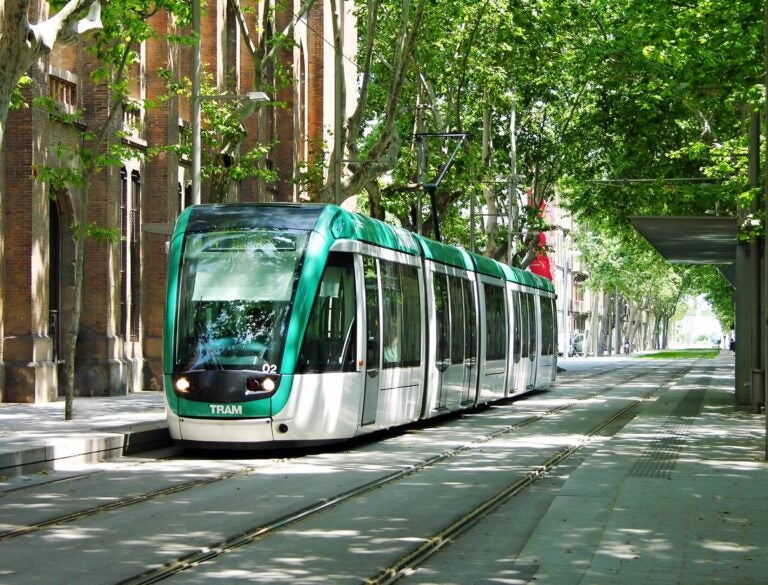
Trambaix and Trambesós are tram systems that connect the city center to other municipalities near Barcelona.
- Trambaix: Connects Barcelona with the Baix Llobregat. The tram system operates 58 stops and 3 lines, connecting the city to the west from 5:00 AM to midnight.
- Trambesós: Connects the Barcelona district of Sant Martí with Badalona and Sant Adrià de Besòs. The tram system runs along 29 stops and three lines, operating from 5:00 AM to midnight.
Travel tip: Always check the tram’s official website for information about schedule changes or ongoing works on the tram lines or stations.
Getting around Barcelona by commuter train (FGC and Rodalies)
Like trams, there are other options for getting around Barcelona’s wider metropolitan area with ease.
The Ferrocarrils de la Generalitat de Catalunya, commonly abbreviated as FGC, operates various metro and commuter lines, including tourist railways such as the Montjuïc Railway, and rural transportation to a lesser extent.
Rodalies de Catalunya works alongside Renfe Operadora on a network of 17 service lines, primarily serving the Barcelona area.
Both options are great for moving around major tourist destinations, such as Park Güell, the Sagrada Familia, and Casa Batlló. Plus, you can connect these services to get pretty much anywhere, but you’ll need a ticket or pass to do so.
Barcelona transport tickets and passes
Barcelona’s transportation system uses a card called T-mobilitat.
People have three options for using the T-mobilitat card: via the FGC T-mobilitat app for contactless use, paying €4.50 for a personalized card, or a €1 card that’s ideal for short-term visitors.
After choosing which card is best for you, here are some ticket and pass options:
- T-Casual: Single-person ticket with 10 trips for any Barcelona public transportation option. Prices range from €13 to €54.45 based on how many zones you’re using it in.
- T-Usual: Unlimited, 30-day card with prices ranging from €22.80 to €63.85 based on how many zones you’re using it in.
- T-Dia: Single-person ticket with unlimited journeys for 24 hours. Prices range from €12 to €32.10 based on how many zones you’re using it in.
- Single ticket: One-time ticket. Prices range from €2.90 to €10.25 based on which zones you’re traveling around.
- L9 Sud airport supplement: An extra €5.90 added to a single ticket or T-Casual trip when using the L9 Sud metro to reach either terminal.
Note that T-Casual and single tickets don’t cover airport travel — you’ll need to add the airport supplement separately. T-Usual and other unlimited passes already include it.
Tickets are valid for up to 3 transfers within a 75-minute period on any mode of transportation.
A warning for travelers from Isaac is: “The T-casual is strictly individual. You cannot pass it backward to swipe in your friend. If you want a card you can share among a group, you must buy the T-grup (which gives you 14 rides over 30 days).”
Getting from Barcelona Airport by public transport
Josep Tarradellas Barcelona–El Prat Airport is the second-largest airport in Spain and is well connected to the city via various services.
- Rodalies R2 Nord Train: Cheapest and fastest option that connects with the center of Barcelona in the Sants and Passeig de Gràcia stations.
- L9S Metro: Connects both terminals to the Zona Universitària, but it’s slower than other transportation methods. Separate tickets are needed for this service.
- Aerobús: Express bus that arrives at Plaça Catalunya from both terminals. Great option when carrying several pieces of luggage.
Landing before you’ve sorted a data plan isn’t a problem either — Barcelona airport WiFi can keep you connected the moment you touch down, whichever of these options you end up taking into the city.
Barcelona transport tips for visitors
Barcelona’s transport system is easy to understand, but first-time visitors may have a hard time figuring out how it works.
Here are some tips to help you deal with Barcelona’s public transport like a local with some tips given by Isaac:
- Download the TMB App. It will help you plan routes, manage your T-Mobilitat card, and check real-time transport schedules.
- Double-check the right entrance at old or deep metro stations. On these platforms, they aren’t usually connected, so you might need to exit and re-enter on the right one.
- Don’t forget to validate your ticket. Even on a transfer, pass it on the machine so you avoid a fine.
- Stay connected with an eSIM so you can use apps like TMB and Google Maps to find the best routes in Barcelona.
- Avoid the heavily advertised “Hola Barcelona Travel Card” unless you plan on riding the metro 6+ times a day; for most people, the T-casual is much cheaper.
Stay connected while getting around Barcelona with Holafly
When visiting Barcelona, if you plan to use public transport, it’s best to stay connected to plan routes, check where to board the bus, or find the nearest metro station to reach the Sagrada Familia.
For all this, your best option is to use the Holafly eSIM for Spain. With unlimited data and 5G data speeds, you’ll make your way around Barcelona like a real local and avoid walking on tram lines, not like Gaudí.
Plus, if you plan to visit other destinations, you get the Always On perk. You get 1 GB of backup data, so even if you’re visiting a new destination, you’ll stay connected and find the best way to move around with public transport.
Unlimited data. Peace of mind.
Make sure you have travel data that's there when you need it most.
FAQs
It depends on how many days in Barcelona you plan to stay. A T-Casual pass is great for short trips, while the T-Usual is best for longer trips, meaning you can spend anywhere from €13 to €63.85.
There are no 3-day metro passes in Barcelona. Your best way to save money is to get a T-Casual pass for a short trip.
Yes. The city is very well connected by public transport, and most landmarks are easily accessible on foot after a few minutes’ walk from a bus stop or train station.
Yes. You can download the TMB App and get some extra support with Google Maps, so you can easily plan your route when exploring the best things to do in Barcelona.
Plans that may interest you


I first started my content creation journey as a freelancer in 2019, before connecting with Holafly in 2021. At Holafly, my travel and tech interests come together in one place as I craft high-quality articles about the eSIM and related markets. My content aims to help travelers stay connected, wherever they are.

