




 Language

The Bahamas in winter: Weather, things to do, and travel tips
The Bahamas in winter means sunshine, 73 to 80°F days, and clear, swimmable seas. Here’s what the weather is like, the best things to do, and how to get there.

While the northern hemisphere wakes up to gray skies and icy winds, the Bahamas in winter basks in golden sunshine, with daytime temperatures of 73 to 80°F (23 to 27°C) from November to April.
Winter in the Bahamas is about powdery white beaches, turquoise seas, and long sunny days, plus swimming with turtles (or pigs), boat trips, and sunset beach dinners.
In this guide, we’ll dive into the weather, the best things to do, and how to get there.
A Holafly travel eSIM keeps you connected from the moment you land.
What winter in the Bahamas really feels like
So, when is winter in the Bahamas?
While winter is technically from November to April, it doesn’t feel like winter at all. Bahamas weather in winter is warm and dry, with average daytime temps of 73-80°F (23–27°C).
Even the Bahamas in January, the coldest month of the year, rarely drops below 70°F (21°C). Plus, the days are filled with sunshine and cool breezes, perfect for boat trips and evening cocktails by the beach!
Winter is also the best time to visit the Bahamas, as it’sthe dry season, with fewer tropical storms and lower humidity. And don’t worry, the sea stays warm and swimmable year-round, with water temperatures averaging around 75°F (24°C) in the winter.
Given the Bahamas weather in the winter, your Bahamas packing list should be full of all your summer favorites, including swimwear, thin clothing, and sun lotion.
Best things to do in the Bahamas in winter
Winter may be a time of slowing down for the rest of the world, but the Bahamas in winter is buzzing. From world-class dives to carnival-style street parades, here are the top things to do on one of the best Caribbean islands!
Snorkeling and diving
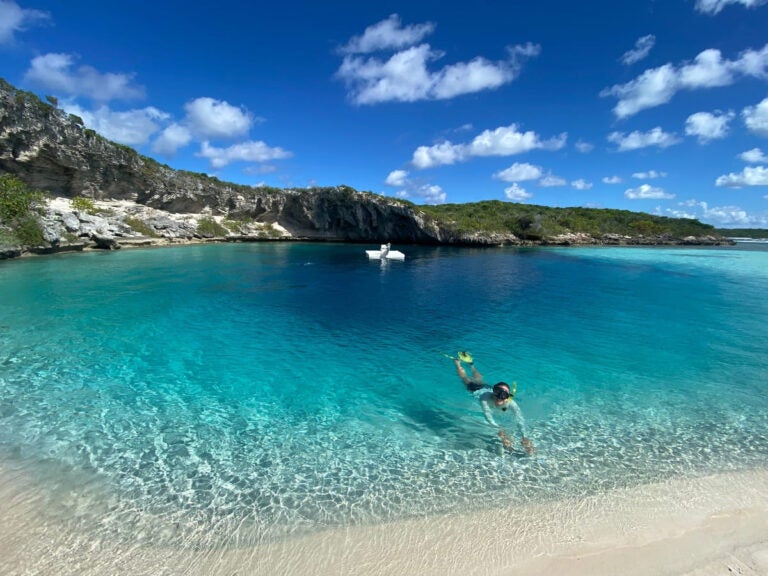
The Bahamas in December and January bring some of the clearest water visibility of the year (often 30–40 meters) thanks to calmer seas. That means you’ll see the stunning coral reefs and tropical fish in full, vivid color.
While you can snorkel directly off any of the beaches, the best snorkeling spots, like Red Shoal, Trumpet Reef, Central Park, and Liben’s Point, are only reachable by boat.
For diving, the most popular spots include the Exuma Cays Land and Sea Park and Thunderball Grotto, made famous by James Bond.
Snorkeling/diving day tours typically cost between $80 and $150 per person.
Boat trips to Exuma Cays or Pig Beach
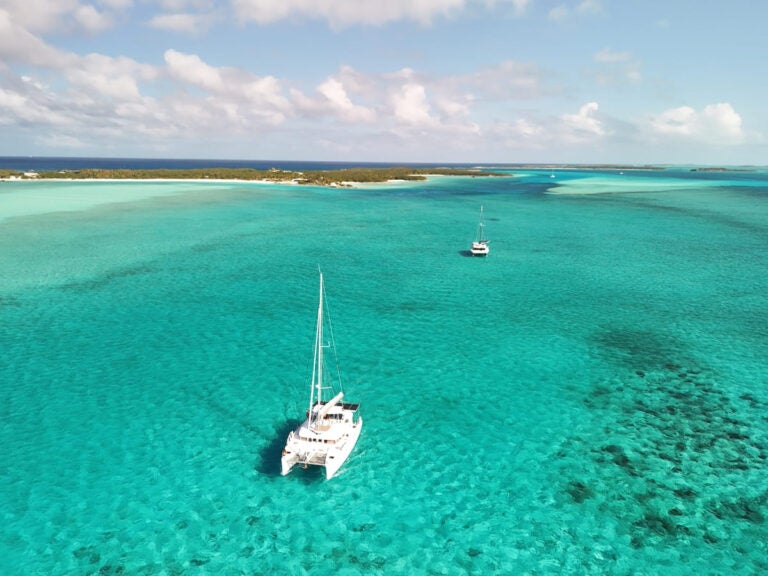
No trip to the Bahamas is complete without meeting the famous swimming pigs of Big Major Cay (Pig Island).
Aside from swimming with pigs, Big Major Cay is a magical island to visit, as it’s uninhabited and totally undeveloped. How the pigs got there remains a mystery!
Big Major Cay is part of the Exuma islands (a chain of 365 islands!) Great Exuma is the largest and most visited island here, and there are even resorts for those who want to spend the night on a remote island.
Various day trips from Nassau take you around the Exuma islands, costing between $100 and $400, depending on the number of islands you visit.
Winter is the perfect time to explore these islands as the sea is calm. Plus, a trip to the Bahamas in January comes with smaller crowds, as the Christmas rush has gone.
Pro trip: Many day trips combine a trip to Pig Island with snorkeling and cost between $100 and $150 per person.
Nassau Junkanoo festival
If you’re visiting the Bahamas in December or early January, don’t miss Junkanoo, a vibrant celebration of music, costumes, and Caribbean culture.
Junkanoo festival takes place on both Boxing Day and New Year’s Day, when the streets of Nassau get taken over with energetic parades, elaborate costumes, and lots of music and dancing! It’s a fantastic way to experience local culture, including traditional Bahamian music.
Whale watching
From December to March, humpback whales migrate through the calm, clear Bahamian waters, and you can head out on a boat to see them.
The best places to see them are:
- Andros (the largest island in The Bahamas)
- Bimini district (the closest point to the U.S.)
Whale watching tours typically cost between $120 and $200 per person.
Sunset beach dinners
Bahama sunsets are incredible, and the best place to see them is by the beach, where the vibrant pink and purple colors reflect on the sea. With the sun setting between 5 and 6 pm during the winter in the Bahamas, it’s the perfect opportunity to unwind with sunset drinks or an early dinner.
- Book a table at Pink Sands Resort on Harbour Island for a fine-dining take on island classics
- Head to Arawak Cay (Fish Fry) in Nassau for a more rustic experience. Order conch fritters or grilled lobster and watch the sunset with the locals!
Quick travel tips for visiting the Bahamas in winter
Planning a trip to the Bahamas in the winter is straightforward, as visitors from the UK, US, EU, and Canada can enter visa-free for up to 90 days.
What’s more, the Bahamian Dollar is equivalent in value to the U.S. Dollar. You can pay in either currency across the islands, so there’s no need to exchange cash if you’re coming from the States.
How to get to the Bahamas
Nassau International Airport serves as the central hub connecting the Islands, with flights to and from 52 destinations in 10 countries, including the USA, Canada, the UK, and other European countries.
Exuma International Airport (GGT) also flies to multiple cities in the USA and Canada, including Toronto, Atlanta, and Miami.
For US travelers in particular, the Bahamas is a short, affordable flight (around $250-$450). For example, you can fly:
- Miami to Nassau in 1 hour
- New York to Nassau in 3 hours
- Atlanta to Exuma in 2 hours
Getting around the Bahamas
The Bahamas Ferries service connects Nassau with islands like Eleuthera, Harbour Island, and Andros. While you can also fly to several of the islands, the ferry is a cheaper and more scenic alternative.
For nearby islands or within harbors, water taxis are a quick and cheap way to get around. For example, a water taxi from Nassau to Paradise Island takes just 10 minutes and costs $7 per person.
Caribbean travel tip: Bahamas Ferries only services islands within the Bahamas. If you’re planning to visit other Caribbean islands, you’ll need to fly there. Grab a Holafly eSIM for the Caribbean before you go to stay connected throughout your tropical adventure.
Stay connected while exploring the Bahamas with Holafly
Whether you’re booking boat tours, checking ferry schedules, or sharing your sunset pics, a Holafly eSIM for the Bahamas gives you unlimited data and 24/7 support, so you can explore with peace of mind.
Set it up before you travel and connect the moment you land, with no need to hunt down an airport kiosk for a physical Bahamas SIM card.
Every Holafly eSIM also comes with Always On: 1 GB of monthly backup data at no added cost in 150+ destinations.
Peace of mind before you fly
Set up your eSIM before travel and get unlimited data on arrival.
FAQs about Bahamas in winter
September is the month most travelers avoid. It falls at the peak of the Atlantic hurricane season, which runs from June through November, and brings the most rain and humidity. Winter is the opposite: the dry season, with fewer tropical storms and lower humidity.
Yes. The sea stays warm and swimmable year-round, with water temperatures averaging around 75°F (24°C) in winter. December also brings some of the clearest water visibility of the year, thanks to calmer seas, so it’s a good month for snorkeling and diving.
Not very. Average daytime temperatures sit at 73 to 80°F (23 to 27°C) from November to April, and the days are filled with sunshine and cool breezes. It’s the dry season, so humidity is lower than in summer.
Yes. December is in the dry season, with warm days, low humidity, and calm seas for boat trips to the Exuma Cays. Nassau also hosts the Junkanoo festival on Boxing Day, with parades, costumes, and music. It’s a busy month, so expect Christmas crowds.
January is the coldest month of the year in the Bahamas, but it rarely drops below 70°F (21°C). Days are sunny and dry, the sea stays around 75°F (24°C), and the Christmas crowds have gone, so beaches and boat tours are quieter.
Plans that may interest you


Hi, I'm Mika, a South Korean writer living in the US. I cover travel and live events, focusing on the practical stuff that makes your trip smoother, whether you're navigating a new city or heading to a major international event.I'm also the founder of Search SEOul, South Korea's leading SEO conference, bringing together search marketing experts and speakers from around the world.