



 Language
How to retire in Costa Rica: Ultimate guide
Find out why retiring in Costa Rica is the best option in 2026. We’ll take a look at the cost of living, benefits, and requirements.

“Pura vida.” In Costa Rica, it’s more than just a greeting, it’s a way of life. It means slowing down and not letting stress take over. That may be why so many retirees from around the world arrive at Juan Santamaría International Airport planning to make Costa Rica home.
Retiring in Costa Rica appeals to many people. The healthcare system is better than many expect, the country is packed with nature and wildlife despite its small size, and it has a long-standing retirement visa program that makes it relatively easy for foreigners to settle there.
But Costa Rica isn’t the cheap paradise it used to be. It now has the highest cost of living in Latin America, and popular retirement areas can be as expensive as some places in Europe. Knowing this before you move can make your retirement much easier.
This guide covers everything you need to know: the available visas, what the real requirements are, the best places to live, practical tips that really help once you’re in the process, and the key questions most people ask before making the move.
What are the advantages of retiring in Costa Rica?
Costa Rica is one of the world’s most popular places to retire for a reason. Understanding why helps you see if it’s the right choice for you. These are the main factors people consider.
1. A reliable healthcare system
For retirees, healthcare is usually one of the biggest factors when deciding where to live. And it’s one of Costa Rica’s biggest advantages.
Costa Rica’s public health system (CCSS) covers all legal residents, including retirees. You have to join, and the monthly cost depends on your income, so it’s usually affordable for people with a pension. It includes doctor visits, hospital stays, surgeries, and basic medicines.
If you prefer private healthcare, Costa Rica has good hospitals and clinics in the main cities, like CIMA in Escazú and La Católica in San José. They offer high-quality care at much lower prices than in the U.S. Many retirees use both public healthcare for basics and private care for faster service and specialists.
2. Territorial taxation: Your foreign income is not taxed in Costa Rica
This is one of the biggest advantages for retirees. Costa Rica uses a territorial tax system, meaning only income earned in the country is taxed. Foreign pensions, social security payments from abroad, and income from overseas investments are all completely tax-free in Costa Rica.
In practice, your pension isn’t taxed in Costa Rica. The money itself is tax-free; only how you use it there could have tax implications.
3. Nature, climate, and quality of life
Costa Rica packs about 6% of the world’s biodiversity into just 51,000 km². Residents can enjoy volcanoes, beaches on both the Pacific and Caribbean coasts, rainforests, nature reserves, rivers for kayaking, and endless trails through stunning landscapes. For people who’ve spent decades waiting to finally have time to enjoy life, that matters.
The weather depends on the area. The Central Valley, where most retirees live, has mild temperatures all year, around 18–26°C, without the intense coastal heat. The northern Pacific areas, like Guanacaste, are much sunnier and have a long dry season, which is ideal for retirees who prefer beach weather and steady warmth.
4. Tax benefits of the retiree visa
The Pensionado Visa also comes with extra perks. You can bring your personal belongings into the country tax-free once within six months of getting residency, and import a car every five years without paying customs taxes. These benefits can save you a lot when moving.
5. A well-established expat community
Costa Rica has a large, well-established expat community. There are online groups, clubs, activities like hiking and golf, Spanish classes, and local events. For newcomers, it’s easy to meet people and feel connected.
What are the requirements for retirement in Costa Rica?
Before starting any paperwork, it’s worth understanding the options available and what the Costa Rican government requires for each one. It’s easier than it looks, but it does have specific documentation rules you shouldn’t overlook.
1. Pensionado visa: The most straightforward option
The Pensionado visa is Costa Rica’s dedicated option for foreign retirees. It’s regulated under Law 9996 and allows you to live in the country legally on a temporary basis, with a number of extra benefits.
Minimum income
You must show a pension or guaranteed monthly income of at least $1,000 ($12,000 per year). Public pensions are accepted as valid proof. You’ll need official documentation from the pension provider, plus an apostille and a Spanish translation.
Required documents:
- A valid passport with at least six months remaining validity.
- A criminal record certificate from the country of origin, apostilled and issued within the last six months.
- Official proof of pension: A letter or certificate from the pension provider stating the monthly amount and that the pension is lifelong, apostilled and translated into Spanish by an official translator in Costa Rica.
- Passport-sized photographs.
- Application letter addressed to the General Directorate of Migration and Foreigners.
- Payment of the application fee: $50.
All foreign documents must be apostilled under the Hague Convention. Documents already in Spanish don’t need translation, but any other language must be translated by an official translator registered in Costa Rica.
Term and renewal
The Pensionado visa is first granted for two years and can be renewed as long as you continue to meet the requirements. After three years of temporary residence, you can apply for permanent residency, which gives you more stability and allows you to work independently in Costa Rica if you choose.
Residency requirement
You need to spend at least four months a year in Costa Rica to keep your Pensionado status active. If you plan to be away for long periods, that’s something worth keeping in mind from the start.
2. Family reunification
This visa allows you to include your spouse or partner, as well as dependent children under 25 (or older if they have a certified disability). Each dependent must provide their own ID documents, and a marriage certificate must be apostilled for a spouse.
3. Rentista Visa: For those who do not receive a pension but have an income
If you don’t have a formal pension but do have a steady income or savings, the Rentista visa is the alternative. You need to show at least $2,500 a month in stable income from investments, dividends, rental income, or other non-pension sources, or prove you have $60,000 available to support yourself for two years.
The eligibility requirements and benefits are similar to those of the Pensionado Visa.
The application process
You can apply at immigration in San José or start the process at a Costa Rican consulate in your country. Most retirees use a local immigration lawyer, which makes the process faster and helps avoid paperwork mistakes.
Processing times vary, but it can take several months from submitting the application to receiving the residency card (DIMEX). During that time, you’re allowed to stay in the country with proof that your application is in progress.
What are the best places to retire in Costa Rica?
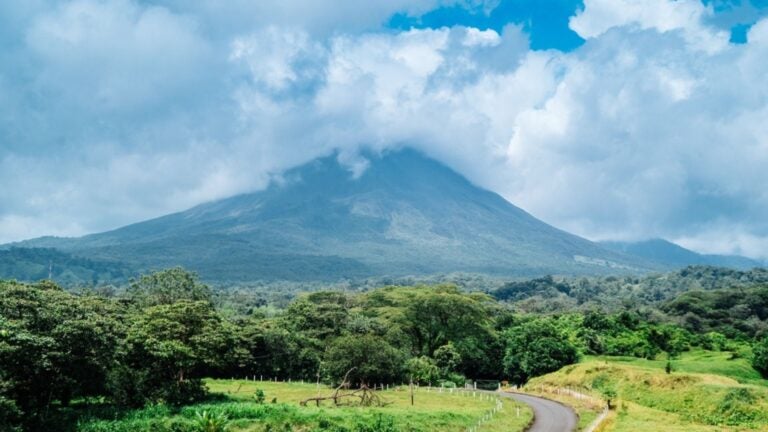
Costa Rica is small, but very diverse. Each area has its own climate and lifestyle, and attracts different types of retirees. What suits someone looking for beaches and a social life isn’t the same as what appeals to someone who wants mountains and peace and quiet. These are the most popular areas for foreign retirees.
1. Central Valley: Escazú, Atenas, and Heredia
This is the most popular area among foreign retirees and the one with the most services aimed at expats.
The Central Valley and San José area, including Escazú, Heredia, and Atenas, are home to many international retirees. They offer easy access to good hospitals and a mild climate all year, with temperatures rarely above 26°C.
- Escazú: It’s a main expat hub in the metro area, with malls, international restaurants, English-speaking services, and Hospital CIMA nearby. The downside is that Escazú is about 15% more expensive than the national average.
- Atenas: Located about 30 minutes from San José, it’s a quieter and slightly more affordable alternative. It has a thriving expat community, several gated neighborhoods with private security, and a climate many people consider the best in the country. National Geographic once named it one of the best climates in the world, and that reputation still plays a big role in its appeal among retirees.
- Heredia: It combines proximity to San José with a more residential, family-friendly feel. It has solid services and infrastructure, and is popular with people who want a quieter lifestyle without being too far from the capital.
2. Guanacaste: Tamarindo and Playa Conchal
For anyone dreaming of life by the ocean, Guanacaste on Costa Rica’s northern Pacific coast is a top choice. The region is known for its beaches, sunny weather, and relaxed coastal lifestyle.
- Tamarindo: It has a very active expat community, good restaurants, surfing, and lots of water activities. It’s lively, with nightlife and always something going on. The cost of living is high, and housing can be quite expensive, sometimes even close to Miami levels. It’s not ideal if you’re looking for peace and low costs, but if lifestyle matters more than budget, it’s hard to beat on the coast.
- Playa Conchal: The Reserva Conchal area is more upscale, with high-end residential communities, a golf course, and access to one of the most beautiful beaches in the country. It’s for those who want a Caribbean-style feel on the Pacific coast, with the infrastructure of an international resort.
3. Southern Pacific Coast: Manuel Antonio, Dominical, and Ojochal
This region, which includes Manuel Antonio, Dominical, Uvita, and Ojochal, is ideal for retirees looking to live surrounded by jungle, with ocean views and a large international community.
Manuel Antonio combines a top-tier national park with well-developed tourist infrastructure. Dominical and Uvita are quieter, with expat communities centered around wellness, nature, and a deliberately slower pace of life.
Ojochal is known as the food hub of the southern coast, with international restaurants and lower prices compared to the north.
4. Arenal and La Fortuna Area
For those who prefer the interior of the country, the Arenal volcano area offers a completely different lifestyle from the coast. You’ll find Lake Arenal, hot springs, hiking trails with volcano views, a cooler climate, and a smaller but close-knit expat community.
It’s a good choice for people who want nature without the crowds and a truly slow pace of life. Prices are generally lower than in the more popular coastal areas.
Tips to consider before deciding to retire in Costa Rica
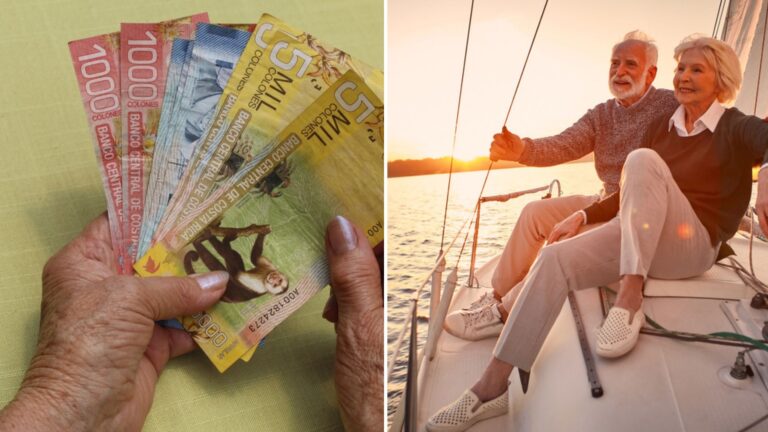
Some things you only learn by experiencing them. But there are also mistakes others have already made that you don’t need to repeat. These are some of the most important things to keep in mind before making the move.
1. Visit the country before making a final decision
Don’t decide based only on Instagram photos or expat Facebook groups. Life in Costa Rica varies a lot by location, and photos don’t show things like San José traffic, busy tourist areas in high season, or the rainy season on the coast. Try to visit for a couple of weeks before making any formal plans.
2. Consult with an immigration lawyer from the start
The Pensionado visa process has strict documentation requirements. Small mistakes like a wrong apostille, expired document, or unofficial translation can delay things for months. Hiring a local immigration lawyer from the start can save you time and stress.
The standard fees in Costa Rica for this service range from $800 to $1,500, depending on the complexity of the case.
3. Enroll in the CCSS as soon as possible
Joining the public healthcare system is mandatory for all residents, including Pensionado visa holders. Getting it done early gives you immediate access to the CCSS network of hospitals and clinics across the country. Many retirees also add private insurance for quicker appointments and access to private specialists.
4. Stay connected without interruption throughout the entire process
Dealing with residency abroad, staying in touch with a lawyer, getting updates from immigration, and searching for housing remotely all require a reliable mobile connection.
Holafly’s Costa Rica eSIM gives you unlimited data from the moment you land, perfect for pre-move visits or your first days settling in. For longer stays, Holafly’s monthly plans work in over 160 countries with a single eSIM, automatic renewal, and an Always On feature that includes 1 GB of backup data each month in more than 70 countries when you need it most.

5. Look for communities of retirees who have already settled there
There are active Facebook groups, expat forums, and local associations where retirees who have lived in Costa Rica for years share advice. They know the neighborhoods, good doctors, reliable services, and common mistakes. This kind of information is very useful and usually shared freely.
6. Calculate the cost of living using actual data, not general averages
Costa Rica has the highest cost of living in Latin America, something worth keeping in mind from the start. For a single person living modestly but comfortably, a realistic monthly budget is around $1,500 to $2,000.
A couple usually needs about $2,500 to $3,500 a month for rent, healthcare, food, and utilities. It depends a lot on the area: Escazú and Tamarindo are more expensive, while places like Atenas or inland areas are much cheaper.
7. Assess the language barrier
Language usually isn’t a big problem for English speakers, but in Costa Rica you’ll mostly need Spanish. The local Spanish has its own slang and expressions. Most official things like government offices, banks, and the CCSS healthcare system are done in Spanish. In tourist areas you’ll find English, but not everywhere.
Frequently asked questions about retiring in Costa Rica
It really depends on the area and lifestyle. As a general guide, a single person needs about $1,500 to $2,000 a month for a comfortable life. A couple should plan for around $2,500 to $3,500. Escazú and Tamarindo are more expensive, while quieter towns like Atenas are cheaper.
Yes. A state pension or other public pension can be used to meet the $1,000 monthly income requirement for the Pensionado visa. You’ll need official proof, plus an apostille and a Spanish translation by an official translator in Costa Rica.
The Pensionado visa does not allow you to work as an employee in Costa Rica. It does, however, allow some limited self-employment activities. After you obtain permanent residency, which you can apply for after three years of temporary residence, your options become much broader.
Pensionado visa holders can use Costa Rica’s public healthcare system (CCSS) if they pay monthly fees based on their income. It covers doctor visits, hospital care, surgeries, and basic medicines. Many retirees also use private insurance for faster service and access to specialists.
The Pensionado visa requires you to spend at least four months a year in the country. If you repeatedly fail to meet that minimum stay, you could lose your residency status. If you plan to spend long periods abroad, it’s something you should take into account from the start.
Yes. The main applicant can include a spouse or partner as a dependent, as well as children under 25 or older if they have a certified disability. Each dependent must provide their own documents, including a passport and police clearance certificate, and a marriage certificate must be apostilled for a spouse.
No. Costa Rica uses a territorial tax system, meaning only income earned in the country is taxed. Foreign pensions are not taxed in Costa Rica. However, it’s important to check the tax implications in your home country with a tax advisor, since changing tax residency can affect your income tax obligations there.
Plans that may interest you

Hi! I'm a Spanish-English copywriter working with Holafly, helping bring travel content to life for curious travelers. As a digital nomad with a passion for exploring, I'm always adding new spots to my bucket list. If you love to travel like me, stick around because you're in the right place to find inspiration for your next trip! ✈️🌍