Language
Cost of living in Hong Kong 2026: Honest monthly budget guide
Discover what it really costs to live in Hong Kong with honest median figures for rent, food, transport, and healthcare, plus real expat insights.

Hong Kong is expensive for Americans, but not in every category. You can expect to spend around HK$29,800 (USD 3,802) a month as a comfortable average-spender living alone, with rent doing most of the damage.
The good news is that public transport, local food, and public healthcare can keep everyday costs manageable.
This guide breaks down the cost of living in Hong Kong across housing, groceries, transport, utilities, healthcare, and lifestyle, with a closer look at what those numbers actually mean for a US earner.
Average cost of living in Hong Kong at a glance
For one person, I would budget roughly HK$16,200 (USD 2,067) a month if you’re careful, HK$29,800 (USD 3,802) for a comfortable middle ground, and HK$50,800 (USD 6,482) if you want more space, more Western comforts, and fewer spending compromises.
These planning figures are built from current Hong Kong government data, and recent expat discussions, then rounded to one figure per category. Hong Kong’s latest Household Expenditure Survey states that housing alone accounted for 39.3% of household spending, which helps explain why a one-person budget can look very different depending on where and how you live.
| Category | Low-spender | Average-spender | Big-spender |
|---|---|---|---|
| Rent | HK$10,000 | HK$17,000 | HK$28,000 |
| Groceries | HK$3,000 | HK$5,000 | HK$8,000 |
| Public transport | HK$1,000 | HK$1,600 | HK$3,000 |
| Utilities | HK$700 | HK$1,000 | HK$1,800 |
| Meals out & lifestyle | HK$1,500 | HK$3,500 | HK$7,000 |
| Private health insurance | HK$0 | HK$1,700 | HK$2,000 |
| Estimated total | HK$16,200 (USD 2,067) | HK$29,800 (USD 3,802) | HK$50,800 (USD 6,482) |
Housing costs in Hong Kong
Plan on about HK$17,000 (USD 2,168) a month for a comfortable one-bedroom or studio, depending heavily on location and size. Housing’s the biggest factor in the cost of living in Hong Kong, and it’s where Hong Kong can feel dramatically more expensive than many US cities.
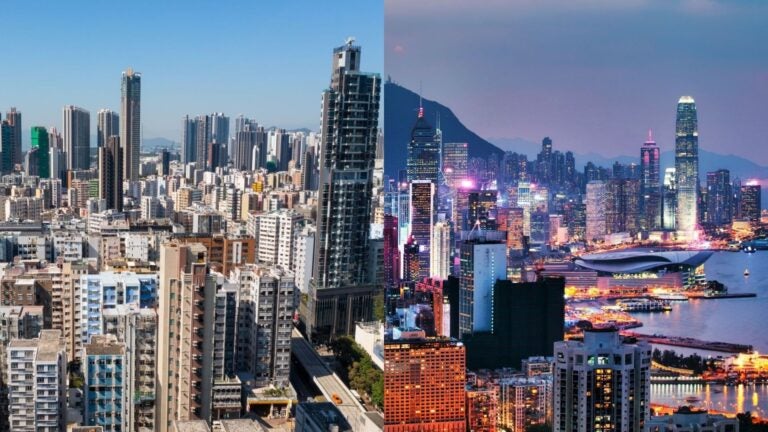
- Renting in Hong Kong Island: Central, Mid-Levels, Wan Chai, and Causeway Bay put you close to offices, restaurants and nightlife, but you’ll be paying for that convenience. Small apartments can be eye-wateringly expensive relative to their size.
- Renting in Kowloon and the New Territories: This is where your money stretches further. Living in Wong Tai Sin, Yau Tong, Lam Tin, Tung Chung, Tai Po, and other outer districts makes more sense if you don’t need to live on Hong Kong Island. Recent residents discussing budgets reported paying HK$14,000-16,000 (USD 1,785-2041) for their own apartments located farther from the centre.
But, note that there’s a hefty upfront-cost involved. Expats report needing to pay around 3 months’ rent upfront plus an agency fee when securing a new rental. And although that’s not a monthly expense, it can still make your first month in Hong Kong expensive.
Buying property: Foreigners can purchase Hong Kong property, but buying is a major financial commitment and the rules around specific subsidised properties can be different. Stamp duty also applies to property transfers. Before buying, get advice from a Hong Kong property lawyer and check the current Inland Revenue Department rules.
The affordability gap: Hong Kong’s median monthly employee wage was HK$21,200 (USD 2,705) in June 2025. Rent would therefore consume roughly 80% of that. For someone bringing in a US salary, this calculation can look completely different. A US worker earning $5,000 a month, for example, would spend about 40% of their gross income on rent. That doesn’t make the apartment cheap, but it shows why Hong Kong can feel brutally expensive on a local salary but more manageable for someone bringing a stronger foreign income.
If you’re considering working remotely from Hong Kong, also understand the visa options for digital nomads in Hong Kong before building your long-term budget.
Food and grocery costs in Hong Kong
Food is one area where Hong Kong can be surprisingly manageable if you eat like a local. The biggest difference comes down to where you shop and whether you cook, eat out, or order delivery.
- Groceries for 1 person: A reasonable grocery budget is around HK$2,500-4,000 (USD 319-510) a month if you cook regularly and mix local and Western ingredients. Current price data puts everyday staples such as 1 liter of milk at about HK$24 (USD 3), a 500g loaf of bread at HK$18 (USD 2.29), 12 eggs at HK$28 (USD 3.5), 1kg of chicken at HK$62 (USD 7.90), and 1kg of rice at HK$15 (USD 2).
- American-style groceries: Expect your bill to climb when you buy imported brands and Western staples. Milk, bread, eggs, chicken, rice, pasta, cereal, peanut butter, cheese, coffee, and familiar packaged foods are all available, but can be expensive.
- Wet markets: Fresh vegetables, fruit, meat, and seafood can often be cheaper at neighborhood wet markets than at premium supermarkets; basic wet-market groceries can cost you about HK$100 a day for 1 person. This is also where you’ll find ingredients commonly used in Cantonese cooking.
- Eating local: This is the part that can surprise Americans. A simple meal at a local cha chaan teng, cooked food centre, or noodle shop can cost around HK$40-80 (USD 5-10). Hong Kong favorites such as wonton noodles cost about HK$40-70 (USD 5-9), while char siu rice is around HK$50-90 (USD 6.3-11.5). A cha chaan teng set might include milk tea, toast and eggs or a noodle or rice dish.
- You won’t have to give up burgers, pizza, sandwiches, or coffee. A McDonald’s combo meal costs around HK$50 (USD 6.3), while a meal for two at a mid-range restaurant costs about HK$500 (USD 64) before drinks.
- Ordering food online: Food delivery is convenient but usually costs more than walking to the restaurant. Hong Kong’s major platforms include Foodpanda and Keeta, and delivery can add fees, service charges, or small-order charges. Some restaurants also list higher prices on delivery platforms.
- Online grocery shopping: You can order groceries online through services such as Foodpanda’s grocery marketplace and local supermarket delivery services. Minimum orders and delivery fees vary. For example, HKTVmall’s Wet Market Express currently offers free delivery on orders of HK$300 (USD 38) or more, while smaller orders incur a HK$25 (USD 3) delivery fee.
Transport costs in Hong Kong
Hong Kong’s public transport network is extensive and relatively affordable, so most people living in urban areas can get around without owning a car. Your monthly cost will depend on how often you commute and which combination of MTR, buses, trams, and ferries you use.
- MTR: Adult single journey fares range from HK$4-66 (USD 0.51-8.40), depending on the distance.
- Buses: Fares vary by route. Citybus fares, for example, include short urban trips around HK$4.80-9.40 (USD 0.61-1.20), while longer or express routes can cost HK$10-20+ (USD 1.28-2.55+). Cross-harbour and airport routes also cost more.
- Trams: Hong Kong’s famous double-decker trams are one of the cheapest ways to get around. An adult ride costs HK$3.30 (USD 0.42), regardless of how far you travel. A monthly tram ticket costs HK$260 (USD 33).
- Ferries: The cost depends heavily on the route. A Star Ferry trip across Victoria Harbour costs around HK$4-6.50 (USD 0.51-0.83). Longer island routes cost more.
- Green minibuses: These are useful for reaching neighborhoods that aren’t as directly served by the MTR. Fares vary by route, but many rides cost around HK$5-12 (USD 0.64-1.53).
- Red minibuses: These don’t have fixed routes or standardized fares, so prices vary depending on the operator and journey. They can be useful for certain local trips.
- Taxis: If you occasionally need a taxi, Hong Kong’s taxis start at HK$29 (USD 3.70) for the first 2 km, with additional charges after that.
So how much should you budget? If you commute mainly by MTR and buses, HK$1,000-1,600 (USD 128-204) a month is a reasonable budget for a regular commuter.
Healthcare costs in Hong Kong
Hong Kong’s public healthcare system is very different from the US system, and costs depend heavily on whether you qualify for subsidized public healthcare or choose private care.
- Private health insurance: Budget around HK$1,700/month (USD 217) as a planning estimate. Premiums vary based on age, coverage, deductible, and pre-existing conditions.
- Public healthcare: If you have a valid Hong Kong ID and qualify as an eligible person, public healthcare is heavily subsidized.
- Public healthcare cap: Since January 2026, Hong Kong has introduced a HK$10,000 (USD 1,276) annual cap on certain public medical charges. Self-financed items are excluded.
- Private healthcare: Private hospitals and clinics offer faster access, but treatment can be expensive without insurance. This is where private insurance can make a bigger difference, particularly for specialist care and hospitalization.
Waiting times: Public healthcare is much cheaper for eligible residents, but non-urgent specialist appointments can involve waiting several months. Private care is the better option if quick access is a priority.
Monthly budget breakdown: What does life in Hong Kong actually cost?
Your monthly cost of living in Hong Kong can vary quite a bit depending on where you live, your housing choices, and how you spend day to day. Renting in a central area can look very different from settling farther from the city center. Here’s what low, average, and higher spending could look like in practice. For this guide, low means a budget-conscious lifestyle with cheaper housing and mostly home-cooked meals, average means a comfortable lifestyle with a mix of cooking and eating out, and higher means spending more on housing, dining, entertainment, convenience, and private services.
- Low-spender: HK$16,200 (USD 2,067) a month. This assumes a smaller apartment or room in a cheaper district, regular home cooking, public transport, restrained entertainment and no private insurance. It’s possible, but you need to be deliberate about housing. A modest Social Security benefit alone would be tight unless you have subsidised housing or another income source. A modest pension can work if housing is already sorted.
- Average-spender: HK$29,800 (USD 3,802) a month. This is the number for a single person who wants a normal, comfortable life rather than a bare-bones setup. You’ll have a small apartment, a mix of cooking and eating out, public transport plus occasional taxis, regular socialising, and standard private health coverage.
- Big-spender: HK$50,800 (USD 6,482) a month. This is for someone who wants a better apartment in a sought-after area, eats out frequently, takes taxis or rideshares, buys imported products, and wants more comprehensive private healthcare. A US remote worker or someone with a strong pension can make this lifestyle work much more easily than someone earning a typical Hong Kong salary.
Is Hong Kong cheaper than the US?
Yes and no. Overall, Hong Kong can be cheaper than the US, but housing is the catch. Compared with the cost of living in the US, Hong Kong’s public transport and local meals cost considerably less, and eligible residents can access heavily subsidised public healthcare.
What can get expensive? Western-style apartments, imported groceries, international brands, and private healthcare.
Stay connected in Hong Kong and beyond with Holafly
If Hong Kong is going to be your home base, connectivity becomes an everyday expense worth planning for. A local SIM works, but it gets annoying when you’re travelling across Asia and constantly switching plans. It’s also worth knowing whether WhatsApp works in Hong Kong, especially if you rely on it to stay in touch with family, friends, or work contacts.
Holafly Plans offers monthly options covering 160+ destinations, with an Unlimited Plan for heavier data users and a Light Plan for more moderate use. The Unlimited option also includes a local US, UK or Canada number, which can be useful when you’re living abroad but still need bank confirmations and verification codes. There are no long contracts, so you can cancel when your plans change.
Both plans include Always On, which provides 1GB of backup data each month. For someone using Hong Kong as a base while travelling around Asia, that’s a lot simpler than buying a new SIM every time you cross a border. You can also check the eSIM for Hong Kong before you move or arrive.

FAQ: Cost of living in Hong Kong
Is HK$30,000 enough to live in Hong Kong alone?
Yes, for a single person, HK$30,000 (USD 3,826) is workable, but expensive apartments can change that quickly.
How much does an international student need in Hong Kong?
If tuition and accommodation are already covered, HK$5,800-10,000 (USD 740-1275) a month can be workable for food, transport, and some entertainment, depending on lifestyle.
Does Hong Kong have a digital nomad visa?
Hong Kong does not have a straightforward digital nomad visa comparable to some popular remote-work destinations. People intending to work, establish a business, or reside in Hong Kong need to look at the appropriate immigration route, while visitors are generally prohibited from taking up employment or establishing a business.
Sources and methodology
The figures above use Hong Kong’s Census and Statistics Department 2024/25 Household Expenditure Survey, the 2025 Annual Earnings and Hours Survey, Hong Kong government healthcare and transport information, the Hong Kong Monetary Authority’s Linked Exchange Rate System, and recent Reddit discussions from r/HongKong. The 3 budget totals add 6 categories: Housing, groceries, transport, utilities, lifestyle, and private health insurance. Reddit is used only to add real-world context and is clearly treated as anecdotal, not statistical. For USD conversions, we used the rate on 24th August, 2026, which was HK$7.84 to 1 USD.
- Hong Kong Household Expenditure Survey
- Hong Kong Annual Earnings and Hours Survey 2025
- Hong Kong Department of Health fees and charges
- Hong Kong public healthcare reform
- Hong Kong Monetary Authority exchange-rate system
- Hong Kong Immigration Department visa information
- Hong Kong property purchase guidance
- Hong Kong Inland Revenue Department tax guide
- r/HongKong expat budget discussion
- r/HongKong rental discussion
Plans that may interest you


With an MBA degree I used to put to good use in another life, I now write for both passion and profession! When not writing, I'm exploring the world, collecting stories and souvenirs along the way.