Language
Buy a house in Malta as a foreigner: Requirements & tips
Complete 2026 guide to buying a house in Malta as a foreigner. Legal requirements, the AIP permit, notary fees, and how the process works.

Malta has a way of drawing people back. It has English as an official language, more than 300 days of sunshine a year, the Mediterranean all around, and beautiful golden-stone buildings shaped by thousands of years of history. For many Europeans, the first visit is a holiday. What comes after is often something more permanent.
Buying a home in Malta as a foreigner is entirely possible, but there are a few rules to keep in mind. The process depends on things like how long you’ve lived in Malta, where you’re buying, and whether the property will be your main home or an investment.
In this guide, you’ll learn how foreigners can buy property in Malta, including AIP permit requirements, Special Designated Areas (SDAs), property prices across different regions, taxes and fees, the buying process, and the key checks to make before signing a contract.
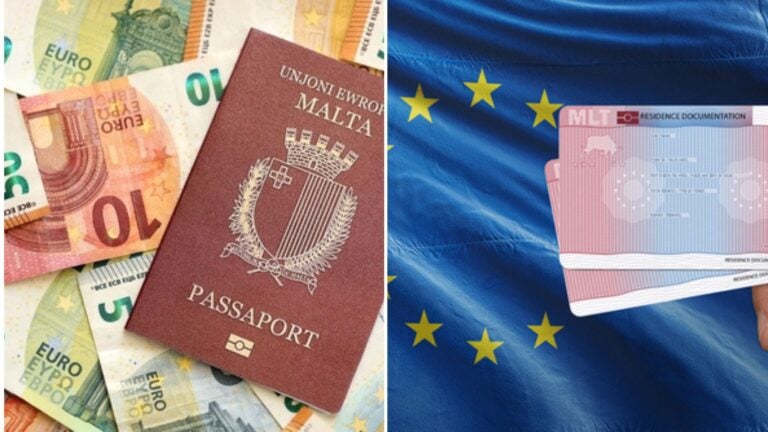
What are the requirements for buying a house in Malta as a foreigner?
The rules for buying property in Malta depend largely on your nationality and residency status. In general, foreign buyers fall into one of three categories.
1. EU citizens with five or more years of continuous residence in Malta
If you’re an EU citizen and have been living continuously in Malta for five years or more, you can buy property freely without any restrictions or special permits. You’ll be treated the same as a Maltese citizen.
2. EU citizens without five years of continuous residence in Malta
If you’re an EU citizen and haven’t lived in Malta for at least five years, you can only buy one property for personal use without a special permit. To buy a second home or an investment property, you need an AIP permit.
3. Non-EU citizens
Non-EU citizens need an AIP permit to buy property in Malta. The property must be their only one, meet minimum value requirements, and be used solely as a residence. The exception is Special Designated Areas (SDAs), where these restrictions don’t apply to any nationality.
The AIP permit: What it is and how it works
The AIP (Acquisition of Immovable Property) is a permit issued by Malta’s Capital Transfer Duty (CTD) department under the Ministry of Finance, allowing foreigners to purchase property under certain conditions. It’s not a complicated process, but it does involve specific timelines and paperwork.
The AIP application fee is about $250, and processing times are typically around five weeks, although delays can occur during busier periods.
The usual documents needed are a valid passport, a copy of the promise of sale (Konvenju) if it’s already signed, and a bank reference. If you’ve owned property in Malta before, you also need the previous deed of sale.
Properties purchased under an AIP permit must meet several conditions:
- A minimum price threshold: Starting in 2026, €220,000 ($255,000) for apartments and €375,000 ($435,000) for villas.
- The property must be used as a residence or for rental purposes with specific authorization.
- It may not be subdivided or converted into multiple units.
- Ownership of only one property under an AIP is permitted outside the SDAs.
Special Designated Areas (SDA): The restriction-free alternative
SDAs (Special Designated Areas) are specific property developments where foreigners of any nationality can buy without needing an AIP permit. There’s no limit on how many properties you can own, and you’re free to rent them out.
Some of Malta’s best-known SDAs include Tigné Point, Portomaso, Pender Place, Madliena Village, and Fort Chambray in Gozo. These are high-end projects with full facilities, mainly aimed at international buyers and priced at the higher end.
Required documentation
Regardless of the buyer’s profile, the standard documents required to complete a real estate purchase in Malta are:
- Valid passport or national ID card.
- Bank statements showing proof of funds.
- Proof of the lawful source of funds.
- AIP application form (if applicable).
- Copy of the Konvenju or letter of intent to sell.
Do you need a notary and an architect?
Both are essential. In Malta, an architect and a notary are key to buying property. The architect checks the property and its condition, while the notary handles the legal paperwork and makes sure everything is in order with no debts or issues.
One advantage for international buyers is that property contracts and legal documentation are typically prepared in English, making the purchasing process easier to navigate.
How much does a house cost in Malta?
Malta’s property market has been booming for years. Because land is very limited on an island of just 316 km², and demand from expats and over three million tourists a year stays strong, prices have been rising for more than a decade.
The average price of a home in Malta is around €310,000 ($360,000), with prices in urban centers such as Sliema and Valletta being significantly higher.
Valletta and its surroundings
Many foreigners who move to Malta choose Valletta. But the first thing to know is that the capital is the most expensive area and has the least available housing. Prices there are around €5,000 ($5,400) per square metre.
Since Valletta was declared a UNESCO World Heritage Site, building restrictions have become very strict. This lack of new supply keeps prices high, and most available properties are historic buildings that need renovation, which adds a significant extra cost.
Sliema and St. Julian’s
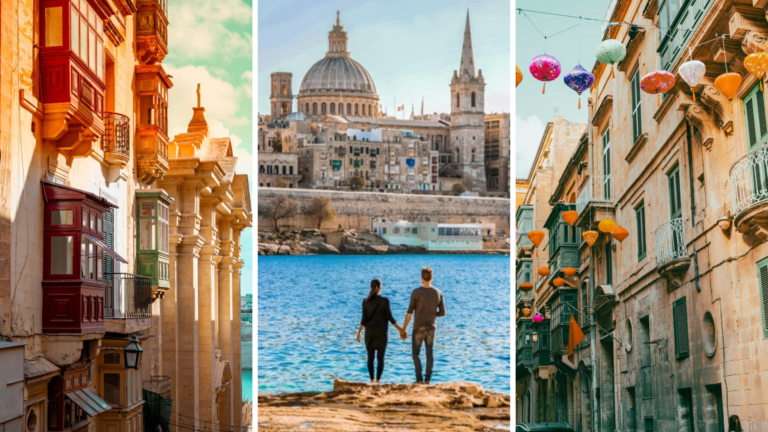
This is the heart of Malta’s expat community. Restaurants, nightlife, the marina, easy access to public transportation, and the island’s main shopping centers.
In high-demand areas like Sliema and St. Julian’s, prices exceed €3,700 ($4,000) per square metre. A well-located two-bedroom apartment typically ranges from €300,000 ($325,000) to €550,000 ($595,000). Properties in SDA developments such as Tigné Point or Portomaso can easily go beyond those figures.
Northern Malta: Mellieħa and St. Paul’s Bay
The north of the island is quieter and more residential, with nice beaches and a slower pace than the centre. Prices are a bit lower than in Sliema, but rising demand has reduced the gap. It’s popular with families and retirees who want peace without being far from services.
Gozo: Sister Island
As a contrast to more urban Malta, the sister island of Gozo offers a greener, quieter setting with a smaller, close-knit expat community.
From a financial point of view, Gozo is the cheapest part of Malta’s property market, with prices usually between €1,500 ($1,620) and €1,900 ($2,050) per square metre in places like Victoria. Its lower prices and rural charm make it a popular choice for holiday homes and rental investments.
However, Gozo also has some luxury options. One example is Fort Chambray, a high-end residential development with Special Designated Area (SDA) status. It allows international buyers to purchase luxury homes with full services and great bay views, without the strict AIP permit rules.
Southern and central areas
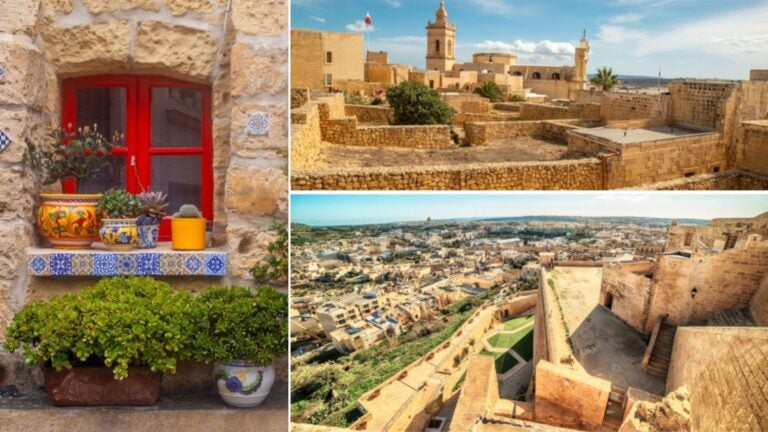
The south of Malta (Marsaxlokk, Birżebbuġa) and the central inland areas are the cheapest parts of the island, with prices starting around €150,000-200,000 ($162,000-215,000) for a decent-sized home. They’re less touristy than the north, but offer a more local, authentic way of life and the lowest prices in Malta.
Maintenance costs
Malta doesn’t have an annual property tax, which is a major advantage compared to many other European countries. The main ongoing costs are community fees (in apartment buildings) and utility bills.
In SDA complexes, maintenance fees for common areas can be significant depending on the services included.
What taxes must be paid when buying a property in Malta?
Malta’s tax system for property purchases is relatively simple and quite favorable compared to most Southern European countries. Here are the main costs you need to take into account.
1. Stamp duty: The main tax when buying
The buyer pays a 5% stamp duty on the property’s value, reduced to 3.5% for first-time buyers in certain cases.
First-time buyers benefit from an additional tax advantage: if it’s their first and only home, they don’t pay stamp duty on the first €200,000 ($215,000) and only pay 5% on the rest.
For a property valued at €310,000 ($360,000), for example, the tax would apply only to the €110,000 ($127,000) that exceeds the threshold, which substantially reduces the tax bill.
2. Notary fees and closing costs
Notary fees are usually about 1–2% of the property price, plus registration and certification costs. In total, extra costs (stamp duty, notary, registration, and AIP if needed) are usually around 6%–8% of the property value.
3. No annual property tax
One of the clearest advantages of Malta’s system is that there’s no recurring annual property tax. Once you buy a property, you don’t pay any yearly tax just for owning it.
4. Rental income tax
If you rent out your property in Malta, rental income is taxed at a flat 15% on the gross amount. It’s a simple final tax, and you don’t need to include rental income in your overall taxable income.
5. When selling: Capital gains tax
Property sales are taxed at 8% of the sale price or 12% of the transfer value, depending on the situation and how long you’ve owned the property. Certain exemptions and reduced rates may apply, particularly for primary residences and inherited properties.
Malta has no inheritance tax, which means that property can be passed on to heirs without any additional tax liability.
Malta has also signed double taxation agreements with many countries, helping to prevent the same income from being taxed twice. In any case, it’s always best to consult a tax advisor before buying, selling, or renting out a property.
What steps do you need to take to buy a house in Malta?
If you’re thinking about buying property in this beautiful part of the Mediterranean, it helps to know that Malta’s property market is well accustomed to international buyers. The system has its own rules, but the process is clear and fairly predictable once you understand how it works.
1. Decide what type of property you’re looking for
It starts with making a clear plan. Before browsing listings online, decide if you want a main home, a holiday place, or a rental investment.
This decision really shapes your entire purchase. It determines whether you look for a standard property under the AIP permit, choose the freedom of SDA developments, or go for a city apartment in Sliema or a quieter home in Gozo.
2. Find the property
Once you know what you want, it’s time to start searching. In Malta, properties sell quickly, so it helps to use trusted sites like PropertyMarket.com.mt, Dhalia Real Estate, or Engel & Völkers Malta for higher-end homes.
Language is rarely a barrier for foreign buyers. Most agencies are used to working with foreigners and everything is done in English.
3. Verify the property’s legal status
Once you’ve chosen a property, the next step is to verify its legal status. The notary verifies ownership, planning compliance, and any debts or legal claims attached to the property. This is especially important with older homes in places like Valletta or Sliema.
4. Sign the Konvenju (letter of intent to sell)
If everything checks out, it’s time to sign the Konvenju, the preliminary agreement that formalizes the deal and secures the property for you. At this stage, you usually pay a 10% deposit of the agreed price.
A key tip: If you’re a foreign buyer who needs an AIP permit, make sure the contract includes a clear clause stating that your 10% deposit will be fully refunded if the permit is refused.
5. Apply for the AIP (if applicable)
Once the Konvenju is signed, your notary or agent will submit the AIP application to the relevant authorities. The process usually takes around five weeks if all your paperwork is in order.
6. Sign the final deed before a notary
It’s time to complete the purchase! Once the AIP is approved and all checks are done, you sign the final contract with a notary. You also pay the rest of the price, the notary fees, and the stamp duty.
7. Register the property
You’ve got the keys, but there’s one last step. The notary registers the property in your name. Once that’s done, it’s officially yours.
How do you pay for a house in Malta?
When it comes to paying and completing your property purchase in Malta, the island’s financial system offers several options to suit different types of buyers.
For buyers from the eurozone, one advantage is that Malta uses the euro, eliminating exchange-rate risk and simplifying transactions. Buyers from outside the eurozone do need to watch currency changes.
If you use your own funds to transfer money internationally, the process is simple but needs careful paperwork. EU anti–money laundering rules require clear proof of where the money comes from, and all payments must go through official banks.
Foreign buyers can also apply for mortgages through Maltese banks such as Bank of Valletta, HSBC Malta, and APS Bank, although lending terms vary according to individual circumstances.
If you’re not yet a resident, mortgage financing is usually capped at around 70%–75% of the property’s appraised value, which is a bit more conservative compared to the 80%–90% that local residents may be able to get.
Buyers applying through residency programs such as the MPRP or GRP should also consider the minimum property-value requirements attached to those schemes.
Finally, if you have the funds available, paying in cash is by far the simplest option. It not only saves you paperwork and the uncertainty of waiting for bank approval, but also gives you stronger negotiating power.
Cash buyers are often in a stronger position during negotiations because sellers know the transaction can move forward more quickly and with fewer conditions attached.

Tips before buying a house in Malta
Before looking at some practical tips, it’s worth understanding a few things about Malta’s property market. As the EU’s smallest member state, Malta has very limited land available for development. Good properties are scarce, and prices don’t tend to drop much. That’s why doing your research before making an offer can save both time and money.
1. Stay connected before, during, and after
Buying property from abroad means you need to stay connected at all times. For short trips, Holafly’s Malta eSIM gives you unlimited data as soon as you arrive, with no need for a local SIM or hotel Wi-Fi. For longer stays, their monthly plans are more convenient, with one eSIM, coverage in 160+ countries, auto-renewal, and the Always On feature, which gives you 1 GB of backup data each month when you need it.

2. Carefully consider whether you need an AIP or would prefer an SDA
For first-time buyers using the property as a home, buying without AIP is the simplest option. If you want multiple properties or full rental freedom, an SDA has no restrictions. The choice also affects what you can buy and how much you pay, since SDAs are usually high-end developments.
3. The legal history of some properties can be complicated
This is especially common in older areas like Valletta and Sliema, where some properties have complex ownership histories or unresolved issues. They’re not common, but they do exist. Your notary should fully check everything before you sign the Konvenju, not after.
4. Visit the island at different times of the year
Malta in August and Malta in January feel very different. In summer it’s busy, traffic is heavier (especially in Sliema and St. Julian’s), and prices go up. In winter it’s much quieter, and some places in tourist areas close earlier. Seeing both seasons helps you understand daily life better.
5. Consider Gozo if you’re looking for peace and quiet and better prices
Gozo has less infrastructure than Malta, but also far less noise, traffic, and lower property prices. The ferry between the islands runs regularly, although it can be disrupted during bad weather.
If you plan to live there full-time, relying on the ferry is something to take into account. If it’s for a second home or holiday rental, Gozo has developed a strong market for holiday homes and short-term rentals.
6. Residency programs may change the eligibility requirements
If you’re looking beyond just buying a property and want to qualify for Malta’s residency program (MPRP or GRP), each one has its own specific property investment thresholds, which are higher than the standard AIP requirements.
Planning this from the start by choosing a property that meets the requirements of your chosen program helps you avoid having to make extra purchases later on.
7. Warning signs you should be aware of
Sellers rushing you to close before the notary finishes checks, prices that are unusually low for no clear reason, or contracts that limit your rights if the AIP is refused. If something doesn’t look right, stop and check with your notary before continuing.
Frequently asked questions about buying a house in Malta
EU citizens who haven’t lived in Malta for at least five years can buy one home without an AIP. For extra properties or investment, an AIP is needed. In SDAs, there are no restrictions for any buyer.
The AIP (Acquisition of Immovable Property) is a permit issued by Malta’s Ministry of Finance that allows foreign buyers to purchase property under certain conditions. The application fee is $250, and processing usually takes around five weeks if all documents are in order.
The main tax is stamp duty at 5% of the property price. First-time buyers don’t pay tax on the first €200,000 ($215,000), and only pay 5% on the rest. With notary and registration fees, total extra costs are usually about 6%–8%.
No. Malta doesn’t have an annual property tax. It also has no inheritance tax, meaning property can be passed on to heirs without additional tax on that transfer.
Yes. Major Maltese banks such as Bank of Valletta, HSBC Malta, and APS Bank offer mortgages to non-resident foreign buyers, although financing is usually capped at around 70–75% of the property’s appraised value. Interest rates are broadly in line with the rest of the eurozone.
In an SDA, foreigners can buy without an AIP, own multiple properties, and rent them freely. Outside SDAs, EU buyers without five years of residency can only buy one property for personal use, while non-EU buyers need an AIP and must meet certain rules and price limits.
Buying a property doesn’t automatically give you residency. However, Malta has programs like the MPRP and GRP that require you to rent or buy property above certain amounts. If you want residency as well, it’s best to plan it together from the start.
Plans that may interest you

Hi! I'm a Spanish-English copywriter working with Holafly, helping bring travel content to life for curious travelers. As a digital nomad with a passion for exploring, I'm always adding new spots to my bucket list. If you love to travel like me, stick around because you're in the right place to find inspiration for your next trip! ✈️🌍