


 Language

Japan in November 2026: Weather, things to do, and travel tips
Complete guide to visiting Japan in November: regional packing checklists, autumn foliage spots, festivals, pros and cons, and expected costs in AUD.
November is considered one of the very best months to visit Japan. It sits right in the heart of autumn, offering pleasant weather, stunning fall foliage, and lively seasonal festivals.
While Japan’s weather has slight regional variations, central areas like Tokyo, Kyoto, and Osaka generally enjoy crisp, cool, and dry autumn conditions. This guide covers everything about Japan in November, including where to find autumn scenery, how to experience cultural events, and how to enjoy seasonal food.
Travellers can stay connected during their Japan trip using a Holafly eSIM, with unlimited data, 5G speeds, and 24/7 customer support.

Peace of mind before you fly
Set up your eSIM before travel and get unlimited data on arrival.
TL;DR: Is November a good time to visit Japan?
Yes, November is one of the very best months of the year to visit Japan.
Main benefits are:
- Stunning autumn foliage (koyo),
- Minimal rainfall with crisp,
- Sunny days,
- Comfortable walking temperatures,
- Vibrant autumn night light-ups at temples and shrines.
But it also has some potential drawbacks, like:
- Early sunsets (around 4:30 PM–5:00 PM),
- Cooler nights requiring warm layering,
- Notable surges in crowds and accommodation pricing around peak leaf-viewing spots and public holidays.
| Parameter | What to expect in November |
|---|---|
| Overall verdict | Highly recommended, but requires advance booking due to foliage crowds. |
| Average temperature | 7°C to 17°C (45°F to 63°F) (Central Japan: Tokyo, Kyoto, Osaka). |
| Weather | Low rainfall/ seasonal specifics (Clear skies, low humidity, crisp autumn breeze, and excellent Mount Fuji visibility). |
| Crowd levels | High Peak in autumn foliage hotspots (Kyoto, Nara, Tokyo parks, Nikko); Shoulder Season in non-foliage regional areas. |
| Overall value (AUD) | • Budget: ~$75/ day (Capsule hotels, hostels, street food, and public transit) • Mid-range/ standard: ~$240/ day (3-star/ business hotels, sit-down meals, and regional Shinkansen travel) • Luxury: ~$750/ day (5-star hotels, traditional luxury Ryokan with kaiseki dining, and private tours/transfers) |
Weather in Japan in November
November brings crisp, dry, and mild weather, making it one of the best times to visit Japan. Daytime temperatures usually average between 15°C and 18°C (59°F to 64°F). Rainfall remains low, and skies are frequently clear.
Average November temperatures by region
Here, we compare November weather in top destinations in Japan:
| Region / City | Average degree(°C / °F) | Daylight hours | Weather notes |
|---|---|---|---|
| Tokyo | 8°C / 46°F to16°C / 61°F | ~10 hours(Sunset ~4:30 PM) | Mostly sunny, mild days, crisp evenings.(~7–8 rainy days) |
| Kyoto and Osaka | 8°C / 46°F to 17°C / 63°F | ~10.2 hours (Sunset ~4:45 PM) | Cool, dry; perfect for daytime walking(~6–7 rainy days) |
| Hokkaido (Sapporo) | 1°C / 34°F to8°C / 46°F | ~9.5 hours (Sunset ~4:00 PM) | Cold; early snowfall usually begins(~14 days; rain/snow mix) |
| Kyushu (Fukuoka) | 10°C / 50°F to 18°C / 64°F | ~10.3 hours (Sunset ~5:05 PM) | Mild and comfortable(~7 rainy days) |
| Okinawa (Naha) | 20°C / 68°F to 25°C / 77°F | ~10.8 hours(Sunset ~5:35 PM) | Warm, pleasant, and breezy; comfortable for beach walks and outdoor exploration.(~8–9 rainy days) |
Does it snow in Japan in November?
Yes, it does snow in Japan in November, but whether you see snow depends heavily on where you go.
In mid-to-late November, northern areas such as Hokkaido (including Sapporo) and high-elevation parts of the Japanese Alps, like Nagano, Tateyama, and Takayama, commonly see early snowfall. Many ski resorts in these areas begin opening late in the month.
Snowfall is extremely rare in Tokyo, Kyoto, Osaka, and low-lying coastal areas during November.
Overall, snow conditions vary significantly by region, elevation, and year-to-year weather patterns.
Can you ski in Japan in November?
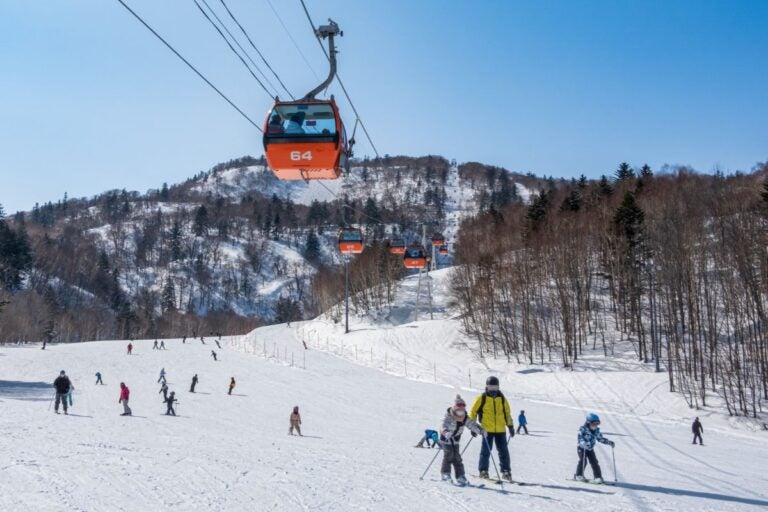
Yes, you can ski in Japan in November, but options are limited. If skiing is your main priority, pivot to high-elevation areas in Hokkaido if natural snow arrives early. Here are the best options:
- Hokkaido resorts (late November): Northern ski resorts at higher elevations, including Sapporo Kokusai, Sapporo Teine, Niseko United, Kiroro, and Furano, generally plan to open in mid-to-late November.
- Resorts using snowmaking machines: Some central Honshu resorts, like Karuizawa Prince Hotel and Snow Park Yeti, open in late October/early November using artificial snow.
Note: Most major ski resorts in Honshu and Hokkaido do not fully open until mid-to-late December. November opening dates are subject to change and depend entirely on the weather. Verify the official opening dates before planning your visit.
What to do in Japan in November
November is a great time to visit Japan for autumn foliage, festivals, early-winter sports, and clear weather for sightseeing.
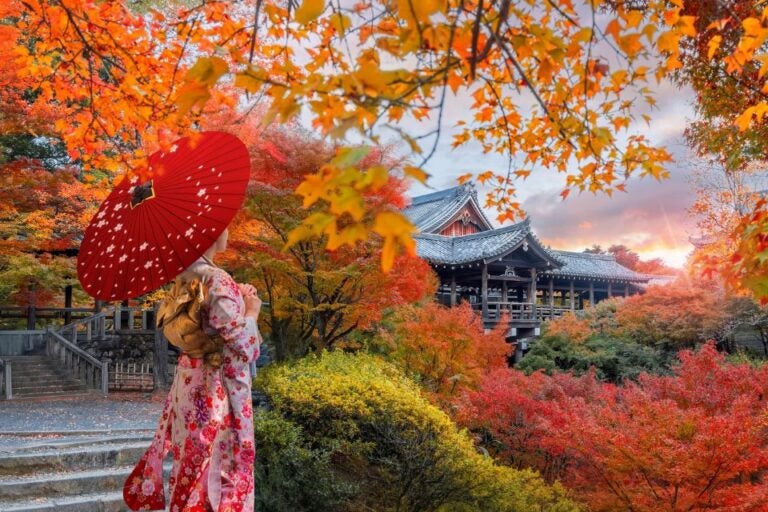
See autumn foliage in Kyoto
Mid-November brings brilliant autumn colors to central Japan, including Kyoto. Major temples, shrines, and urban gardens, some of Kyoto’s best attractions, extend their hours for dramatic night light-ups that reflect off ponds.
Top spots to see autumn foliage in Kyoto:
- Eikandō Temple (Zenrin-ji): It boasts over 3,000 vibrant maple trees that create a stunning display, arching gracefully over its historic wooden halls, tranquil ponds, and winding hillside paths.
- Kiyomizu-dera: A historic temple in Kyoto with iconic views from large wooden verandas overlooking blazing maple trees.
- Arashiyama: A scenic district on Kyoto’s western outskirts where mountain slopes burst into reds and golds in November.
- Tōfuku-ji Temple: Home to one of Kyoto’s most famous autumn viewing spots, offering sweeping panoramic vistas. It features expansive Zen gardens and deep ravines filled with dense maple trees.
Key experience: Walk through illuminated temple grounds after dark, where maples are specially lit against the night sky.
Explore Tokyo’s autumn scenery
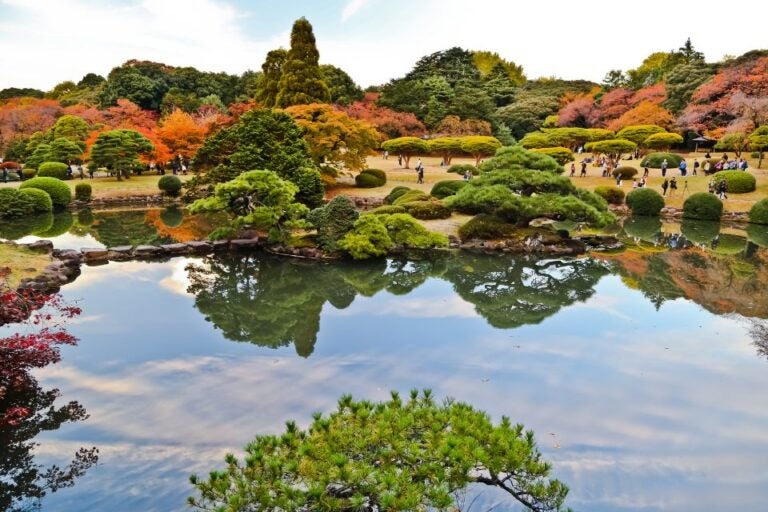
If you prefer clear, sunny days, vibrant urban parks, and crisp weather for city walking, Tokyo is the best location during mid-to-late November.
It features clear autumn weather with average daily highs around 16°C (61°F) and offers stunning autumn displays in its parks and temples, including:
- Shinjuku Gyoen National Garden: A sprawling urban park combining French formal, English landscape, and traditional Japanese garden styles.
- Meiji Jingu Gaien Ginkgo Avenue: Tokyo’s most iconic golden tree-lined street, famous for its perfectly manicured canopy of ginkgo trees.
- Meiji Jingu Gaien Ginkgo: Tokyo’s most iconic golden tree-lined street, famous for its perfectly manicured canopy of ginkgo trees.
- Tokyo Skytree: The city’s tallest landmark, offering panoramic observation decks overlooking the sprawling metropolis. It provides a breathtaking bird’s-eye view of Tokyo’s parks, rivers, and urban canopy tinged with autumn colors.
Visit Mount Fuji and the Fuji Five Lakes
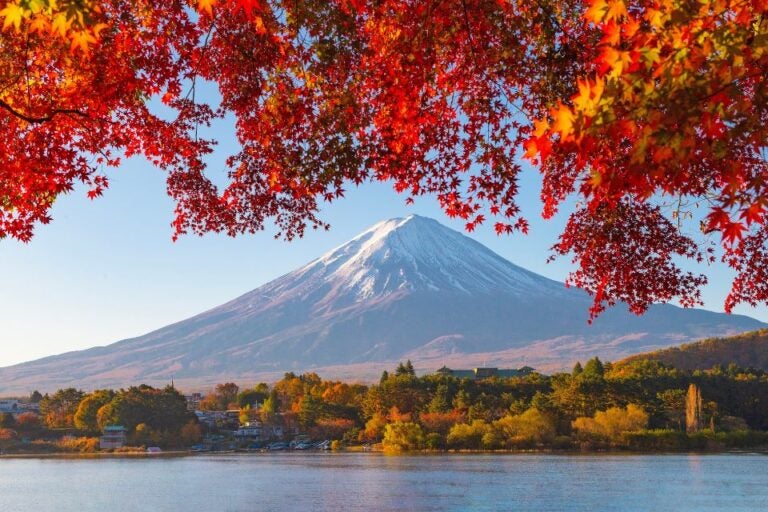
If you want postcard views of Mount Fuji under crystal-clear autumn skies, Lake Kawaguchiko and the Fuji Five Lakes region are best visited in early-to-mid November.
The Fuji Five Lakes (Fujigoko) is a resort region situated at the northern base of Mount Fuji in Yamanashi Prefecture. Formed by past volcanic eruptions, the area consists of five distinct lakes: Lake Kawaguchi, Lake Yamanaka, Lake Sai, Lake Shoji, and Lake Motosu.
Lake Kawaguchi is the most accessible and developed of the Fuji Five Lakes, serving as the primary hub for autumn sightseeing. The area is popular for hiking, camping, hot springs (onsen), museums, and seasonal events like autumn foliage festivals.
Located almost two hours from Tokyo by bus or train, it is a great day trip from Tokyo.
Experience autumn in Nikko
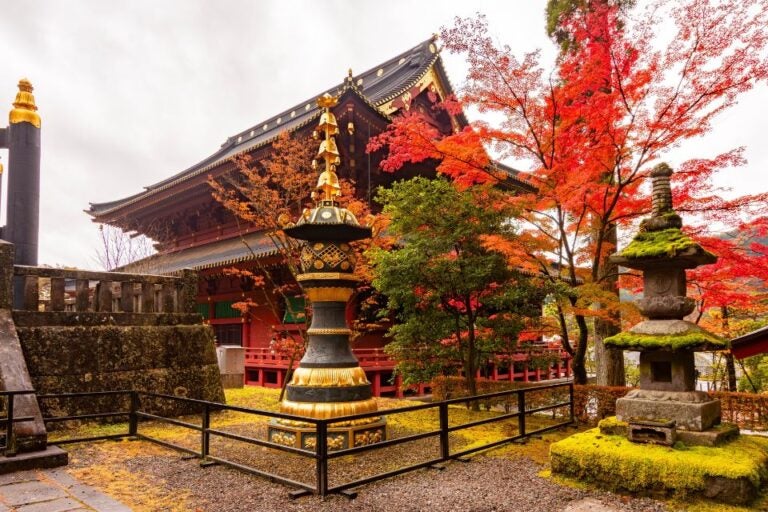
Nikko offers some of Japan’s most dramatic mountain scenery, sacred shrines, and historic architecture, framed by vibrant autumn foliage. The best places to see autumn leaves are:
- Nikkō Tōshōgū: This shrine features hundreds of detailed wood carvings and gold-leaf accents, all nestled in a thick forest.
- Rin’nōji Taiyū-in (Mausoleum of Iemitsu): A historically significant Buddhist mausoleum complex that complements Toshogu.
- Nikko National Park: A large protected area with stunning mountains, beautiful waterfalls, and high-elevation lakes.
Enjoy warmer weather in Okinawa
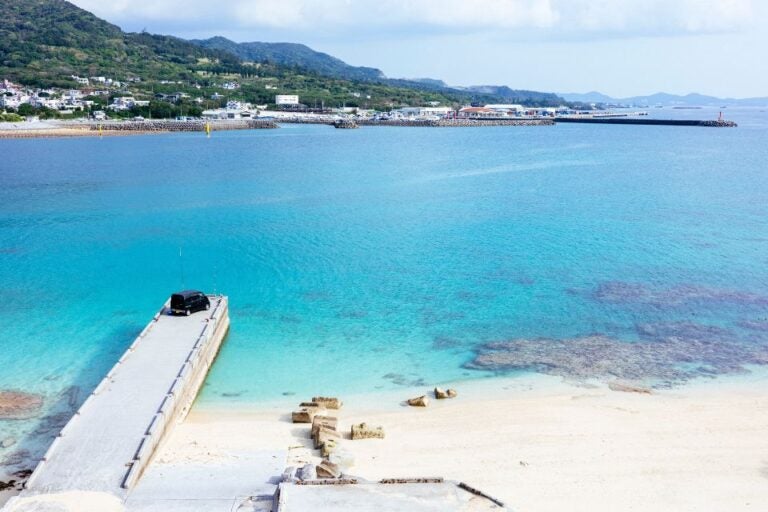
If you prefer warm island sunshine, beach strolls, and outdoor water activities without summer humidity, Okinawa is the best place to visit in November.
Although official swimming seasons at most public beaches typically end in November due to increasing ocean breezes, activities like marine sports remain enjoyable with wetsuits.
Here are the other things to do in Okinawa during November:
- Explore historical sites: Visit UNESCO World Heritage sites and ancient Ryukyu Kingdom ruins—such as Nakagusuku Castle or Zakimi Castle—in comfortable walking weather, with fewer heavy crowds.
- Southeast Botanical Gardens: An expansive tropical botanical garden featuring thousands of plant species, outdoor relaxation areas, and animal feeding zones.
Festivals and events in Japan in November
November is the time of the year that Japan bridges late-autumn traditions and the transition into winter. During this month, a variety of seasonal cultural events and local festivals take place across the country.
Shichi-Go-San (Seven-Five-Three Festival)
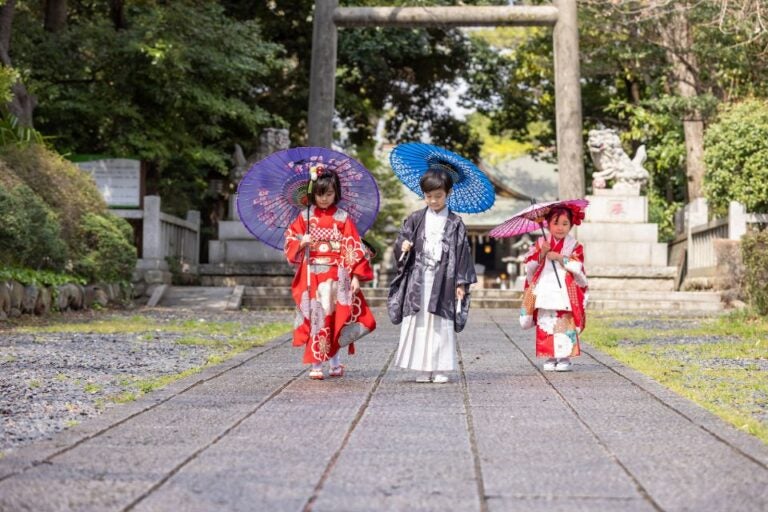
Shichi-Go-San (7-5-3 Festival) is a traditional Japanese rite of passage celebrated annually around November 15. This event celebrates important developmental stages for young children, providing families an opportunity to give thanks for their well-being and wish them a long and successful life.
- When: Mid-November (around November 15)
- Where: Shrines across Japan (e.g., Meiji Shrine in Tokyo)
- Admission: Free to walk shrine grounds and watch the festivities (formal prayer blessings require a fee).
- Tip: Visit on a weekend morning around mid-November to see children dressed in traditional kimonos, with fewer of the heaviest shrine crowds.
Autumn Night Illuminations (Koyo Light-ups)
Autumn illuminations (Koyo Light-ups) allow visitors to experience famous temples, traditional gardens, and maple avenues in a completely different ambiance after sunset. Illuminations typically run from Mid-November to early December, usually operating from sunset until around 8:30 PM or 9:00 PM.
- When: Mid-November to early December
- Where: Kyoto (Eikan-do, Kiyomizu-dera, Kodai-ji) and Tokyo (Rikugien Garden).
- Admission: Requires a paid entrance ticket.
- Tip: Arrive just before sunset or close to the final entry time to avoid peak queues at popular illuminated spots.
Cultural Day
Culture Day (Bunka no Hi) is a national holiday in Japan. It is dedicated to promoting culture, the arts, peace, and academic achievement across the nation. Many public museums, art galleries, and historic sites offer free entry and host special exhibitions on this day.
- When: November 3
- Where: Public museums, historic towns like Hakone, major Shinto shrines, sports arenas like the Nippon Budokan, and university campuses nationwide.
- Admission: Free
- Tip: Check official museum websites in advance, as some free-entry permanent exhibits still require advance time-slot reservations on popular holidays.
What to wear in Japan in November
To pack for Japan in November, adopt a versatile layering approach. This strategy will help you comfortably adapt to the changing temperatures from cool mornings and mild afternoons to colder evenings.
Here are some tips to help you decide what clothes to pack for your trip:
- Base and mid layers: Thermal undershirts, long-sleeve tops, and light sweaters or fleeces that can be easily shed in heated trains and shops.
- Outerwear: A mid-weight wool coat, trench coat, or light down jacket for cool evenings and windy days.
- Footwear and protection: Comfortable, well-broken-in walking shoes (slip-ons are convenient for temples/ryokans) and a compact umbrella for light rain.
Always check local weather forecasts shortly before departure, as autumn temperatures can shift rapidly between early and late November. Here’s the estimated weather forecast for the major cities:
- Hokkaido and North (0°C to 8°C): Winter gear required, heavy down coats, thermal base layers, gloves, beanies, and water-resistant boots for early snowfall.
- Central Japan/ Tokyo and Kyoto (7°C to 18°C): Crisp autumn weather, medium coats or light down over sweaters, plus a light scarf for chilly nights.
- Mountain Regions/ Nikko and Fuji (0°C to 12°C): Considerably colder; windproof/down jackets, thick socks, thermal innerwear, and warm accessories.
- Okinawa and islands (20°C to 26°C): Warm subtropical climate; T-shirts, shorts or light trousers, and a light jacket for breezy evenings.
Pros and cons of visiting Japan in November
Visiting Japan in November offers a wonderful balance of vibrant autumn scenery and crisp weather. However, it also comes with high tourist crowds and peak-season demand. Here are the pros and cons of visiting Japan in November.
Pros
- Stunning autumn foliage: The famous red and gold koyo leaves are at their peak across central Japan.
- Pleasant weather: Crisp, clear, and dry daytime conditions make it ideal for comfortable sightseeing.
- Fascinating cultural festivals: Unique seasonal events like Shichi-Go-San and autumn night illuminations take place.
- Comfortable temperatures: Avoiding the humid summer heat makes walking and exploring much more enjoyable.
- Seasonal delights: A wide variety of delicious autumn harvest foods and street snacks are in season.
Cons
- Peak tourism crowds: Popular tourist spots and autumn foliage sites experience high visitor traffic.
- Higher accommodation rates: Hotel prices surge in major cultural hubs like Kyoto and Tokyo during peak season.
- Early sunsets: Days grow shorter, with darkness falling quickly around 4:30 PM to 5:00 PM.
- Chilly evenings: Temperatures drop sharply after sunset, requiring constant adjustment with layers.
- Advance booking required: Top-rated autumn illuminations, tours, and hotels frequently sell out well in advance.
Is Japan expensive to visit in November?
Japan in November is generally considered moderately high-priced to expensive. While it is generally more affordable than the spring Cherry Blossom peak or New Year holidays, demand increases the cost of travelling to Japan.
Here is the estimated cost of travelling to Japan during November:
- Flights: $850 – $1,500+ AUD return from major Australian cities.
- Accommodation: AUD $35–$65/night (hostels), AUD$110–$180/night (mid-range), and AUD$250–$500+/night (ryokans/4-star).
- Meals: $20–$35/day (budget/convenience stores) to $50–$90/day (sit-down dining).
- Transport: ~$486 AUD for a 7-day JR Pass, or $5–$12/day for local subways.
- Attractions: $4–$12 AUD per temple/garden entry; $85–$110 AUD for major theme parks.
Note that peak foliage demand raises hotel rates in hubs like Kyoto and Tokyo by 10%–20%, making advance booking 4–6 months ahead essential.
Stay connected in Japan during your November visit
Staying connected is essential for a stress-free trip to Japan in November. With Holafly, you can choose an eSIM that suits your travel needs, whether you’re visiting for a short holiday or travelling more frequently.
- Travel eSIMs: Best for short international trips, Holafly travel eSIMs are reusable, so you won’t have to install a new one every time you need data abroad.
- Holafly Plans: A monthly eSIM plan, best for frequent travelers or digital nomads needing a reliable, global data solution.
- Holafly Ultra: Best for those who need more than unlimited data, the Ultra monthly plan is always there for you. Stay protected as you travel with data privacy and real-life support benefits.
All Holafly eSIMs come with 24/7 customer support and Always On, a 1 GB monthly data backup that stays active even after your eSIM plan ends.

Keep your passport in its hiding place
Save your passport for the airport, our eSIMs don't need it.
Plans that may interest you

Formerly a travel journalist turned marketing copywriter, I found my way back to the travel world with Holafly—my dream company that made remote work possible. My motto? “Dream big and make it happen.” I’m passionate about writing, exploring the world, and staying active through walking, running, swimming, and hiking. I also love learning, reflecting, and connecting with inspiring minds.


