Language

Business trip packing list: What to bring and how to pack
A business trip packing list with packing formulas, clothing, tech, documents, and a free Google Sheets version.

A business trip packing list helps you bring what your meetings, dinners, and travel days call for, so you don’t overpack or forget something you need.
This guide contains:
- Packing formulas that tell you how much to bring
- What to pack, from work clothes to travel documents
- How to pack your bag and keep clothes wrinkle-free
- A free, editable version of the packing list in Google Sheets
If you’re traveling abroad for work, Holafly for Business keeps you online with secure mobile data.

Pack an eSIM for your next work trip
Business trip packing list in Google Sheets
For your convenience, we’ve put together a business trip packing list (click to get yours) in Google Sheets that includes every item in this guide.
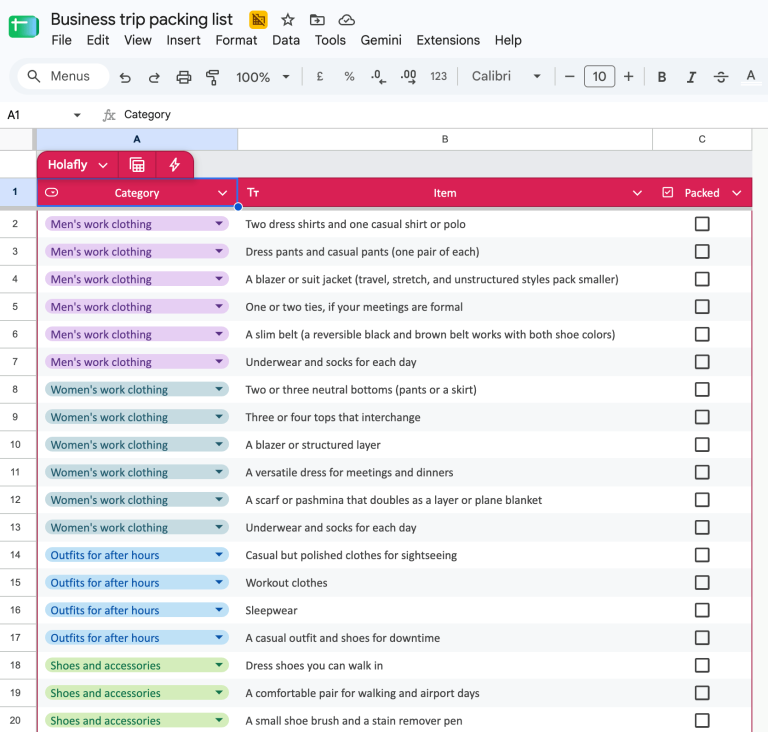
(Screenshot: Google Sheets version of the business trip packing list)
Treat it as a starting point, and add or remove items to fit your needs.
How much should you pack for a business trip?
Each formula below sets a number for each item type, so you don’t overpack or leave something behind, and builds outfits from a few neutral pieces that mix and match.
Here’s how they compare:
| Formula | What to pack | Best for |
|---|---|---|
| 4-3-2-2 | Four shirts, three pairs of pants, two blazers, two pairs of shoes, and a reversible belt | Trips that mix formal and business-casual meetings |
| Duffel-only setup | Two pairs of pants, two non-iron shirts, one belt, one pair of shoes, and a business-ready outfit you wear on the plane | Short trips without a checked bag |
| Space-saving list | Three shirts, two pairs of chinos, two ties, one pair of shoes, one belt, and one watch | Traveling light in a single bag |
| Women’s capsule | Two bottoms, one or two dresses, three tops, one or two layers, a pair of walking shoes, a pair of dressy shoes, and one to three pieces for special occasions | Carry-on trips with meetings, dinners, and sightseeing |
| Men’s capsule | Two dress shirts, one casual shirt, two pairs of pants, a blazer or suit jacket, one pair of dress shoes, and one pair of casual shoes | Short trips in a carry-on |
How to adjust your business trip packing list for trip length
The longer the trip, the more you repeat pieces and plan laundry instead of packing more.
Take a look at this table:
| Trip length | How to pack |
|---|---|
| 1–2 days | One suit or outfit with a fresh shirt each day, one pair of shoes, and a single bag |
| 3–4 days | Two suits or jackets, four shirts or tops, and one or two layers (e.g., a cardigan or sweater), packed in a carry-on with packing cubes |
| 5–7 days | Repeat jackets and pants, change your shirt each day, and use hotel laundry or pressing if you need it |
| 2 weeks or more | About a week of clothes, with laundry planned for the weekend |
It’s also a good idea to research local dress norms before you go, as expectations for meetings and dinners vary by country.
Taking a personal trip? See our international travel packing list.
What to pack for a business trip: Clothing
Your clothes should cover every event on your calendar, including meetings, dinners, and travel days. A small set of neutral pieces does that while taking up less space in your bag.
Men’s work clothing
A suit can repeat for a few days if you change the shirt and tie.
- Two dress shirts and one casual shirt or polo
- Dress pants and casual pants (one pair of each)
- A blazer or suit jacket (travel, stretch, and unstructured styles pack smaller)
- One or two ties, if your meetings are formal
- A slim belt (a reversible black and brown belt works with both shoe colors)
- Underwear and socks for each day
Women’s work clothing
A tight color palette (e.g., navy, ivory, and one accent color) means every top pairs with every bottom.
- Two or three neutral bottoms (pants or a skirt)
- Three or four tops that interchange
- A blazer or structured layer
- A versatile dress for meetings and dinners
- A scarf or pashmina that doubles as a layer or plane blanket
- Underwear and socks for each day
Pro tip: Wear a crisp tunic over slim pants for long meeting days, as it’s more comfortable than a fitted suit.
Fabrics that travel well
The fabric decides whether you arrive looking pressed or creased.
Here’s what to look for:
- Crease-resistant fabrics: Crepe, cotton blends, jersey, and knits recover their shape after a flight.
- Stretch and travel fabrics: Clothing with elastane, along with travel-designed suits, resists wrinkles and dries quickly after spills.
- Non-iron shirts: These save you from ironing at the hotel.
- Machine-washable pieces: These are easy to wash on longer trips.
Pure linen creases in a packed bag, so save it for relaxed trips. If you pack a silk piece for dinner, roll it and hang it as soon as you arrive.
What to wear on travel day
Wear your bulkiest pieces on the plane, such as your blazer and heavier shoes, to free up space in your bag. Your travel outfit should be comfortable but presentable enough to walk into a meeting if your bag is delayed.
For example:
- Long pants, a sweater, a belt, and shoes you can walk in
- Soft pants with a relaxed tunic
- Leggings and a sweatshirt you swap for work clothes at the airport
Bring a layer, too, such as a jacket or a scarf, as planes can be cold.
Outfits for after hours
Work trips often continue into the evening, so pack at least one outfit that goes from day to dinner.
- Casual but polished clothes for sightseeing
- Workout clothes
- Sleepwear
- A casual outfit and shoes for downtime
Shoes and accessories
Two pairs of shoes, one dressy and one comfortable, cover almost every business trip.
- Dress shoes you can walk in
- A comfortable pair for walking and airport days
- A small shoe brush and a stain remover pen
- A watch, sunglasses, and simple jewelry
- Cufflinks and a tie bar for formal meetings
Tech and work gear to pack for a business trip
Keep your work gear in your carry-on, as it’s hard to replace if a checked bag is delayed.
- Laptop or tablet, phone, and a padded sleeve or laptop bag
- Chargers for every device, and only the cables you use
- A multi-port charger
- A power bank, which the TSA allows in carry-on bags only
- A universal travel adapter for international trips
- Headphones or earbuds (noise-canceling ones help on flights)
- Business cards, a pen, and a notepad
- Cable organizers or a tech pouch
Pro tip: Bring a spare charging cable, so you can leave one plugged in at the hotel.
Toiletries, grooming, and health items to pack
A toiletry bag that stays packed between trips saves you from gathering the same items every time.
- A clear, quart-size bag with liquids in containers of 3.4 oz (100 ml) or less, per the TSA 3-1-1 rule
- Toothbrush, toothpaste, deodorant, and a razor
- Hairbrush, makeup, moisturizer, and lip balm
- Prescription medication in its original containers, with a few extra days’ supply
- Pain relievers, allergy pills, and antacids
- A mini first aid kit, electrolytes, and sanitary products
- Glasses or contact lenses
Pro tip: Look up what your hotel room will have (e.g., shampoo, a hair dryer), so you don’t pack duplicates.
Travel documents and money to bring on a business trip
Keep documents and cards in a travel wallet you carry on you, so they never end up in a checked bag.
- A passport that meets your destination’s validity rules (some countries require six months beyond your trip)
- A REAL ID or passport for US domestic flights, as the TSA charges travelers without one a $45 fee
- A visa or electronic travel authorization, if your destination requires one
- Itinerary, boarding passes, and hotel and car rental confirmations, in digital and printed copies
- Travel insurance details and emergency contacts
- A corporate card, a backup personal card, and some local currency
- Digital copies of your passport and travel documents on your phone
For the steps to take before you fly, see our business travel checklist.
Managing expenses on the road
Expense reports are easier if you save receipts as you go.
Take a photo of each paper receipt and keep the original, then log your spending in an expense app or spreadsheet.
Before you spend, check your company travel expense policy for what’s reimbursable.
How to pack your bag for a business trip
A carry-on bag saves time at the airport and leaves no checked bag to lose. A duffel works too, as long as it fits your airline’s carry-on limits.
If you do check a bag, pack a change of clothes and your essentials in your carry-on, so a delayed suitcase doesn’t leave you without an outfit.
It’s also best to pack the night before you leave.
Here’s the order to follow:
- Place your shoes in the shoe bags at the bottom of the bag.
- Lay pants flat on top, followed by shirts and jackets.
- Add accessories, such as belts and ties.
- Pack your chargers and tech.
- Finish with your toiletry bag and travel documents on top, where they’re easy to reach at security.
Packing tools
A few tools can keep clothes sorted and crease-free in your bag:
- Packing cubes
- A garment folder for dress shirts and pants
- Shoe bags
- A laundry bag for dirty clothes
- A travel steamer or wrinkle release spray
Folding or rolling
Fold suits, blazers, and dress shirts flat, and roll knits and casual pieces if you’re short on space. Packing a dress shirt inside a dry-cleaning bag also helps limit creases.
To fold a suit jacket:
- Lay the jacket flat, face down.
- Fold one side in so it lines up with the center back seam.
- Flatten the sleeve along the fold line, then repeat on the other side.
- Bring the bottom up to fold the jacket in half.
Another option is to fold the jacket inside out to reduce creases.
To fold a dress shirt:
- Lay the shirt flat with the buttons facing down.
- Fold one side into the center of the shirt, and flatten the sleeve along the fold.
- Repeat on the other side, laying the second sleeve over the first.
- Bring the bottom up to fold the shirt in half.
Keeping clothes wrinkle-free
Unpack your work clothes as soon as you reach the hotel, before creases set in.
- Hang suits, shirts, and dresses right after you check in.
- Use wrinkle release spray on the pieces that need to look sharpest.
- Steam creases with the hotel iron by holding it near the hanging garment, without touching the fabric.
- Test the hotel iron on a towel first, in case it’s dirty or broken.
Business trip extras and what to leave at home
A few small extras make long flights and delays easier, while a few common items only add weight.
Comfort extras
- An eye mask, earplugs, and a neck pillow for long flights
- A reusable water bottle
- Snacks for delays and long meeting days
- A book, an e-reader, or downloaded shows for downtime
- Shampoo bars or other solid toiletries
Pro tip: Get to the airport early, and book a flight that lands the night before an important meeting in case of delays.
What to leave at home
- Just-in-case items for events that aren’t on your calendar
- A third pair of shoes
- Bold pieces that don’t match the rest of your outfits
- Full-size toiletries
- Expensive jewelry and watches
- Documents and gadgets you won’t use on the trip
Get secure mobile data on every trip with Holafly for Business
When you’re traveling for work, secure mobile data belongs on your packing list.
Holafly for Business is an eSIM provider available in 160+ destinations that activates on your device, so you don’t have to worry about local SIM cards or roaming charges. Your company also gets access to our centralized management platform, the Holafly Business Center, where admins can manage individual eSIMs, invoices, and data usage.
Holafly Plans for Business come in four tiers, all featuring hotspot, 4G/5G, and 24/7 multilingual support:
- Daily: Unlimited data with pay-per-day flexibility, built for short business trips under 16 days a month.
- Monthly: Unlimited data for teams traveling more than 16 days a month, a fit for frequent travelers and long-term remote staff.
- Annual: Unlimited data for ultra-frequent travelers, suited to long-term global operations and predictable annual budgets.
- Enterprise: Bespoke plans for companies managing travel for 20+ employees a year, with volume discounts, a dedicated account manager, priority support, and custom integrations, built to optimize costs, streamline operations, and ensure seamless global connectivity across teams.
Not sure which plan is right for your team? Book a demo.
Pack an eSIM for your next work trip
FAQ
The 5-4-3-2-1 packing rule tells you to bring five tops, four bottoms, three pairs of shoes, two dresses, and one set of accessories, which together form a capsule wardrobe.
Under the 3-3-3 rule for travel packing, you bring three tops, three bottoms, and three pairs of shoes that all go together, for a total of 27 outfit combinations.
You should start packing for a business trip two to three days before you fly by writing a packing list. Then, pack your bag and charge every device the night before.

I’m a writer with over eight years of experience in digital content. My work has appeared in publications such as The New York Times, Forbes, Business Insider, and the BBC. At Holafly, I write clear, practical guides to help travelers stay connected with eSIM technology. In my spare time, I enjoy car detailing, biking around Warsaw, and capturing portraits.