





 Language
Best cruises to Japan from Australia 2026: Cruise lines, itineraries, and travel tips
Planning a cruise to Japan from Australia? Voyages run 14–50+ days from Sydney. Find the best cruise lines, itineraries, ports, and planning tips.
Cruises to Japan from Australia are long-haul voyages, typically running 14 to 25+ days, with most departures from Sydney, Brisbane, or Melbourne. You unpack once, wake up in a new Japanese port, and skip the internal flights and hotel shuffles entirely.
This guide covers the main cruise lines, popular itineraries, the best time to sail, key ports, costs, and practical planning tips for Australian travellers. If you’re new to the country, the Japan travel guide is a good starting point before you plan your shore days.

An eSIM you can rely on
Join over 10 million Holafly customers and get connected with our trusted, global services.
Why take a cruise to Japan from Australia?
Cruising is one of the most practical ways for Australians to explore Japan’s coastal cities. Rather than booking multiple flights and hotels across the country, you board once and move between ports overnight, arriving rested with your luggage exactly where you left it.
Japan’s geography makes it well-suited to cruising. Major cities like Tokyo, Osaka, Hiroshima, and Nagasaki all have cruise terminals, meaning you can cover a lot of ground in a single voyage.
Cruise lines also time many of their Australia–Japan sailings around the country’s most spectacular seasons. Spring departures (March to May) are often scheduled to align with cherry blossom season, while autumn sailings (October to November) coincide with the foliage. These windows tend to book out early among Australian travellers.
Japan is far from the only destination worth considering, as cruises from Australia guide cover an impressive range of itineraries, from the Pacific to Asia and beyond.
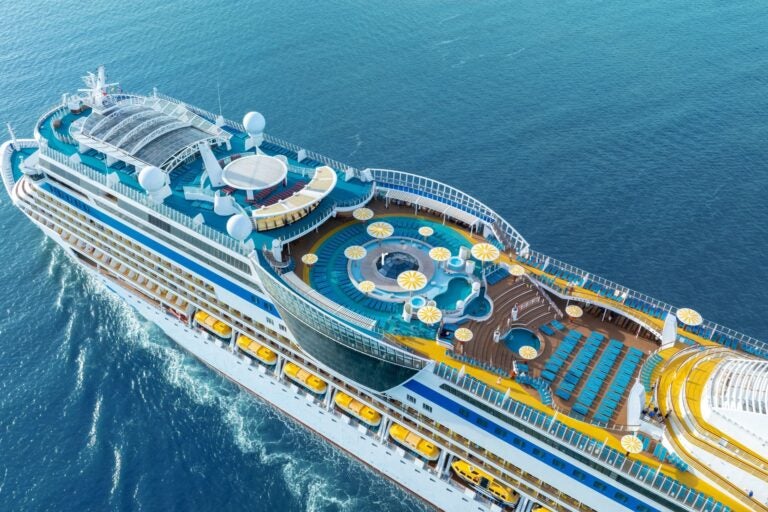
Best cruise lines for Japan from Australia
Several cruise lines operate confirmed Australia–Japan itineraries, ranging from premium to ultra-luxury. The table below is based on verified sailings.
| Cruise Line | Experience Tier | Route Type | Typical Voyage Length | Notes |
|---|---|---|---|---|
| Princess Cruises | Mid-range to premium | Direct and multi-country Asia | 16–57 days | One of the most accessible options for Australians; strong itinerary variety on the Australia–Japan route |
| Azamara | Premium | Direct (Sydney to Tokyo) | 48 days | Boutique-style ship; Australia to Japan Grand Voyage via Southeast Asia ports including Bali, Singapore, and Hong Kong |
| Oceania Cruises | Premium | Multi-country Asia (Sydney to Tokyo) | 51 days | In-depth itinerary via Indonesia, Vietnam, the Philippines, and South Korea before reaching Japan |
| Silversea | Ultra-luxury | Multi-country Asia (Sydney to Tokyo) | 34 days | All-suite, all-inclusive; Silver Moon sails Sydney to Tokyo via Bali, Singapore, and Hong Kong |
| Viking Ocean Cruises | Premium | Grand Journey (Sydney to Vancouver) | 79 days | Extensive multi-country itinerary covering Australia, Southeast Asia, Japan, and Alaska; includes multiple Japanese ports |
| Regent Seven Seas | Ultra-luxury | Multi-country Asia | 50+ days | Near-all-inclusive pricing; intimate itineraries with Japan port calls |
Route availability and schedules vary by year. Always verify directly with the cruise line or a travel agent, as not all lines operate the same itineraries each season.
Popular cruise itineraries from Australia to Japan
Most Australia to Japan cruise itineraries depart from Sydney, with some seasonal sailings also leaving from Brisbane or Melbourne. The main route types fall into three categories: direct Japan-focused voyages, multi-country Asia itineraries, and repositioning cruises.
Direct cruises from Australia to Japan
Direct sailings focus primarily on Japan and are the best choice for travellers whose main goal is exploring Japanese ports in depth. These itineraries typically run 14 to 22 days and sail via the South China Sea or the Philippine Sea before arriving in Japan.
Common ports on a direct Japan cruise from Sydney include Yokohama (for Tokyo), Kobe or Osaka, Hiroshima, Nagasaki, and Fukuoka. With 5 to 8 Japanese port days on most voyages, there is enough time to see a genuine cross-section of the country.
Cruises combining Japan with other Asian destinations
Multi-country Asia itineraries typically route through Hong Kong, Singapore, Vietnam, or South Korea before reaching Japan, or use those ports as a return leg. These are well-suited to travellers who want a broader Asia experience in a single trip. Travellers keen on Southeast Asia might also consider cruises to Singapore from Australia as a standalone option.
An Australia to Japan cruise itinerary of this type usually runs 20 days or longer. The trade-off is fewer days in Japan itself, so if Japanese ports are your priority, a direct sailing gives you more time on the ground. That said, combination itineraries offer excellent value for first-time visitors to Asia who want wider exposure.
Repositioning cruises between Australia and Japan
Repositioning cruises occur when cruise lines move ships between their Australia season and their Asia season, because these are one-way voyages and not marketed as round-trip products, they often represent strong value per night.
These sailings tend to be longer, sometimes 20 to 30 days or even longer, and include more sea days than a standard itinerary. They suit unhurried travellers who enjoy the voyage itself as much as the ports.
If you’re open to other long-haul options, cruises from Australia to Europe and cruises to South America from Australia also follow a similar repositioning model and can offer comparable value.
Best time to cruise to Japan from Australia
The best time for a cruise to Japan from Australia is spring (March to May) or autumn (October to November). Both seasons offer mild temperatures, low humidity, and the country’s most visually striking natural events.
Spring sailings between late March and early May align with cherry blossom season, when parks and castle grounds across Japan are in full bloom. Autumn departures from mid-October through November coincide with the koyo foliage season, when maple and ginkgo trees turn red and gold.
Avoid July to September if possible. This period overlaps with Japan’s typhoon season, which can affect sea conditions and occasionally force changes to port schedules. It also coincides with Japan’s school summer holidays, meaning popular sites will be busier and accommodation costs will be higher.
Whichever season you choose, it’s worth getting your kit sorted early. The cruise packing list covers everything worth bringing on a long-haul voyage. And if you’re weighing up alternatives for that time of year, cruises to Fiji from Australia and cruises to Hawaii from Australia are warm-weather options that avoid typhoon risk entirely.
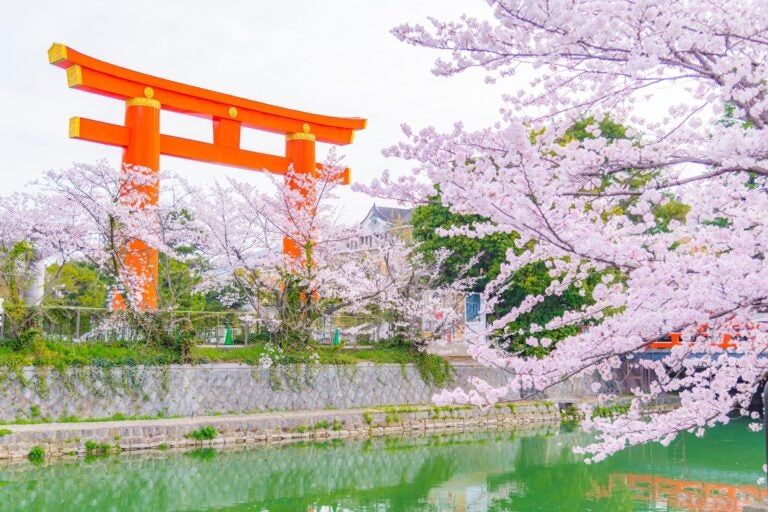
Key ports to explore on a Japan cruise
Japan’s long coastline means cruise itineraries can cover an impressive spread of cities, from the megacities of Tokyo and Osaka to quieter historic ports like Nagasaki and Shimizu. Before diving in, a quick read on facts about Japan helps put each port in context, especially for first-time visitors. Here is what to expect at each major stop.
Tokyo (Yokohama)
Most large cruise ships calling on Tokyo dock at Yokohama, specifically at Daikoku Pier or Osanbashi Terminal. Medium-sized vessels may use the Tokyo International Cruise Terminal at Odaiba, which offers more direct access to central Tokyo. If you’re berthed at Yokohama, allow30 to 40 minutes by train to reach central Tokyo.
Top things to do on a shore day:
- Explore Shinjuku, Shibuya, or Asakusa (Senso-ji Temple) in Tokyo
- Walk through Yokohama’s Chinatown and the Minato Mirai waterfront if time is limited
- Visit Tsukiji Outer Market for breakfast before heading into the city
Osaka and Kyoto
Ships dock at either Osaka’s Tempozan Cruise Terminal or at nearby Kobe Port. Both are workable bases for a day trip to Kyoto, which sits roughly 30 to 60 minutes away by train, depending on your starting point. Osaka itself is well worth a few hours, Dotonbori, Osaka Castle, and the Kuromon Market are all accessible by metro.
Top things to do on a shore day:
- Visit Fushimi Inari Taisha or Arashiyama bamboo grove in Kyoto
- Explore Namba and Dotonbori in Osaka for food and atmosphere
- Take a day trip to Nara to see the free-roaming deer and Todai-ji Temple
Hiroshima and Miyajima Island
Hiroshima is one of the most historically significant stops on any Japan cruise from Sydney or other Australian ports. The Peace Memorial Park and Museum is a sobering and essential visit, allowing at least two to three hours. From Hiroshima, a short train ride and ferry crossing takes you to Miyajima Island, home to the famous floating torii gate of Itsukushima Shrine.
Top things to do on a shore day:
- Hiroshima Peace Memorial Museum and Genbaku Dome
- Ferry to Miyajima to see the torii gate and explore the island on foot
- Try Hiroshima-style okonomiyaki for lunch
Other notable ports
- Kobe: Japan’s original international trading port, with excellent sake breweries in the Nada district, sweeping views from Mt Rokko, and the European-influenced Kitano district.
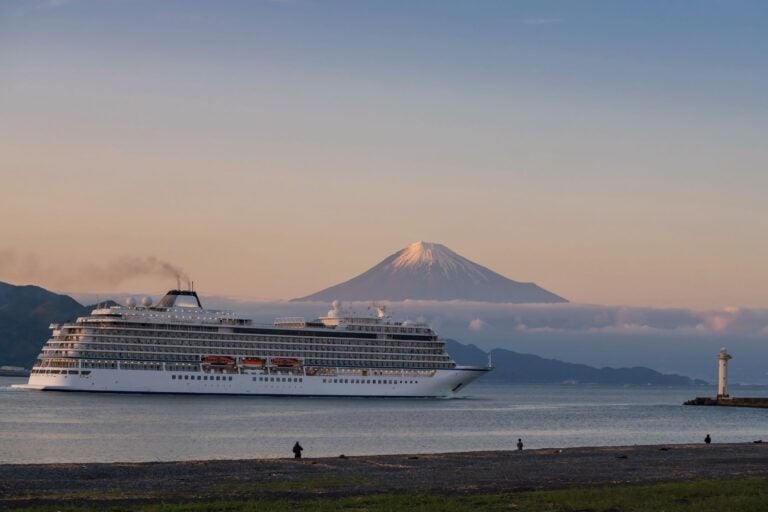
- Shimizu: The closest cruise port to Mt Fuji. On a clear day, the mountain is visible from the pier. The Miho no Matsubara pine grove is a short bus ride away and offers one of the most photographed Fuji views.
- Nagasaki: A city shaped by history and trade. The Atomic Bomb Museum, Dejima (the old Dutch trading post), and the hilltop Glover Garden are the key stops. A well-paced shore day can cover all three.
- Fukuoka: Japan’s gateway to Kyushu. Hakata ramen is unmissable, Ohori Park is excellent for a morning walk, and the Dazaifu Tenmangu shrine is reachable in under an hour. Fukuoka also has one of Japan’s best covered shopping arcades in Tenjin.
- Okinawa: A different side of Japan entirely. The beaches at Emerald Beach and the rebuilt Shuri Castle (a UNESCO World Heritage site) are the main draws. The pace is slower, and the food is distinct. Okinawan cuisine has strong Chinese and Southeast Asian influences.
For a broader look at what the country has to offer beyond the cruise ports, the best places to visit in Japan is worth reading before you sail.
How much do cruises to Japan from Australia cost?
Cruise pricing varies significantly by cruise line, cabin type, and how far in advance you book. The table below gives a general guide to what Australians can expect to pay for an inside cabin on a return voyage.
| Cruise Type | Estimated Per-Person Cost (Inside Cabin) | Notes |
|---|---|---|
| Budget | AUD 3,000–5,000 | Lower-deck inside cabin, limited inclusions |
| Mid-range | AUD 5,000–10,000 | More inclusions, better cabin options |
| Premium | AUD 9,000–16,000 | Higher service levels, some drinks/dining included |
| Luxury | AUD 15,000–35,000+ | Near-all-inclusive, butler service on suite tiers |
Most cruise fares include accommodation, main dining, and entertainment. What is typically not included: shore excursions, specialty restaurant dining, alcohol packages, Wi-Fi, gratuities, and travel insurance. These extras can add up to AUD 100–200 or more per person per day on some lines, so factor them into your total budget.
Book early, the best cabins at the best prices on Australia–Japan sailings sell out months ahead.
If budget is a priority, comparing options across cruises from Australia to New Zealand and cruises to Antarctica from Australia can also help you get a feel for how Japan sailings are priced relative to other long-haul itineraries.
Practical tips for planning cruises to Japan from Australia
A few Japan-specific practicalities are worth sorting before you leave. Getting these right makes shore days noticeably smoother.
- Carry cash. Japan remains cash-dependent, particularly at smaller port-town shops, temples, and shrines.
- Get an IC card. Pick up a Suica or Pasmo card at major train stations, including Yokohama and Osaka. You tap on and tap off, no fumbling for change or buying individual tickets at every stop.
- Download apps before departure. Ship Wi-Fi is expensive and often unreliable in Japanese waters. Download critical apps for travelling in Japan before you sail, such as offline maps, a translation app, and a transit app.
- Book shore excursions early. Popular tours, particularly Kyoto day trips, Mt Fuji views from Shimizu, and Miyajima from Hiroshima, sell out well before departure. Independent touring is also viable and often cheaper, but requires more planning.
- Get travel insurance. Japan’s healthcare is excellent but expensive for foreign visitors. Make sure your policy covers cruise travel specifically, including missed port departures and medical evacuation.
- Sort your data before the ship sails. Ship Wi-Fi packages are costly and slow down significantly when many passengers are online in port. For reliable data on shore days, a dedicated Japan eSIM is a practical alternative. Read more about mobile internet in Japan to understand your options and find the most suitable plan in the Holafly eSIM shop.
Stay connected in Japan with Holafly
Port days move fast, and reliable data makes a real difference, whether you’re navigating Kyoto’s backstreets, checking ferry times to Miyajima, or finding the best Hakata ramen spot in Fukuoka. Ship Wi-Fi is expensive on most lines and often drops out near the coast.
Holafly’s Japan eSIM connects you to local data networks as soon as you step off the gangway. Holafly covers over 200 destinations globally with unlimited data, and the Holafly eSIM coverage includes Japan across all major itinerary ports.
One more thing before you sail: every Holafly eSIM includes Always On — 1 GB of monthly backup data at no extra cost. Keep the eSIM on your device between port days, and if your plan runs out while you’re still mid-voyage, Always On activates automatically so you’re not left without data when you step off the gangway.

Get an unlimited data eSIM
Use code MYESIMNOW5 for 5% off at checkout
Plans that may interest you

哈囉我是來自台灣的 Wen,平常最喜歡旅遊,也喜歡將旅遊的種種化成文字跟大家分享,希望大家能在我的文章中找到有用的資訊,加上 Holafly 的 eSIM,讓你的旅程更美好!✈️✈️✈️ Hi! I'm Wen, a passionate content writer and travel enthusiast from Taiwan. I transform my wanderlust adventures into engaging stories and practical guides, helping fellow travelers make the most of their journeys.Through my articles, I strive to provide travel tips while introducing how our eSIM technology can enhance your travel experience - keeping you connected wherever your adventures take you!

