


 Language

8 Best Colorado ski resorts that skip the worst of I-70 traffic
Discover 8 of the best Colorado ski resorts that avoid the weekend I-70 gridlock, with alternative routes, train connections, and regional airports.

Winter is here, ski season has begun, and weekends on the slopes can start again. But there’s one slight problem: I-70’s traffic.
No one wants to spend Friday evening crawling through Floyd Hill, inching towards the Eisenhower Tunnel, and then sit in traffic for hours again on Sunday. Yet it can feel like an unavoidable part of a ski weekend.
But it doesn’t have to be.
From train and bus connections to regional airports and scenic southern routes, there are plenty of ways to reach the slopes while avoiding the worst of the congestion.
While a couple of resorts still require a short stretch on I-70, here are eight options offering a much less stressful way to plan your next ski trip.
Where are Colorado’s best ski resorts?
Most of the following Colorado ski resorts sit west or south of Denver, away from the I-70 Front Range corridor.
Here’s how to reach each resort, and when the 2026–27 ski season begins:
| Resort | How you skip I-70 | 2026–27 opening day |
|---|---|---|
| Winter Park | Amtrak Winter Park Express | Nov 13 |
| Eldora | RTD bus or CO-119 from Boulder | Nov 24 |
| Steamboat | Fly into Hayden (HDN) | Nov 27 |
| Aspen Snowmass | Fly into Aspen (ASE) | Nov 26 |
| Telluride | Fly into Montrose (MTJ) or Telluride (TEX) | Dec 5 |
| Crested Butte | Fly into Gunnison (GUC) | Nov 25 |
| Purgatory | Fly into Durango (DRO) | Nov 20 |
| Wolf Creek | US-160 / fly into Alamosa (ALS) | Open daily since Nov 21 |
1. Winter Park Resort
Winter Park Resort offers one of the easiest ways to skip Colorado’s I-70 traffic: arrive by train.
Amtrak’s Winter Park Express runs directly from Denver Union Station to a platform just steps from the ski lifts. The seasonal service returns on December 10 and runs Thursdays through Sundays to serve weekend ski traffic.
Fares start at $9 each way (kids ride for half price), the same as last season thanks to CDOT sponsorship, and you don’t have to pay an additional fee to bring your own skis and snowboards.
If you’re flying into Denver International Airport, take the A Line to Union Station, then connect to the Winter Park Express.
The ski train makes Winter Park a popular choice among day trippers and car-free travelers. You could also stay a night in Denver on either side of your trip, since there are plenty of things to do near Denver International Airport.
2. Eldora Mountain Resort
Just 21 miles west of Boulder via Boulder Canyon (CO-119), Eldora Mountain Resort lets you skip the I-70 ski corridor.
You don’t even need a car to get there. During ski season, RTD’s seasonal Route NB runs daily from Downtown Boulder Station, bringing you just steps from the Alpenglow lift. The buses have room for luggage and ski equipment, but skis and snowboards must be packed in a ski bag. The route only runs while the resort is open.
Eldora offers a smaller, more local feel than Colorado’s major resorts, as many locals enjoy relaxed half-days on the slopes here.
Eldora pushed back its planned November 13 opening and opens on November 24, starting with two intermediate trails off the Alpenglow lift. Beginner terrain opens as conditions allow.
3. Steamboat
Steamboat is famous for its light, fluffy snow and excellent tree skiing, making it a favorite for powder hunters.
If you want to experience the Champagne Powder but don’t fancy sitting in the I-70 traffic, you can avoid it by flying into Yampa Valley Regional Airport (HDN).
It’s about 25 miles from the resort, and seasonal flights run from various US cities, including Atlanta, Chicago, Los Angeles, and Seattle. Most of these nonstop routes start between December 10 and 19, so check when yours begins.
You can also drive from Denver, but the route follows I-70 as far as Empire before heading north on US-40.
The 2026–27 season opens on November 27, the day after Thanksgiving (pushed back from November 21). It’s worth buying your lift tickets online in advance. Peak-season tickets are among the highest in the country, with prices reaching over $300 on select dates.
4. Aspen Snowmass
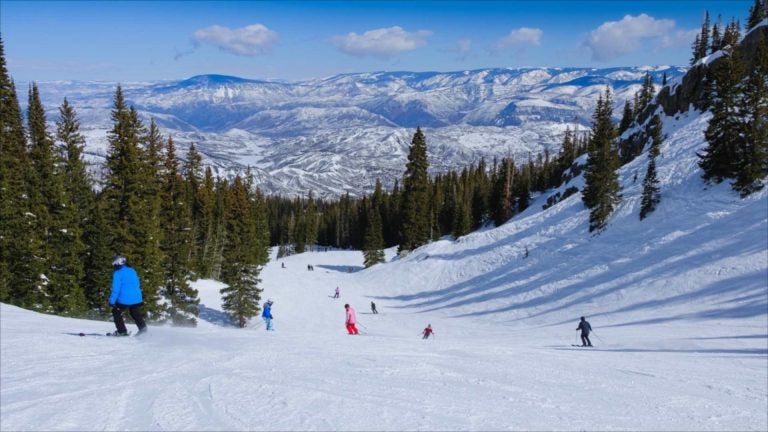
Aspen Snowmass is another resort that offers a ski trip with minimal I-70 driving.
Fly into Aspen/Pitkin County Airport (ASE), just 6 miles from Snowmass Village, to bypass the region’s heavy traffic. RFTA also offers a complimentary bus service from the airport to Aspen and Snowmass.
If you’re driving from Denver, be aware that Independence Pass closes every winter, so you’ll need to take the longer route via I-70 and Glenwood Springs.
Aspen is one of the most popular places to visit in Colorado because it has four interlinked mountains and resorts. As a result, a Snowmass ticket also gives you access to Aspen Mountain, Aspen Highlands, and Buttermilk.
The 2026–27 season kicks off on November 26, with Aspen Mountain and Snowmass opening first, followed by the other two mountains on December 12.
5. Telluride
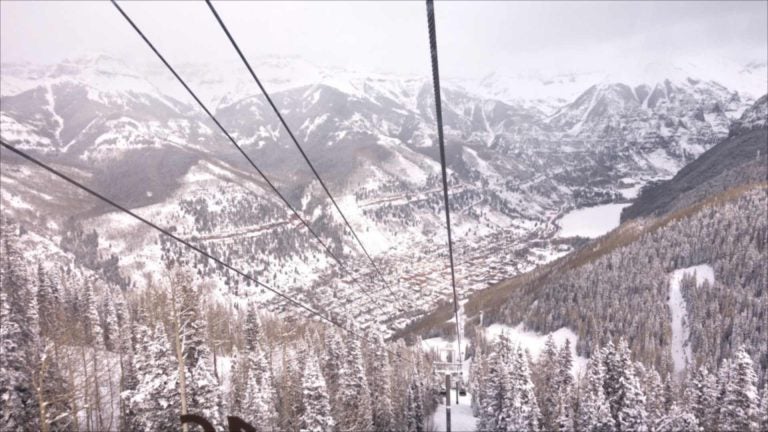
Telluride offers another way to escape the worst of I-70 traffic, particularly if you fly in. Montrose Regional Airport (MTJ) is about 65 miles from Telluride, roughly a 75 to 90-minute drive, and has most of the region’s winter nonstop flights. The smaller Telluride Regional Airport (TEX) is about 10 minutes from town, with daily flights from Denver and twice-weekly flights from Phoenix starting December 20.
Once you’re there, you can take the scenic no-charge gondola between Telluride and Mountain Village. It runs daily from November 20, 2026, through April 4, 2027, though Telluride Ski Resort has recently pushed its opening day back to December 5 because of continued warm weather.
6. Crested Butte
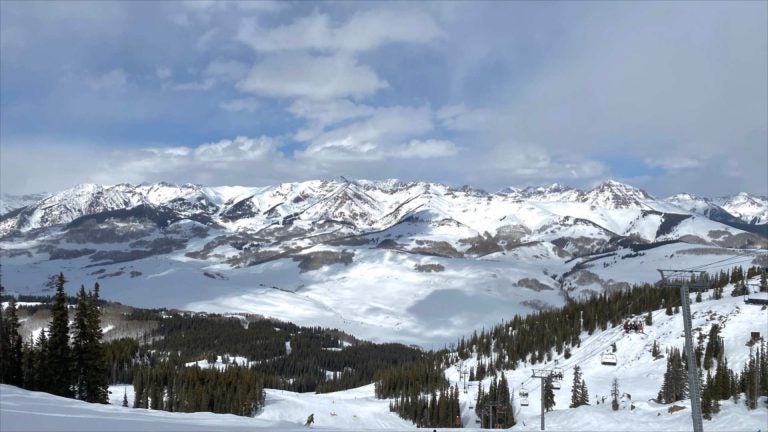
If you prefer a more laid-back, old-town ski experience or want to avoid the crowded slopes of Colorado’s bigger resorts, head to Crested Butte.
Known for steep, challenging terrain like Wyoming’s Jackson Hole, Crested Butte suits confident skiers looking for challenging runs.
Fly into Gunnison-Crested Butte Regional Airport (GUC), which offers nonstop flights from Denver. From here, take a shuttle or rental car for the 30-mile trip to the resort.
Crested Butte’s 2026–27 season kicks off on November 25, making for a timely Thanksgiving ski trip.
7. Purgatory Resort
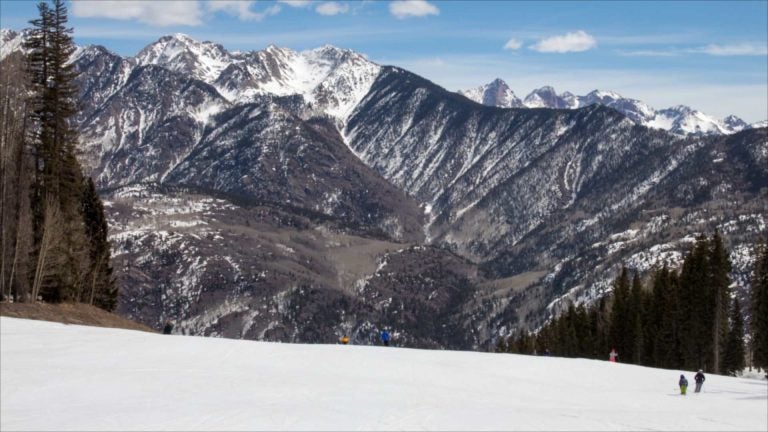
Purgatory Resort is another ski trip that avoids I-70 altogether, as you can fly into Durango-La Plata County Airport (DRO). From there, it’s around a 50-minute drive north on US-550.
Purgatory Resort opened on November 20, and this year, there’s an exciting new addition: the Colorado Couloir lift. Expected to open in December, pending state certification and snow, the new lift unlocks around 40 acres of advanced and expert terrain, which makes Purgatory a strong pick for advanced and expert skiers.
It’s also one of Colorado’s more budget-friendly options, with lift tickets priced under $50 on 95 days of the season and limited $9 tickets on select dates. Prices rise the closer you get to your ski day, so buy online in advance.
8. Wolf Creek Ski Area
Wolf Creek Ski Area is known for its high natural snowfall, averaging 430 inches per season. It opened on October 31, but closed a day later when historic flooding brought evacuation orders to the area. It ran on weekends from mid-November and has been open daily since November 21, with all lifts running.
From Denver, you can reach the resort via US-285 and US-160, avoiding I-70 entirely. US-160 over Wolf Creek Pass fully reopened on November 21, but CDOT says to allow at least an extra hour between South Fork and Pagosa Springs, with single-lane traffic and delays of up to 20 minutes at three work zones, so check COTrip.org before you drive. The trip takes several hours, so many people choose to fly into San Luis Valley Regional (ALS) in Alamosa instead. From here, the resort is about 65 miles away.
Wolf Creek is a relatively affordable option. The 2026–27 adult lift ticket is $96 on regular days and $110 on peak dates.
When to go, and how to time I-70 if you can’t avoid it
If you’re heading to one of the resorts that involve a section of I-70, you can reduce your travel time with some strategic planning.
According to CDOT, Friday afternoons (2 to 7 p.m.) are the busiest for westbound traffic heading toward the mountains, while Sunday afternoons (3 to 6 p.m.) bring the heaviest eastbound congestion toward Denver. So if possible, head up after 7 p.m. on Friday, and on Sunday, leave before late morning or stay for dinner (or another night) and drive back after the rush.
Construction at Floyd Hill will continue throughout the entire 2026/2027 ski season, so allow extra time for lane changes and potential delays. Colorado’s Traction Law also applies on the I-70 Mountain Corridor (Morrison to Dotsero) from September 1 to May 31. Check that your tires meet the requirements or carry approved chains or an alternative traction device before setting off.
If you’re visiting from abroad, check what roaming in the USA will cost before you fly, or compare prepaid SIM options for the USA to stay connected throughout your trip.
And if you’re already taking a long-haul flight to the USA, you might want to consider a ski trip in Utah instead. Many Utah ski resorts are within an hour of Salt Lake City International Airport, eliminating the need for an additional regional connection.
Stay connected on Colorado’s mountain roads with Holafly
Whether you’re catching the ski train out of Denver or landing at a tiny mountain airport, you’ll want maps, lift apps, and traffic updates working the moment you arrive. If you’re flying in from abroad, a Holafly eSIM for the USA gives you unlimited data on reliable 5G networks, plus 24/7 customer support. You install it before you fly and switch it on when you land.
Mountain travel doesn’t always go to plan, at home or abroad. That’s where Always On helps. Every Holafly eSIM includes 1 GB of free monthly backup data, subject to its activation and eligibility conditions. It stays active as long as the eSIM is installed, renews every month, and works in 150+ destinations. So whether your next ski trip is Colorado or the Alps, a delayed flight or a closed pass won’t leave you offline.

Peace of mind before you fly
Set up your eSIM before travel and get unlimited data on arrival.
Plans that may interest you

Hi, I'm Michaela, a South Korean writer living in the US. I cover travel and live events, focusing on the practical stuff that makes your trip smoother, whether you're navigating a new city or heading to a major international event.I'm also the founder of Search SEOul, South Korea's leading SEO conference, bringing together search marketing experts and speakers from around the world.

