Language
How to retire in Morocco: Ultimate guide
If you're looking for a country with a rich cultural heritage and a low cost of living, retiring in Morocco might be your best option.

More and more people are choosing to spend their retirement years in this North African country, taking the time to explore the local culture. Retiring in Morocco offers rich traditions, good weather, close proximity to Europe, and a much lower cost of living.
In this guide, we’ll cover the main benefits of retiring in Morocco, the requirements you’ll need to meet, the types of visas you can apply for, and the best areas to live in. We’ll also share some practical tips to help you settle in more easily during your first few months after the move.
What are the advantages of retiring in Morocco?
Morocco appeals to many retirees thanks to its affordable lifestyle, mild climate, and vibrant culture. It also means spending your days exploring cities full of history and culture. Here are some of the main reasons retirees choose Morocco.
1. Lower cost of living
With a European pension, you can live comfortably in Morocco, since housing, food, and everyday expenses are generally much lower than in countries like Spain or France. For example, in cities such as Fez or Marrakech, you can find spacious homes at competitive prices starting from around $434 per month.
2. Warm weather all year round
Morocco has a warm, pleasant climate all year, with average temperatures around 20°C. In coastal cities like Agadir, winters are mild too. If you’re coming from a colder country, you’ll enjoy the many sunny days and find it easy to stay active outdoors.
3. Diverse and delicious cuisine
Another major advantage of retiring in Morocco is the chance to enjoy traditional Moroccan cuisine, with dishes like tagine, couscous, pastilla, and mint tea. Eating out at local restaurants is also very affordable, with meals starting from around $7, so you won’t need to cook as often.

4. Rich culture and unique experiences
You’ll discover a country shaped by a mix of Arab, Berber, and French influences, where there’s always something new to see or do. You can wander through the blue streets of Chefchaouen, explore the medina of Marrakech, visit the Sahara Desert, or admire the stunning Hassan II Mosque.

Requirements for retirement in Morocco
Morocco does not offer a specific retirement visa, but you still need to meet certain requirements to live there legally, such as a monthly pension, savings, and a local address. Understanding these requirements in advance can make the relocation process much easier.
1. Visas for retirement in Morocco
Citizens of the EU can enter Morocco without a visa and stay for up to 90 days as tourists. This is a good way to visit the country first before deciding to move there. It allows you to explore different areas and see which city suits you best. If you later need to apply for a long-stay visa at the Moroccan embassy in your country, these are the two most common options:
- Residence permit: This permit allows foreigners to live in Morocco for one year, with the option to renew. You’ll need proof of income, a rental contract or property ownership, a medical certificate, and a clean criminal record.
- Long-term residence: After residing legally for several years, you may be eligible for a longer-term permit valid for up to 10 years.
2. Proof of sufficient financial means
One of the key requirements for a long-stay visa is proving that you can support yourself without working. Authorities usually look for a stable income, such as a pension, recent bank statements, or significant savings.
3. Accommodation and registration in the country
To get residency in Morocco, you need a rental contract or proof that you own a home. This shows you have a place to live and a plan for your stay. You must also register your address with the local police so your residency is officially recorded.
4. Medical certificate and criminal record check
You’ll need a medical check-up to confirm you don’t have any contagious diseases. It’s usually done by a local doctor, but a certificate from your home country may also be accepted. You’ll also need a clean criminal record, which you can often request online through the Ministry of Justice.
5. Personal documents
In Morocco, a national ID card is not accepted for entry, so you must travel with a valid passport. It should be valid for at least six months from your date of arrival and be in good condition. It’s worth checking the expiration date well before your trip.
Best places to retire in Morocco
You can choose a quiet coastal town, a mountain or nature area, or a big city. You can also try living in a few places to see which one you like best. These are some of the most popular options among expats:
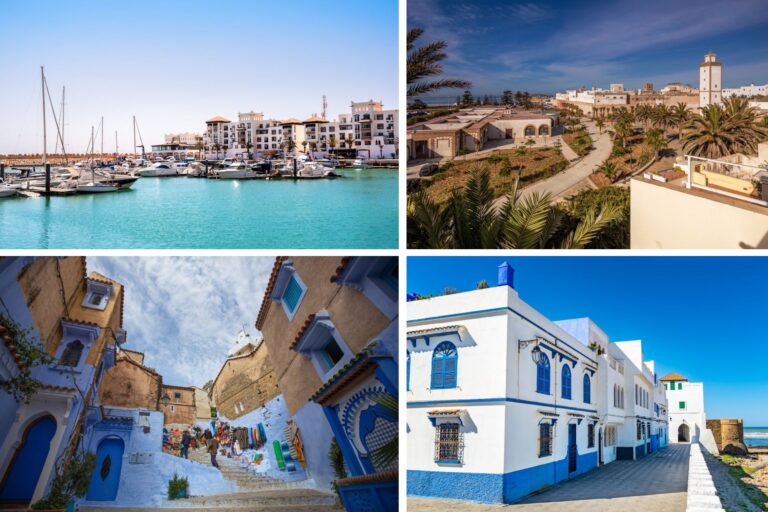
- Agadir: It’s a popular choice among European retirees thanks to its beaches, sunny climate, modern amenities, and large international community. It’s located in the Souss-Massa region in the south of the country.
- Tangier: If you want quick ferry connections, this city is a great option thanks to its location in northern Morocco. It also has a strong Spanish influence and a lively, cosmopolitan atmosphere.
- Essaouira: If you’re looking for peace and quiet away from tourist areas, a mild climate, and a more artistic vibe, this small city on the central Atlantic coast is a great choice.
- Marrakech: Located inland at the foot of the Atlas Mountains, it’s the country’s main tourist hub, with a lively atmosphere, cultural events, markets, and neighborhoods suited to an international lifestyle.
- Chefchaouen: Located in the north, it is a mountainous region surrounded by nature, known for its lush green landscape and its famous blue medina.
- Asilah: This small coastal town, located 45 km from Tangier, is a peaceful place near the Strait of Gibraltar with more affordable prices.
Tips to consider before deciding to retire in Morocco
Before retiring in Morocco, it’s important to plan ahead and spend time getting familiar with the country. Visiting as a tourist is very different from living there long term, so you’ll need to be ready to adapt to a new culture. Follow our tips to make the transition easier!
1. Make sure you have a stable internet connection
Internet is generally good in big cities like Marrakech, but it can be less reliable in other areas. Holafly’s monthly plans are a good option for staying connected, whether you’re traveling, talking to family, or handling paperwork.
Choose a 25 GB or unlimited data plan with no contract, and connect multiple devices at once. You can use it in over 160 destinations without changing your plan or eSIM, which is useful when traveling by ferry without worrying about your connection. All plans include Always On, which gives you 1 GB of free data forever, even if you cancel.
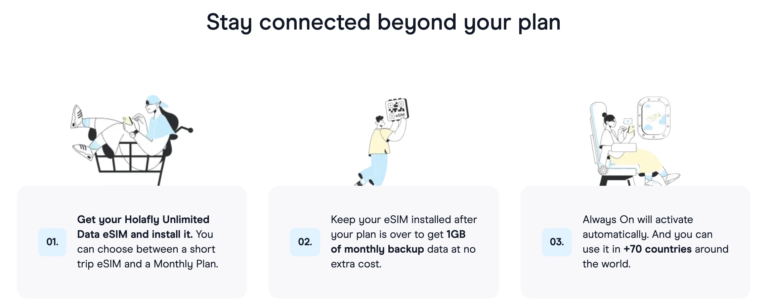
Get 1GB of monthly backup data, no extra cost.
2. Get to know the country beforehand
Before making the move, take time to get to know the country first. Visit as a tourist and spend a few weeks in different areas to see if it suits you. This will help you experience the local lifestyle, climate, traditions, and food before deciding where you’d like to settle.
3. Consult with a real estate agency
If you don’t speak French or Arabic, working with a local agency can make the process much easier. They can assist with residency paperwork, finding a home, translating documents, and other administrative tasks.
4. Connect with retirement communities
Look for expat or retiree groups on social media where people living in Morocco share advice and experiences. You can ask questions before your move and, once there, meet people to join activities or excursions with. Having a community around you can make settling in much easier.
5. Purchase private health insurance
To access modern hospitals and more advanced medical care, you’ll need private health insurance in Morocco. Although the country has a public healthcare system called AMO, coverage for foreigners is limited. Make sure your insurance includes medical care, hospitalization, emergencies, and repatriation.
Frequently asked questions about retiring in Morocco
There is no specific retirement visa for Morocco, but you can apply for other long-term residence permits.
Some of the safest cities to retire in Morocco are Marrakech, Tangier, and Essaouira. In general, the country is considered safe for expats, although it’s still important to take basic precautions.
Yes, you can continue to receive your pension even if you live abroad, provided you meet the requirements regarding living and residence verification.
In cities like Agadir or Tangier, you can live comfortably on an average pension of about $1,850 per month.
Yes, foreigners can buy property in Morocco with relatively few restrictions, especially in cities like Marrakech, Tangier, or Essaouira. It’s a good idea to work with a local real estate advisor who can help you with the process.
Plans that may interest you


Hi! I'm a Spanish-English copywriter working with Holafly, helping bring travel content to life for curious travelers. As a digital nomad with a passion for exploring, I'm always adding new spots to my bucket list. If you love to travel like me, stick around because you're in the right place to find inspiration for your next trip! ✈️🌍