







 Language
How to retire in Cyprus: Ultimate guide
A complete guide to retiring in Cyprus. Learn about the requirements for permanent residency, minimum income, and legal procedures for 2026.

Some people choose retirement places for the weather, others for the cost of living, and others for healthcare. Cyprus has been on these lists for decades because it offers all three on one island. It has over 320 days of sun a year, the Mediterranean Sea just a short distance from anywhere on the island, legal residents have access to public healthcare, and its tax system in 2026 is still one of the most favorable in the EU.
But retiring in Cyprus isn’t as simple as it might first sound. EU citizens can move there without a visa, but there are still a few formalities to sort out. The island has been split since 1974, which influences where it makes sense to live. And English is widely spoken, which makes daily life easier than you’d expect in a country where Greek is the official language.
This guide covers everything you need to decide: how to get residency, the updated 2026 tax rules, the best places to live, useful tips before you move, and the most common questions people ask during the process.
What are the benefits of retiring in Cyprus?
There are strong reasons behind choosing Cyprus that go well beyond what any tourist brochure can show. These are the main factors that tend to influence foreign retirees who have already been living there for years.
1. A flat rate of 5% on your foreign pension
This is the tax benefit that often comes up first. Tax residents who get a pension from abroad can either add it to their normal income and pay progressive tax, or choose a flat 5% tax on pension income above €5,000 ($5,400) a year.
To understand the real impact, here’s a simple example: a retiree with an annual pension of €24,000 ($25,800) would only be taxed in Cyprus on the €19,000 ($20,500) above the €5,000 threshold. That comes out to €950 ($1,025) in tax per year.
This system is applied year by year. Each year, retirees can choose whether to use the flat rate or the standard progressive tax system, depending on which one works out better for them. That kind of flexibility is unusual in Europe’s tax landscape.
2- EU member: Free movement and a stable legal framework
Cyprus has been in the EU since 2004. That means EU citizens can live there freely, use the euro, and benefit from EU rules. Its legal system is based on British-style common law.
Beyond immigration rules, the stable legal system is a strong point for anyone thinking long term. Property rights are well protected, contracts are usually written in English as well as Greek, and the judicial system is built on solid foundations.
3- English as the de facto language
About 80% of people in Cyprus speak English well. It’s used in business, much of government, and most services for expats. For retirees who don’t speak Greek, everyday things like banking, doctor visits, utilities, and meeting other expats are much easier than in many other Mediterranean countries.
4- High-quality, accessible public healthcare for residents
Since 2020, Cyprus has had a national healthcare system known as GESY. It covers all legal residents, including foreign retirees with residency permits. Contributions are based on income and are usually fairly low for people receiving average pensions.
Public healthcare has improved a lot since GESY was introduced. If you prefer private care for faster appointments or specific specialists, Cyprus also has many private clinics in the main cities, with good standards and lower prices than in Western Europe.
5- Non-Dom status: Additional benefits for capital gains
In addition to the special tax treatment for pensions, Cyprus also offers a “non-dom” regime. This allows people who have been tax residents for less than 17 years on the island to pay 0% tax on dividends and interest during that period.
For retirees earning income from investments, capital, or family businesses, this can matter just as much as the flat pension tax. In 2026, the system is still in place with some small technical changes, but the main benefits remain.
What are the requirements for retirement in Cyprus?
Before looking at the details, it’s important to understand that the process is very different for EU and non-EU citizens.
For EU citizens
EU citizens can move to Cyprus without needing a visa or work permit. However, if they stay longer than three months, they need to officially register as residents with the local authorities.
Registration is handled through the local civil registry office. You’ll usually need a valid passport or ID card, proof of address in Cyprus (such as a rental contract or property deed), proof that you have enough financial means to live there without working, and in some cases health insurance. Once registered, you receive the “Yellow Slip,” which is the certificate that proves an EU citizen’s legal residence in Cyprus.
After five years of continuous legal residence, you can apply for EU permanent residency, which offers greater legal stability and removes the need to regularly renew your paperwork.
For non-EU citizens
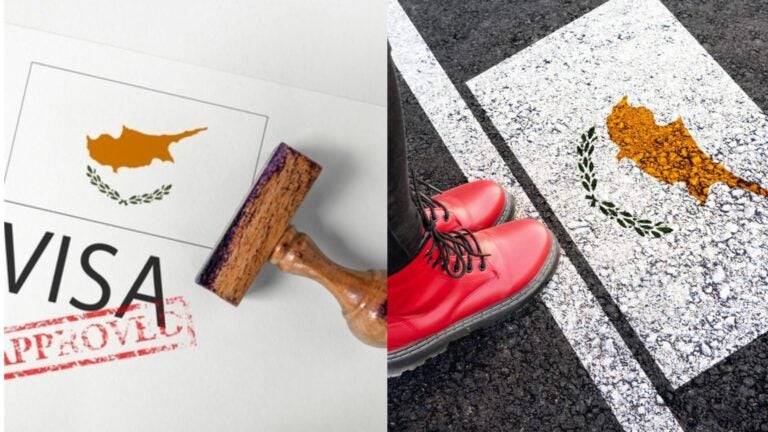
Non-EU citizens need a specific residence permit. For retirees, the most common option is the “Pink Slip” (Category F), a temporary residence permit for non-EU nationals who have sufficient financial means and want to live in Cyprus without working.
You need to show at least €9,568 ($10,300) a year for the main applicant, plus €4,613 ($5,000) for each dependent. You also need private health insurance and proof of a home in Cyprus, either rented or owned. The application goes to the Immigration Department and usually takes 6 to 12 months.
For people who can invest more, there’s a faster option: Permanent Residency through Investment. It requires at least €300,000 ($324,000) in new property or other eligible assets, plus proof of €50,000 ($54,000) in yearly income from abroad. It usually takes about three months to get and doesn’t need renewal.
Becoming a tax resident in Cyprus
Getting a residence permit doesn’t automatically make you a tax resident. To be taxed in Cyprus and benefit from the 5% flat pension rate, you must become a Cypriot tax resident.
Cyprus usually considers you a tax resident if you spend more than 183 days a year there. Since 2017, Cyprus has also applied a 60-day tax residency rule in certain cases. To qualify, you must not spend more than 183 days in another country during the same tax year, must maintain ties to Cyprus such as property or business activity, and cannot be considered a tax resident elsewhere.
Documents you will need
Regardless of the path to residency you choose, these are the documents that are typically required during the process:
- A valid passport or national ID card with several months remaining before expiration.
- A criminal record certificate from the country of origin, with an apostille.
- Proof of income (certificate from the INSS or pension-paying entity, bank statements).
- Health insurance coverage (if you are not eligible for GESY from the start).
- Proof of residence in Cyprus (lease agreement or property deed).
All foreign documents must be apostilled under the Hague Convention, and if they are not in English or Greek, they must be translated by a certified translator.
Best places to retire in Cyprus
The island is small, but its areas are quite different. Where you live affects your costs, lifestyle, services, and how close you are to the airport. One important thing to know: northern Cyprus has been controlled by Turkey since 1974 and is not internationally recognized. Most expats and retirees live in the south, the Republic of Cyprus, which is in the EU.
That said, these are the areas most popular among foreign retirees.
1- Paphos: The most popular city for retirees
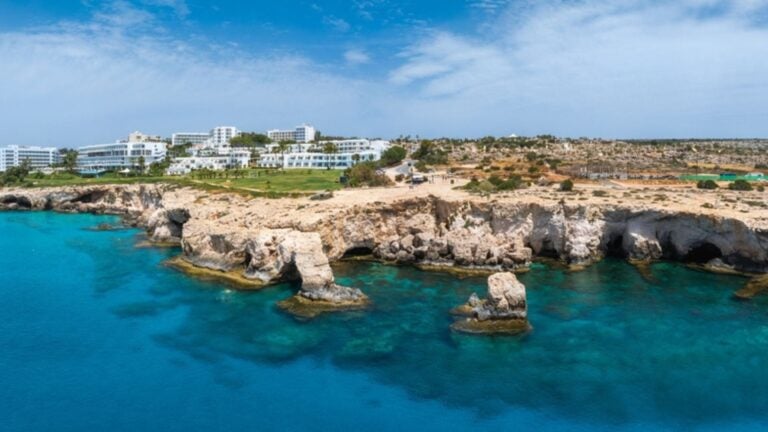
Paphos is often ranked the best city in Cyprus for expats and has been number one for seven years straight. It’s popular because it has a strong expat community, lots of English-speaking services, lower prices than Limassol, and very beautiful natural surroundings.
The area is full of history, with archaeological sites, an old harbour, and Roman mosaics that are a UNESCO World Heritage site. Daily life is easy and relaxed, without the rush of a big city. The only downside is the distance. It’s about an hour to Limassol and over an hour and a half to Nicosia.
2- Limassol: Cosmopolitan and convenient
Limassol is the most dynamic city in southern Cyprus. It’s a financial hub with a strong presence of international companies, a modernized marina that has transformed the coastline, restaurants from all over the world, and a highly diverse expat community.
For retirees who want great services nearby, plenty of shops, an active cultural life, and easy access to Larnaca airport, Limassol is the best option. However, it’s the most expensive place to live in Cyprus, with much higher housing and living costs. It’s not ideal for those on a budget.
3- Larnaca: A good balance between price and amenities
Larnaca is the closest city to the island’s main international airport. For anyone planning frequent trips, that small detail makes everyday life much easier than you might expect.
The city has a diverse, active expat community, lower prices than Paphos or Limassol, solid services, and easy access to beaches. The Mackenzie Beach and Finikoudes areas are especially nice to live in. It’s probably the most balanced option for anyone wanting a relaxed lifestyle without giving up urban convenience.
4- Nicosia: For those who prefer the city
The capital is the only city on the island without a coastline. In return, it offers the best access to government services, major hospitals, universities, and the country’s financial and political centre. It’s a better fit for retirees who prefer city life over living by the coast.
Tips to consider before deciding to retire in Cyprus
Some decisions take time, and retiring abroad is one of them. Beyond paperwork and taxes, there are practical things that can mean an easy move or a difficult start. These are the ones most retirees tend to mention afterward.
1. Visit before committing to anything
Cyprus feels very different in August compared to January. In summer it’s busy with tourists and prices go up. In winter it’s much quieter, especially in Paphos, and many places have shorter opening hours.
Visiting at different times of the year before making your final decision gives you a much more realistic picture of what daily life will be like.
2. Consult with an international tax specialist
The 5% pension tax does exist, but it only applies if you fully give up tax residency in your previous country, which can have important consequences. Tax authorities may also challenge your status if they believe your main ties remain in your home country.
A tax adviser who specializes in expats and understands the agreements between your home country and Cyprus is well worth it, as it can help you avoid serious problems.
3. Join GESY right from the start
Cyprus’ national healthcare system covers all legal residents. Registering as soon as possible ensures you can access the public network of doctors and clinics from the start. Many retirees also add private insurance to see specialists faster or use top private clinics without long waiting times.
4. Stay connected throughout the entire process
Residence procedures often involve receiving notifications, coordinating with local lawyers or agents, and being available for any urgent steps. During pre-move visits, a Cyprus eSIM from Holafly gives you unlimited data from the moment you land, without needing to look for a local SIM card.
For longer stays, Holafly’s monthly plans give you coverage in over 160 countries with automatic renewal. They’re ideal if you’re moving regularly between countries without ever losing connection. Plus, with Always On, you get a built-in 1 GB backup per month in more than 70 countries, which only kicks in when you need it.

5. Connect with expats already living there
Cyprus has a larger expat community than you might expect, especially in Paphos and Larnaca. There are active social media groups, resident associations, and informal meetups where you can connect with people who’ve already gone through the same process you’re about to start. That kind of firsthand insight is hard to find anywhere else.
6. Carefully assess the cost of living before deciding where to settle
Cyprus isn’t especially cheap, but it’s still more affordable than most Western European countries.
The cost of living varies a lot by area. In Limassol, it can easily exceed €2,500 ($2,700) a month for a couple including rent, while in Larnaca or quieter parts of Paphos you can live comfortably on €1,800–2,200 ($1,950–2,400). It’s better to look at specific areas rather than relying on national averages.
7. Keep in mind the issue of the island’s division
Northern Cyprus is under Turkish administration and is not recognized by the Republic of Cyprus or the EU. If you live or own property in the south, you have no legally recognized rights over property in the north, and crossing the dividing line comes with specific implications. This is important to keep in mind if you’re looking at property or areas of the island and come across unusually cheap options in the north.
Frequently asked questions about retiring in Cyprus
No. EU citizens can enter and live in Cyprus without a visa. If they stay longer than three months, they must register with the local authorities and obtain a “Yellow Slip,” which serves as proof of legal residence.
Tax residents in Cyprus receiving a pension from abroad can choose a flat 5% tax on pension income above €5,000 ($5,400) a year. The first €5,000 is tax-free. Each year, they can pick between this and the standard tax system, whichever works out better.
Since 2020, Cyprus’ national healthcare system (GESY) has covered all legal residents, including foreign retirees with residence permits. Contributions are based on income and are generally quite low. Many retirees also take out private insurance to get faster access to certain specialists.
The general rule is 183 days a year. There’s also a 60-day rule, which can allow tax residency with less time in Cyprus if you meet a few conditions, including not being a tax resident elsewhere for more than 183 days. It’s best to get specialist tax advice to make sure you do it correctly.
Yes. EU citizens can bring their spouse or registered partner, who also has the right to live in Cyprus under EU free movement rules. For non-EU citizens, a spouse can usually be included as a dependent in the residence permit application, with extra costs depending on the type of permit.
Yes. EU citizens can buy property in the Republic of Cyprus just like locals. Non-EU citizens can also buy, but with some limits. One key point: avoid buying in Northern Cyprus if you want EU-backed legal security.
Yes. Cyprus has double taxation agreements with many countries. These agreements determine which country has the right to tax each type of income and prevent the same income from being taxed twice. For anyone moving their tax residency to Cyprus, these treaties are a key part of tax planning.
Plans that may interest you


Hi! I'm a Spanish-English copywriter working with Holafly, helping bring travel content to life for curious travelers. As a digital nomad with a passion for exploring, I'm always adding new spots to my bucket list. If you love to travel like me, stick around because you're in the right place to find inspiration for your next trip! ✈️🌍
