Language
How to buy a house in Switzerland as an expat in 2026
Live in the Swiss Alps! We explain the requirements, steps and costs for buying a house in Switzerland as an expat.

Are you thinking about buying a house in Switzerland? This idea can become an excellent investment in one of the world’s highest-quality countries. It suits residents and buyers seeking a second home. However, you must understand how the Swiss property market works, because foreign property purchases face strict regulations.
Therefore, this article explains the most common requirements and restrictions based on property type, location and intended use. We’ll also explore the current market, property prices and the required deposit. In addition, we’ll cover payment methods and the taxes you must declare after purchasing. Furthermore, regulations can vary by canton, so poor planning may create delays and extra costs.
Requirements For Foreigners Buying a House in Switzerland
If you’d like to buy a house to live in Switzerland, as an investment or for holidays, you must understand several legal requirements. Mainly, the law regulating foreign property purchases is called Lex Koller. This law controls where you can buy, property types and purchase conditions to limit property speculation.
1. Resident and non-resident foreigners
Firstly, if you legally live in Switzerland, you can buy a house under the same conditions as Swiss citizens. However, without a residence permit, you’ll usually need to prove the property serves as a second home, holiday property or approved tourist accommodation.
2. Legal restrictions and limited areas
The Lex Koller law mentioned earlier regulates foreign property purchases and imposes several restrictions on non-residents. For example, you can usually buy only one property per person, with size limits and approved locations only, including Zermatt, Verbier, Davos and St. Moritz.
3. Property type
The most common purchase structure in Switzerland involves full ownership of the property. This means you gain complete ownership rights, including resale, inheritance and transfer rights. However, some properties may include special rights depending on the canton or communal land regulations.
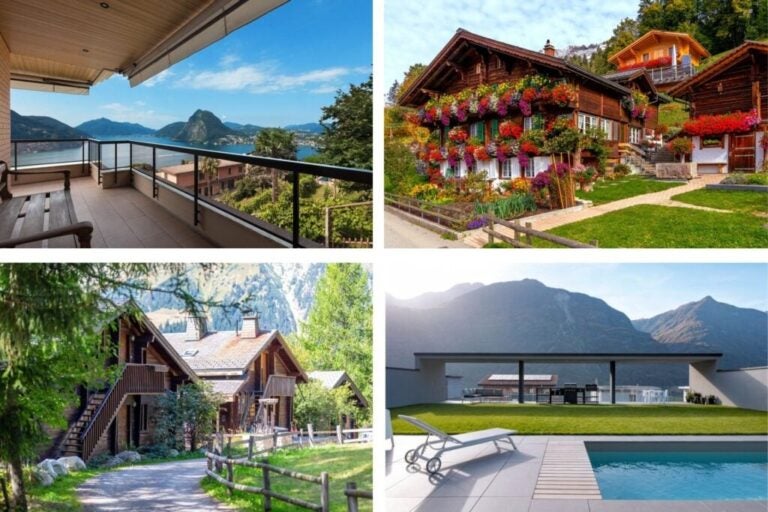
For example, a mountain chalet may belong to a private development with shared land areas, including roads, gardens or parking spaces. In this situation, owners must follow community regulations and pay maintenance fees.
4. Basic Financial Requirements
To buy a house in Switzerland, banks impose strict conditions on foreign buyers. These include proof of income, your financial history, employment stability and the source of your funds. Usually, mortgage applications require a minimum deposit between 20% and 30% of the property’s value. However, foreign buyers may need larger deposits, so you must prove you hold sufficient savings.
5. Required documents
The main documents you must provide include your valid passport, residence permit, if applicable, tax declaration and bank statements. You’ll also need an employment contract or proof of assets. Furthermore, buyers must submit the title deed, registration details, floor plan, debt certificate, community regulations, energy certificate and bank valuation.
6. Buying through a company or local partner
If you’d like to buy a house in Switzerland with your resident partner or through a company, you can do so legally. However, Lex Koller closely examines these agreements because using artificial companies to gain purchase advantages may trigger penalties and cancel the transaction. Therefore, you must clearly prove the property’s true owner, funding source and future resident.
7. Legal risks and hiring an adviser
The Swiss property market follows strict regulations and market trends may change regularly. For example, authorities may introduce new foreign ownership rules, tourism limits, mortgage changes or different cantonal regulations.
Therefore, working with specialised professionals who provide advice and updates remains extremely important. Although not mandatory, hiring a property agent or specialist lawyer helps you understand mortgage contracts, solve legal disputes and overcome language barriers.

How Much Does a House Cost in Switzerland?
Switzerland’s property market ranks among Europe’s and the world’s most expensive markets. This results from the high cost of living in Switzerland, strong demand and limited supply. Although prices vary by canton, city, views and nearby services, the national average price ranges between $9,900 (€8,415) and $10,700 (€9,095) per m². Meanwhile, the highest prices appear in:
- Zurich: $24,700-28,600 (€21,000-24,310)/m²
- Geneva: $27,000 (€22,950)/m²
- Lausanne: $20,600 (€17,510)/m²
- Basel: $12,900-15,900 (€10,965-13,515)/m²
- Bern: $12,900 (€10,965)/m²
The most expensive areas sit within financial centres or beside lakes. Therefore, a modern apartment in central Zurich may cost $2,352,941 (€2,000,000). However, if you’d like lower prices, nearby towns connected by train offer reductions between 20% and 40%. Meanwhile, alpine and rural regions provide properties for around $5,300-7,100 (€4,505-6,035)/m².
Besides the purchase price, you must consider annual costs for community fees, maintenance, heating and insurance, which usually equal 0.5% to 1% of the property’s value. For example, a property worth $1,176,471 (€1,000,000) may require yearly costs between $5,882 (€5,000) and $11,765 (€10,000).
If we compare these figures with the average Swiss monthly salary, which usually ranges between $7,100 (€6,035) and $8,200 (€6,970) net per month, prices may not seem excessively high. Even so, buying a house in Switzerland remains difficult for many local residents. Here are several current examples:
- Apartment in Bern: 50-70 m² for $411,765-647,059 (€350,000-550,000)
- Chalet in a tourist alpine area: From $2,352,941 (€2,000,000).
- Family home in Basel: 100-140 m² for $941,176-1,647,059 (€800,000-1,400,000)
Taxes On a House in Switzerland
Now that you understand approximate property prices in Switzerland, you should also review the taxes and fiscal costs linked to this transaction. These taxes vary by canton, so Switzerland doesn’t apply one national rate. The following table shows the main initial taxes and approximate rates:
| Tax | Approximate cost |
|---|---|
| Property transfer tax | 0.2%-3.3% of the property’s value |
| Land registry | 0.1%-0.5% |
| Notary fees | 0.1%-1% |
| Mortgage costs | Varies by bank |
| Example: A property worth $1,176,471 (€1,000,000) | Between $31,765 (€27,000) and $41,176 (€35,000) in initial costs |
Regarding annual wealth and cantonal property taxes, you’ll pay more in cantons like Geneva and Vaud than in Zug and Schwyz, which attract residents through lower taxes. You must also consider the imputed rental value, a unique Swiss tax system feature. This tax applies when living in your own property, although you can deduct interest and maintenance expenses.
As an advantage, Switzerland holds double taxation agreements with many countries, including Spain, France and Germany. Therefore, these agreements help you avoid paying taxes twice on wealth, income or capital gains after selling the property.
Steps To Buy a House in Switzerland
With proper organisation and support from property professionals, the process of buying a house in Switzerland can remain safe, efficient and transparent. To help you plan this purchase, we’ve prepared several recommended steps.
1. Search for properties and analyse areas
The first step remains the easiest because you simply define your budget and purchase goal: Main residence, second home or investment. Afterwards, you can begin searching local property portals, including Homegate, ImmoScout24, Comparis and Newhome.
Compare several locations carefully because prices in major cities like Zurich and Geneva remain extremely high. However, nearby towns connected by train often provide lower prices and reduced cantonal taxes, including Lucerne, Nidwalden, Zug and Schwyz. This process may take between two weeks and several months.
2. Verify whether you can legally buy the property
Some homes can only be sold to Swiss residents under Lex Koller regulations, so you must confirm your eligibility. Therefore, we recommend seeking advice from a local property agent, lawyer or notary who understands the language and legal requirements. Usually, you’ll know within three to seven days whether you meet the conditions.
3. Negotiate the price and reserve the property
Once you’ve chosen the property, you can submit an offer and negotiate the price with the owner, including delivery dates, furniture and payment conditions. In Switzerland, negotiations remain more formal and less aggressive than in many countries. Usually, the property agent handles the process, which often lasts around one week. If the seller accepts, you must sign a preliminary agreement and place a deposit between 5% and 10% of the purchase price.
4. Apply for a mortgage and complete the financial review
If you need financing, you must submit the required documents to the bank for approval. The bank will assess your income, assets, employment stability and the source of your funds. Usually, the estate agency manages this process. If everything meets requirements, the bank approves the mortgage within two to six weeks and explains the conditions, taxes and monthly repayments.
5. Sign the deed and complete the final payment
In Switzerland, the signing of the sale and purchase is formalised on the same day before a notary, who draws up the deed, confirms the identities, verifies the payments and registers the transaction. During this process, the final payment, the transfer of funds and the settlement of taxes and fees are carried out. Such payments are usually made by bank transfer or through an escrow account, where the money is held by a third party, such as the notary or bank.
6. Registration of ownership and handover of keys
Once the contract has been signed, it is officially registered with the Land Registry, after which the keys, the final documentation and the relevant contracts are handed over. Depending on the canton, this last step can take between two and eight weeks.
⚠️ Important: Try to avoid the most common mistakes when buying a house in Switzerland, as any incorrectly carried out formalities can lead to high costs or cancellation of the purchase. To do this, consult a property advisor, check the restrictions on foreign buyers and work out the total costs, including taxes.
How Do You Pay For a House in Switzerland?
When buying a house in Switzerland, you can pay for it by international bank transfer, local bank transfer, with an escrow account, with a mortgage or with your own savings. If you need funding, opening a Swiss bank account usually makes the process much easier, for which you will need your passport or residence permit, your tax documents and proof of income. Normally, banks ask for a minimum down payment of 20% and 30% of the value of the property, as well as proof of financial stability and the legal origin of the funds.
Currently, mortgage interest rates in 2026 are between 1.5% and 3% for fixed mortgages and between 1% and 2.5% for variable mortgages. Please note that transactions are in Swiss francs, so the exchange rate may affect the final cost if you transfer money in euros or dollars. For example, a small change in the local currency against the euro or dollar can mean a lot of money in high-value housing. In addition, you also have to add the usual bank charges:
| Category | Approximate Cost |
|---|---|
| International transfer | $24-118 (€20-100) |
| Currency exchange | 0.5%-3% |
| Opening of mortgages | Variable |
| Bank appraisal | $588-2,353 (€500-2,000) |
For this reason, many foreigners buying a property in Switzerland prefer to pay cash or apply for private financing in their home country to speed up the transaction. It is also common to use currency brokers and foreign exchange hedges to protect your money. Switzerland is a country with very rigid financial controls related to money laundering and tax fraud, so an international transfer will be carefully reviewed before being approved.
Tips Before Buying a House in Switerzland
Now that you have all the information on how to buy a house in Switzerland, here are some interesting tips to complete your purchase in a safe way. First of all, think about contracting a global internet connection that allows you to go back and forth from your home country to Switzerland without having to change eSIM and tariffs.
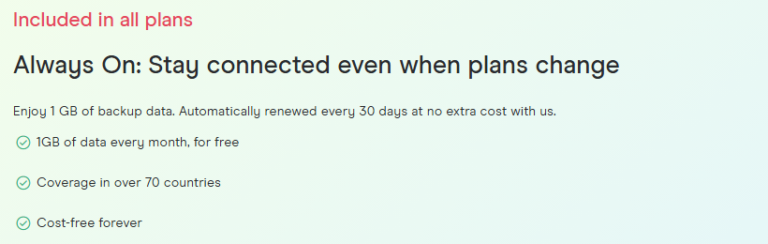
The best option is Holafly’s monthly plans, offering 25 GB or unlimited data that you can use in over 160 destinations, with 5G coverage across the whole country. In addition, the Always On benefit gives you 1 GB free forever if you cancel your subscription or face emergencies. On the other hand, if you only need a connection for a few days, Holafly’s eSIM for Switzerland is another alternative to be able to navigate from the moment you land in the country and pay only for the days you need, from $3.90 (€3.79) a day.
Tips for safe shopping in Switzerland
As well as having worked out how you’re going to connect, we’ve listed below a series of tips to help you plan your shopping in Switzerland safely and enjoy your views of the Alps or Lake Geneva with complete peace of mind:
- Check all legal documentation: Check the land registry, that the property is free of encumbrances and mortgages, building permits and restrictions for foreigners.
- Seek local advice: Hire a lawyer, notary or agent with expertise in the Swiss real estate market.
- Analyse the area well: Check whether it has transport, security, schools, shops and services nearby.
- Study the market before deciding: Compare costs between central, peripheral and rural areas. Zurich and Geneva are the cities with the highest prices.
- Beware of potential scams: Be wary of bargains, sellers pushing for quick payment or incomplete property documentation.
- Find out the hidden costs: Calculate cantonal taxes, maintenance, insurance, bank charges and notary fees.
- Consider renting before buying: If you don’t know the area well and are unsure, rent a property for a few days or weeks to get a feel for the area and avoid a rush purchase.
Frequently Asked Questions About Buying a House in Switzerland
Yes, but it depends on the type of property, residence or nationality. Non-resident foreigners are usually subject to more restrictions due to the Lex Koller regulation.
It isn’t compulsory, as you can buy a house in Switzerland as a second home, holiday home or as a property in an approved tourist area.
Swiss banks require at least 20-30% of the value of the property, although for foreigners this percentage can be higher.
They depend on the canton, but the general ones are the transfer tax, notary fees and land registry fees, which cost approximately 1% to 5% of the value of the property.
Yes, you can buy a house in Switzerland in cash without bank financing, but you’ll have to prove the legal origin of the money.