Language
How to buy a house in the Dominican Republic as an expat in 2026
Looking to invest in the Caribbean? Discover the benefits of the Confotur Law for foreigners and the requirements to buy a house in the Dominican Republic.

The Caribbean has a particular effect on first-time visitors. Punta Cana, Las Terrenas, Santo Domingo, Samaná. Every corner of the island has its own character, and many visitors arrive for holidays but leave wondering how to stay forever. Or at least, how to keep one foot here.
The most surprising part appears once you start researching. Buying a house in the Dominican Republic as a foreigner doesn’t require a special visa, you don’t need a local partner, there’s no property limit, and your ownership rights match those of any Dominican citizen. Since 1998, when authorities repealed the law requiring prior approval, the Dominican property market has remained fully open to foreign investment without basic restrictions.
However, that doesn’t mean the process lacks complexity. You must provide specific documents, understand taxes beforehand, and assess legal differences between regions. Moreover, the market grew rapidly during recent years, which created additional risks.
This guide covers the entire process: Real prices by area, taxes, payment methods, buying steps, and costly mistakes.
Requirements For Foreigners Buying a House in the Dominican Republic
The country’s legislation states that foreign individuals and companies can buy, sell, and own property under the same conditions as Dominican citizens. Authorities don’t require residency or special government approval for purchases. This openness genuinely exists and has strong legal backing.
However, you must meet several documentary requirements to complete the purchase legally. These requirements apply to every formal property transaction in the country:
1. Identity documents
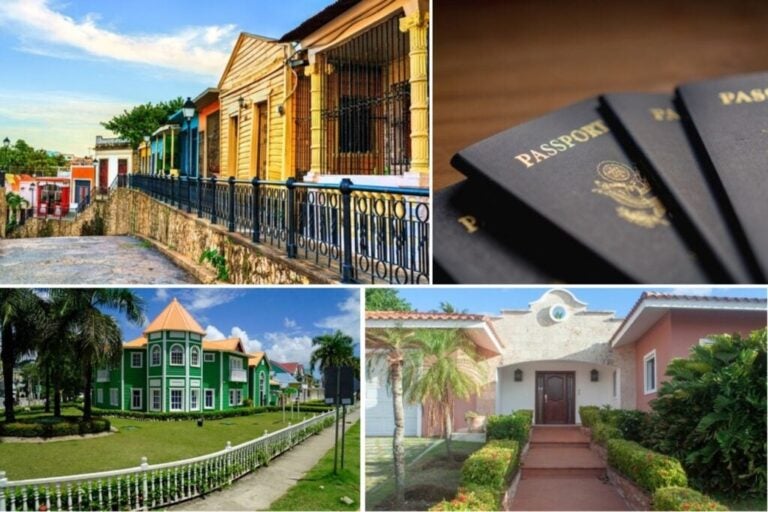
You must provide two documents: A valid passport remains essential as your primary document. Authorities also accept a driving licence, residence card, or another official identity document as secondary identification.
2. KYC form (Know Your Client)
This standard form helps property and banking institutions verify the buyer’s identity and comply with anti-money laundering regulations.
The form includes details about your occupation, assets, marital status, dependants, and properties in your home country. If you’re married, your spouse must also complete the form and provide identification documents.
3. Proof of legal source of funds
This requirement ranks among the most important. You must prove that your purchase funds come from a legitimate source. Buyers usually provide an employment letter, business ownership documents, or other proof of economic activity.
Additionally, authorities request bank statements covering the last three to six months and tax returns from the previous two years. For United States residents, officials apply this requirement particularly strictly.
4. RNC (National Taxpayer Registry)
To transfer the property title into your name, you must register with the Directorate General of Internal Taxes (DGII) and obtain a tax identification number. This process remains straightforward and usually takes place during the purchase.
5. Investor visa
If your property’s value equals or exceeds $200,000 (€176,000), you can apply for an investor visa that grants legal residency in the Dominican Republic.
This visa isn’t mandatory for buying property, yet many foreign buyers overlook this advantage. If you plan long stays, explore this option with a local immigration lawyer.
6. Local lawyer
The law doesn’t force you to hire a lawyer when buying property in the Dominican Republic. In practice, experienced buyers rarely accept the risks of proceeding alone.
Your lawyer verifies the property’s legal status at the Title Registry, reviews the sales agreement, and supervises the title transfer correctly. Legal fees usually range between 1% and 1.5% of the property’s value.
If you work with an estate agent, ensure they belong to the Association of Real Estate Agents and Companies of the Dominican Republic (ACOPROVI). Membership alone doesn’t guarantee quality, although it shows recognised professional standards.

How much does a house cost in the Dominican Republic?
The Dominican property market operates at two very different speeds within the same country. On one side, the residential segment targets local buyers, with Dominican peso prices and accessible entry-level options.
On the other side, the foreign buyer and international investor market mainly uses US dollars. Furthermore, luxury developments compete with established Caribbean destinations like Barbados and the Virgin Islands.
Prices vary greatly depending on the area, property type, and proximity to beaches or major urban centres. These are the current price ranges by location:
Santo Domingo and Greater Santo Domingo
The capital offers the country’s widest property selection and greatest price diversity. According to the National Statistics Office Building Supply Register (ROE 2025-2), the average price per square metre in the National District reaches approximately $132,730 RD, equivalent to around $2,300 (€2.024)/m².
The most exclusive districts show significantly higher figures:
- Piantini: Average price of $172,377/m² RD ($2,920; €2,510), making it the capital’s most expensive district.
- La Julia and Renacimiento: Around $165,000/m² RD ($2,790; €2,400).
- Ensanche Naco and La Esperilla: Between $134,000 RD and $149,000/m² RD ($2,270–2,520; €1,950–2,160).
Meanwhile, eastern and western Santo Domingo districts offer more affordable prices for local buyers, ranging between $800-1,400 (€704-1,232)/m².
Punta Cana and Cap Cana
This area represents the country’s most dynamic investment hub and attracts the largest number of international buyers. Consequently, prices reflect this strong demand:
- Beachfront condominiums in Punta Cana / Bávaro: Between $2,000-3,500 (€1,760-3,080)/m².
- Luxury villas in Cap Cana (golf or private beach areas): Above $4,500 (€3,960)/m².
- Two-bedroom apartments in high-value areas: From $225,000 (€198,000).
- Residential plots in the area: Between $300-800 (€264-704)/m².
Las Terrenas (Samaná)
This destination has grown rapidly among European buyers during recent years, especially French and Spanish investors. Moreover, it offers a quieter and less crowded alternative to Punta Cana:
- Apartments in central Las Terrenas: Between $1,200-2,000 (€1,056-1,760)/m².
- Beachfront villas: Between $2,500-4,000 (€2,200-3,520)/m².
- Plots in remote areas: From $150 (€132)/m².
Puerto Plata, Sosúa, and Cabarete
The northern coast offers lower prices alongside strong appreciation potential through new developments and infrastructure investment. Therefore, long-term investors should seriously consider this region.
Santiago de los Caballeros
This city ranks as the country’s second-largest urban and economic centre. Established residential districts like Los Jardines and La Trinitaria show prices between $1,100-1,800 (€968-1,584)/m², while peripheral areas provide cheaper alternatives.
Maintenance costs
Gated communities and condominiums charge monthly maintenance fees depending on included services: Private security, swimming pools, gardens, and backup generators.
In mid-to-high-end Punta Cana developments, these fees usually range between $100-400 (€88-352) monthly. Luxury projects may exceed these amounts. Therefore, include this recurring expense from the beginning.
What Taxes Apply When Buying a House in the Dominican Republic?
The Dominican tax system for property purchases remains simpler and more direct than many European systems. Nevertheless, understanding transfer taxes and available exemptions remains essential for calculating your total investment accurately. Below, we break down the legal and tax costs you should expect:
1. ITBI (Property Transfer Tax)
This tax represents the main charge when purchasing property. The rate stands at 3% and applies to whichever value proves higher: The contract sale price or the valuation registered by the Directorate General of Internal Taxes (DGII).
Without proof of payment for this tax, the Title Registry won’t issue the Title Certificate in the buyer’s name.
- Payment timing: You pay it once when requesting the title transfer into your name.
2. Notary fees and legal costs
Notary fees and registration charges at the Title Registry add another percentage to the transaction’s total cost. As mentioned earlier, lawyers usually charge between 1% and 1,5% of the property’s value.
Additionally, you should budget for smaller costs covering notary stamps and registration fees. Together, these legal expenses usually add indirect costs between 4% and 5% of the sale price (including the 3% transfer tax).
3. The crown jewel: CONFOTUR Law exemption
This detail matters most for buyers investing in tourist hubs like Punta Cana, Cap Cana, Las Terrenas, or Puerto Plata. The Tourism Promotion Law 158-01 (CONFOTUR) offers major incentives designed to attract foreign investment:
- Purchase savings: If the project holds CONFOTUR certification, buyers remain exempt from the 3% transfer tax payment.
- Long-term savings: Owners also receive exemption from the IPI (1%) for periods usually lasting 15 years.
- Priority verification: Because savings may reach tens of thousands of dollars, verify the project’s active certification before making deposits or reservations.
4. IPI (Real Estate Wealth Tax)
Once you become a property owner, the IPI applies. This annual tax targets the total real estate assets owned by individuals.
The tax applies annually to property values exceeding $6,5 million RD (approximately $110,000 (€96,800) using the 2026 exchange rate). If your home’s value, or combined properties, stays below this threshold, you won’t pay IPI. CONFOTUR-certified tourist properties also remain exempt during the exemption period.
The annual rate equals 1% of the value exceeding this threshold.
5. Income Tax
Profits from selling property in the Dominican Republic may face Income Tax (ISR) for non-residents. Rates and exact conditions depend on the seller’s tax situation and any double taxation treaty between the Dominican Republic and their country.
For example, Spain and the Dominican Republic signed an active Double Taxation Agreement covering these situations. Therefore, consult a tax adviser before selling property.
6. Inheritance tax
If you inherit property in the Dominican Republic, authorities apply a 3% tax on the inherited estate’s total value. Heirs have 90 days from the date of death to submit the inheritance declaration to the DGII.
Steps to buy a house in the Dominican Republic
Buying property in the Caribbean’s heart feels exciting, although the process requires a clear roadmap. Unlike other systems, legal certainty develops step by step: From detailed title verification to maximising tax incentives. Follow this sequence carefully to protect your investment and turn your Dominican dream into a secure long-term asset.
1. Define your ideal property type and location
Before contacting agencies or browsing listings, define exactly what you’re looking for: A primary residence, holiday home, or rental investment? Beachfront, city, or inland? Brand-new off-plan project or resale property?
Each buyer profile has ideal areas and unique legal considerations. For example, a CONFOTUR-certified apartment in Punta Cana involves very different tax and management implications than a house in a Santo Domingo residential district.
2. Hire a trusted lawyer
In the Dominican Republic, your lawyer acts as more than an administrator. They become your guarantee of success. Don’t sign documents or transfer funds without a local property law specialist. Their first task involves carrying out due diligence: A detailed audit at the Title Registry confirming the seller’s legal right to sell and ensuring the property stays free from liens, mortgages, or tax debts.
3. Verify the property title
The Dominican Republic uses a Title Certificate system proving legal ownership. Before committing financially, your lawyer must verify that the property holds a clean title and correct registration.
Some rural areas and informal developments still contain properties without clear titles. Therefore, avoiding these properties remains the golden rule for foreign buyers wanting complete peace of mind.
4. Negotiate the price and sign the preliminary sales agreement
Once your lawyer verifies the title and both parties agree on the price, you’ll sign the preliminary sales agreement (Contrato de Venta) formalising the deal. At this stage, buyers usually pay a deposit between 10% and 20% of the agreed price.
Your lawyer should draft clear termination clauses, fixed payment deadlines, and breach penalties protecting your capital against unexpected situations.
5. Obtain your RNC from the DGII
For the Dominican state to recognise the property under your name, you must register with the DGII. You’ll obtain the RNC (National Taxpayer Registry) by presenting your passport and completing the required form.
This administrative process remains straightforward, and your lawyer can accelerate it. However, authorities require it before processing transfer taxes.
6. Complete payment and sign the deed of sale
Once you sign the preliminary agreement and receive your RNC, you’ll pay the remaining balance and sign the deed of sale before a notary. At this stage, all related taxes and transaction costs also become payable.
7. Register the transfer at the Title Registry
The final step, and arguably the most important, involves registering the transfer at the Title Registry. Don’t settle for signed paperwork alone; the process only finishes once authorities issue a new Title Certificate under your name. Only then can you confidently claim legal ownership of your Caribbean paradise.
Financial Logistics: How To Pay for Your Property in the Dominican Republic
The Dominican property market, especially within luxury and tourist segments, operates as a dollarised economy. Although the Dominican peso (DOP) remains the official currency, most foreign transactions use US dollars (USD) for pricing and settlement. Therefore, understanding payment routes and financing options remains vital for reducing transaction costs.
1. International transfers and banking management
International bank transfer remains the standard payment method. Although buyers can legally operate from abroad, opening a local bank account with institutions like Banco Popular, BHD, or Banreservas strongly helps when managing maintenance payments, recurring taxes, and utilities after purchase.
When transferring large amounts, correspondent banking fees and exchange rates may create significant losses. Therefore, specialised international transfer platforms often provide better conditions than traditional banks.
2. Financing for non-residents: Reality and conditions
Foreign buyers can obtain mortgages in the Dominican Republic, although the process differs greatly from European or US systems. Commercial banks like Scotiabank RD or Banco Santa Cruz offer international banking departments under specific conditions:
- Loan-to-value ratio (LTV): While residents may obtain up to 80%, non-residents usually access between 60% and 70% of the appraised value.
- Interest rates: Historically, Dominican dollar-based rates exceed those in the Eurozone or the US. Therefore, comparing the effective annual rate between institutions remains essential.
- Requirements: Prepare for a rigorous compliance process. You must provide credit history reports from your home country (such as TransUnion reports), tax returns, and proof of stable income.
3. Cash purchases
This method dominates the investment segment. Paying cash not only simplifies the process by removing banking bureaucracy and external valuations, but also strengthens the buyer’s negotiating position. In the Dominican market, buyers with immediate liquidity often secure substantial discounts from the asking price.
4. Off-plan purchases: The tourist development model
If you plan investing in expanding areas like Punta Cana, Las Terrenas, or Cap Cana, staged payment structures remain standard. This model allows leverage without paying bank interest during construction:
- Typical structure: Reservation ($2,000-5,000 (€1,760-4,400)) + 10-20% upon signing the agreement + 30-40% through construction instalments + remaining balance upon delivery.
- Advantages and risks: Buyers can capture property appreciation from groundbreaking until delivery. However, this investment’s security depends entirely on the developer’s financial strength. Before depositing funds, your lawyer must verify construction permits and the developer’s delivery history.
Regardless of your chosen method, ensure every payment moves through official banking channels. Avoid large cash payments because Dominican anti-money laundering laws remain extremely strict. Otherwise, you could struggle registering your title without proving the funds’ banking traceability.

Tips Before Buying a House in the Dominican Republic
Investing abroad requires both enthusiasm and caution. Therefore, keep these strategic recommendations in mind before making your final decision.
1. Stay connected before, during, and after the purchase
Managing an overseas property purchase requires constant availability. For shorter trips, such as property viewings, the Holafly eSIM for the Dominican Republic gives you unlimited data from the moment you land, without changing SIM cards or searching for WiFi.
For longer stays or your first months in the country, Holafly’s monthly plans provide the best solution because you subscribe once and forget future paperwork. Their global eSIM gives internet access across more than 160 countries, connects you to the strongest available network, and lets you share data with other devices. Additionally, you receive the Always On benefit, which automatically provides 1 GB monthly as a backup connection across more than 70 countries whenever needed.
2. Always verify the title before paying a single peso
The biggest risk involves fraud through duplicate titles or sellers lacking legal authority. Don’t transfer a single dollar until your lawyer validates the original Title Certificate at the Title Registry. This verification remains your only real protection against hidden debts or legal claims.
3. Confirm CONFOTUR status when buying in tourist areas
If the project holds active certification, you’ll avoid ITBI and IPI payments for up to 15 years. Without certification, or after expiry, standard taxes apply normally. Over time, this difference may represent tens of thousands of dollars.
4. Assess the area carefully before committing
Don’t let glossy renders alone impress you. In the Dominican Republic, infrastructure quality often changes street by street.
The country combines highly developed infrastructure with areas suffering regular electricity cuts, water issues, or poor accessibility. Therefore, visiting the property personally, speaking with local residents, and checking essential services becomes time well invested.
5. Be cautious with prices far below market value
In a fast-moving market where many buyers operate remotely, deals appearing too good usually hide problems. If a property sits far below local price ranges without explanation, investigate thoroughly before committing.
6. Consider renting as your first step
If you don’t fully know the area, consider short or medium-term rentals as an investment in local knowledge. Living there daily helps you assess nightlife, waste management, and traffic conditions before committing large capital long term.
7. Most common fraud warning signs
Sellers pressuring buyers into quick decisions without document verification, properties sold using copied paperwork without originals, developers lacking verifiable permits, and contracts hiding abusive clauses in small print.
If you encounter any of these situations, stop immediately and consult your lawyer before continuing.
Frequently Asked Questions About Buying a House in the Dominican Republic
Yes. Since 1998, Dominican legislation has allowed foreign individuals and companies to buy, sell, and own property under the same conditions as Dominican citizens. Authorities don’t require prior residency or special government approval.
The Title Certificate is the official document proving property ownership in the Dominican Republic. Without a clean and correctly registered Title Certificate, the purchase lacks solid legal protection. Therefore, verifying it at the Title Registry before payment remains the most important step.
The main tax is ITBI (Property Transfer Tax), which equals 3% of the property’s registered value. If the property belongs to a CONFOTUR-certified tourist project, authorities exempt this tax for up to 15 years.
Yes, although conditions remain stricter than those for local residents. Dominican banks finance foreign buyers, but they require more documentation and sometimes lower financing percentages. The process also requires proof of stable income and strong credit history.
Not automatically. However, if the property’s value equals or exceeds $200,000 (€176,000), you may apply for an investor visa allowing legal residency in the country. This visa remains independent from the purchase and requires separate processing through an immigration lawyer.
The CONFOTUR Law is the Dominican Republic’s Tourism Promotion Law. Property projects in tourist areas holding active certification remain exempt from ITBI and IPI taxes for up to 15 years. Therefore, foreign buyers in Punta Cana, Cap Cana, or Las Terrenas could achieve major long-term tax savings by verifying active certification.
The most common risks include buying properties without formal titles or with disputed ownership, sellers lacking legitimate ownership rights, off-plan developments managed by unverifiable developers, and contracts containing unclear clauses. Working with a trusted local lawyer and verifying every document through official institutions remains the best protection against these risks.