Language
Buy a house in Sweden as a foreigner: Requirements & tips
Complete 2026 guide to buying a house in Sweden as a foreigner. Learn how the auction system works, the requirements, and costs.

In some countries, foreign investors run into restrictions like quotas, permits, or requirements to partner with a local resident. Sweden is not one of them. Foreigners have the same ownership rights as Swedes, and you don’t need to live there or have a visa.
This makes Sweden especially appealing for people looking to live in a country with one of Europe’s highest standards of living. It has a strong welfare system, clean and well-organized cities, lots of nature, and a job market that regularly attracts international workers.
But buying a house in Sweden has its own process, taxes, and rules, especially the bidding system. Knowing this early can save you time, money, and stress.
This guide walks you through the entire process: types of properties available, required documents, real prices by city, taxes, the step-by-step buying process, and common mistakes to avoid.
Requirements for foreigners looking to buy a house in Sweden
Before looking at the buying process, it’s important to understand what kind of property you’re buying. Sweden’s property system is different from what you’ll find in many other European countries, and it can affect both what you own and your rights as a homeowner.
Fastighet vs. Bostadsrätt: Two very different ways of owning a home
- Fastighet (single-family home owned outright): This is full ownership in Sweden. You own both the house and the land it stands on. There are no mandatory association fees or rules from a housing association. It is the most common type of ownership for detached homes, townhouses, and rural properties.
- Bostadsrätt (co-op apartment): This is the most common form of ownership for apartments in Sweden. When you buy a Bostadsrätt, you buy a share in a housing association that gives you the right to live in the apartment. The association manages the building and common areas, and owners pay a monthly fee (avgift) for those costs. These fees can vary a lot and can affect the property’s value.
As a foreigner, you can buy either type of property without restrictions. However, if you’re buying a Bostadsrätt, it’s important to look closely at the housing association’s finances, its overall debt, and the monthly fee before making a decision.
The main restriction: Agricultural land and protected areas
The only types of property that may be subject to restrictions for foreign buyers are agricultural land and protected natural areas. For most people buying in a city or suburb, this won’t matter. But if you’re looking at a rural property with a large amount of land, make sure to check how the land is classified before you buy.
Required documentation
The Swedish process is fairly straightforward when it comes to paperwork. There is no need for a notary, and the real estate agent handles much of the process. In most cases, you’ll just need to have the following documents ready:
- A valid passport or ID card.
- Proof of financing: If you’re buying with a mortgage, a pre-approval letter from the bank is essential before entering the bidding process.
- If you are providing financing from abroad, you must provide documentation of the source of the funds in accordance with the requirements of the Swedish bank or notary.
The Personnummer
The personnummer is a Swedish personal ID number for residents. You don’t need it to buy property, but it makes things much easier, for example opening a bank account, getting a mortgage, or handling taxes.
If you plan to live in Sweden as a foreigner, registering with Skatteverket (the tax agency) to obtain it is one of the first steps you should take.
How much does a house cost in Sweden?
The Swedish housing market is very varied. Prices are high in Stockholm, while in some rural areas you can even get land for free to attract new residents. The whole country uses the Swedish krona (SEK). As a rough guide, 1 US dollar is about 10–11 kronor, but this rate can change.
Stockholm and the surrounding area
The capital is by far the most expensive market in the country. In Stockholm, prices are around 62,918 Swedish kronor per square meter, roughly $6,000 per square meter. In the most exclusive areas like Östermalm, Lidingö, or Djursholm, prices can easily go above $7,000 per square meter.
For a two-bedroom bostadsrätt (cooperative apartment) in a well-connected area of the city, prices start at around $330,000–385,000. Single-family homes in the Stockholm metro area begin at roughly $440,000–550,000 in more outlying locations and can easily exceed $1 million in prime areas.
Gothenburg
The country’s second-largest city and a major port in Northern Europe. In Gothenburg, average prices are about 48,990 SEK per square meter, roughly $4,600. It’s an active market with strong demand from expats in industry and tech. Prices are lower than in Stockholm, with two-bedroom apartments starting at around $220,000–275,000 in good areas.
Malmö
The country’s third-largest city and the gateway from Denmark via the Øresund Bridge. In Malmö, prices are about 36,410 SEK per square meter, roughly $3,500. It’s the cheapest of Sweden’s three big cities, with a large international community and close ties to Copenhagen, making it popular for people working across both cities.
Medium-sized cities: Uppsala, Linköping, Örebro
These are university cities with active local economies, offering a high quality of life at lower prices than the three major cities. Uppsala, about 70 km from Stockholm, is especially popular with families and professionals who work in the capital but prefer a quieter environment. Average prices in these cities range from about $2,800–3,800 per square meter, with two-bedroom apartments starting at around $165,000–220,000.
Inland and northern Sweden
In Dalarna, you’ll find more affordable options, with prices around 21,770 Swedish kronor per square meter (about $2,100). In northern regions like Norrland, prices can be even lower, but homes can take longer to sell and there is less activity in the market.
There are even cases where municipalities offer land at symbolic prices to attract new residents. The town of Götene in Västra Götaland, for example, has offered plots for as little as one Swedish krona per square meter, as long as the buyer builds a home within two years.
Annual maintenance costs
Owning property in Sweden comes with ongoing costs that vary depending on the type of home. For a detached house, the main expenses include the annual property tax, home insurance, land upkeep, and utilities.
For a Bostadsrätt apartment, the main ongoing cost is the monthly fee to the housing association (avgift). It usually ranges from about 2,000 to 6,000 SEK per month ($190–570), depending on the building, location, and how much debt the association has.
Taxes on a house in Sweden
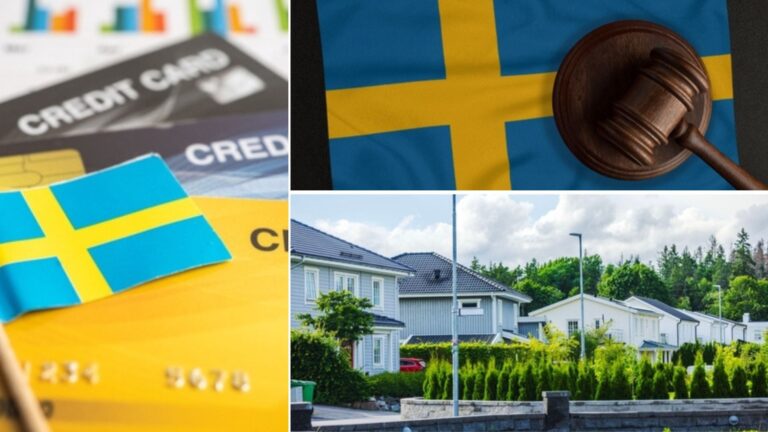
The Swedish tax system for buying property is simpler and less demanding than in many Southern European countries. These are the key things you need to know.
1. Stämpelskatt: Stamp duty when buying
In Sweden, the stamp duty (stämpelskatt) is paid when you apply to register the property title with Lantmäteriet, and it is set at 1.5% of the purchase price or the assessed value, whichever is higher.
One important detail: the 1.5% stamp duty on the property title only applies to detached houses. For Bostadsrätt apartments, this tax doesn’t apply, since you’re not buying real estate directly, but rather shares in a housing association.
In addition to the percentage, buyers also pay a small fixed administrative fee. As of 2026, this fee is $75.
2. Pantbrev: Mortgage cost
If you use a Swedish mortgage, there’s an extra cost. When a new mortgage deed (pantbrev) is issued, you pay a 2% fee on the mortgage amount. This can add a significant amount to your upfront costs if you’re financing most of the purchase with a mortgage.
3. Annual property tax
Once you own a property, you pay an annual property tax. The rate is 0.75% of the assessed value, with a maximum of 9,287 SEK per year in 2025 ($860). This cap is relatively low compared to many European countries.
The Swedish assessed value is updated periodically and corresponds to approximately 75% of the property’s market value.
Newly built properties are exempt from this tax for the first 15 years after completion, which means significant savings during the early years of ownership.
4. Capital gains tax upon sale
When you sell a property in Sweden, you pay tax on the profit as capital income. The tax rate is 22% of the gain you make. You can subtract costs like renovations and buying expenses, which lowers the amount you’re taxed on.
There is also an option to defer capital gains tax if you reinvest in another home in Sweden, subject to certain conditions. This system is especially relevant for people planning to stay in the Swedish property market long term.
5. No wealth tax
Sweden abolished its wealth tax in 2007. This means that simply owning a high-value property does not create any extra tax burden beyond the annual property tax mentioned above.
What is the total cost of purchase?
Total costs for buyers are usually around 2.9% to 4% of the purchase price, not including the down payment. This covers stamp duty, mortgage deed costs if you take a loan, a property inspection, and optional legal fees. The seller pays the real estate agent, which makes buying cheaper upfront than in many other European countries.
Steps to buying a house in Sweden
The Swedish process is a bit different from other European markets, especially when making an offer. Understanding it helps you avoid surprises and gives you a better chance when you find the right home.
1. Get pre-approved for financing
In Sweden, the offer process moves very quickly. Turning up to viewings without a mortgage pre-approval puts you at a real disadvantage, since sellers and agents prioritize buyers with confirmed financing. If you plan to get a mortgage, it’s best to sort that out before you start house hunting.
2. Look for a property
The main property sites in Sweden are Hemnet, Booli, and Blocket Bostad. Hemnet is the most used and has almost all listings. You can see photos, floor plans, bidding dates, and for Bostadsrätt apartments, the monthly fee and association details.
3. Attend the viewing and arrange for a technical inspection
In Sweden, homes usually have one or more open viewings before bidding starts. It’s important to visit in person to assess the property’s actual condition. If you’re seriously interested, you can also hire an independent inspection to check for problems.
A typical technical inspection costs $370–1,380, depending on the size and complexity of the property.
4. Participate in the bidding process
This is one of the main differences in Sweden. Homes are usually sold through bidding, where buyers make offers via the agent. It’s usually transparent, but it can go very fast if you’re not used to it.
After a viewing, buyers send their offers to the agent. The agent tells the seller and updates everyone on the highest offer (not who made it). The bidding goes in rounds until only one buyer remains. The final price can be much higher than the starting price, especially in cities like Stockholm and Gothenburg.
5. Sign the purchase agreement and pay the deposit
Once your offer is accepted, you sign the purchase contract. After acceptance, you enter into a legally binding agreement and pay a 10% deposit within five days. The contract is binding for both parties.
6. Complete the purchase on the closing date
The remaining balance is paid on the agreed completion date, usually four to eight weeks after signing the contract. At that point, you receive the keys and the property officially changes hands.
7. Register the title with Lantmäteriet
The property title is registered with Lantmäteriet, Sweden’s national land and property registry. The buyer must apply for it within about three months of purchase. At this stage, the 1.5% stamp duty is also paid for standalone single-family homes.
How do you pay for a house in Sweden?
Sweden uses the Swedish krona (SEK). If you’re buying with dollars or another currency, you’ll need to factor in exchange rates and international transfer fees. Services like Wise or similar platforms can often offer better rates and lower costs than traditional bank transfers, especially for larger amounts.
Swedish banks do offer mortgages to foreigners, but the conditions depend on whether you live in Sweden or not. Residents usually need at least a 15% down payment. For non-residents, the down payment is often higher, depending on the bank.
Mortgage rates in Sweden are currently about 2.85% to 3.2%. Most loans have variable rates, which means your monthly payments can change when the Riksbank changes interest rates.
The main banks that work with foreign buyers are Swedbank, SEB, Handelsbanken, and Nordea. They usually ask for proof of income, credit history, and, for non-residents, extra documentation showing where the funds come from.
Finally, for buyers with available capital, paying in cash makes the process simpler and removes the uncertainty of mortgage approval. In Sweden’s bidding system, cash buyers can have an edge, since the seller doesn’t need to wait for bank approval.
Tips before buying a house in Sweden
The Swedish property market has its own rules and pace. These tips cover the things people find most helpful once they’re actually going through the process.
1. Stay connected throughout the entire buying process
Buying a property remotely means you need to be available at all times. For short trips (like visiting a property), a Holafly eSIM for Sweden is a good option, since it gives you unlimited data for the days you’re there.
For longer stays or your first months in Sweden, Holafly’s monthly plans are a better option. They work in over 160 countries, so you stay connected when moving between your home country and Sweden. They renew automatically and include an “Always On” feature with 1 GB of backup data per month in over 70 countries.

2. Make sure you fully understand the auction process before participating
The Swedish bidding system can be confusing if you’re used to slower, direct negotiations. Final prices can go well above the asking price, especially in Stockholm. The most important thing is to set a maximum budget before you start bidding and stick to it.
3. Carefully review the association’s financial statements if you’re buying a Bostadsrätt
The monthly fee (avgift) and the cooperative’s shared debt are two of the most important factors affecting an apartment’s real value in Sweden. A low fee can look good, but it may mean high debt or poor maintenance. Always ask for the association’s financial reports and check them before making an offer.
4. The technical inspection is an investment, not an expense
In many countries it’s optional, but in Sweden it’s considered essential when buying a detached house. An inspection can find serious issues before you buy and save you a lot of money. Don’t skip it just to save the $360–1,350 fee.
5. Assess the market at different times of the year
The Swedish property market is seasonal. Spring (March–May) is the busiest and most competitive time, and autumn is also active. Summer and winter are quieter, with fewer listings but less competition too. If you can, buying outside peak season can give you more negotiating power.
6. Visit the area in different weather conditions
Sweden has harsh winters in some regions, especially in the north. A home that looks bright and easy to live in during summer can feel very different in January, with months of darkness and sub-zero temperatures. If you’re not familiar with the area, it’s worth visiting at different times of year.
7. Warning signs you should be aware of
Homes priced far below market value without a clear reason, sellers rushing you to close before a proper inspection, bostadsrätt with very low fees that aren’t explained in the accounts, or contracts with unclear terms about the property’s condition. If something feels wrong, talk to a lawyer or property expert before continuing.
Frequently asked questions about buying a house in Sweden
Yes. There are no restrictions on foreign nationals buying property in Sweden. Foreign buyers are treated the same as Swedish citizens and don’t need to be residents or have a visa. The only exception is agricultural land and protected natural areas.
A fastighet means you fully own the home and the land. A bostadsrätt means you own a share in a housing association, not the apartment itself. With a bostadsrätt, you pay a monthly fee and follow the association’s rules, but you don’t pay the 1.5% purchase tax.
The main cost is a 1.5% tax (stämpelskatt) on the purchase price or assessed value, plus a $80 fee. If you take a new mortgage, there’s an extra 2% charge on the loan. In total, buying costs are usually around 2.9%–4% of the price.
Yes, but the conditions are stricter than for residents. Major Swedish banks (Swedbank, SEB, Handelsbanken, Nordea) do offer mortgages to non-residents, but they require more documentation and usually a higher down payment than the 15% minimum for residents.
After viewings, buyers make offers through the agent. The agent shares the highest offer, and others can raise theirs. This continues until only one buyer is left. It’s transparent but moves fast, and the final price can be much higher than the asking price.
No. Sweden abolished its wealth tax in 2007. The only recurring property tax is the annual one at 0.75% of the assessed value, capped at around $850 per year for residential properties.
Yes. Newly built properties are exempt from the annual property tax for the first 15 years after completion. This is a significant advantage worth considering when comparing new builds with existing homes.
Plans that may interest you


Hi! I'm a Spanish-English copywriter working with Holafly, helping bring travel content to life for curious travelers. As a digital nomad with a passion for exploring, I'm always adding new spots to my bucket list. If you love to travel like me, stick around because you're in the right place to find inspiration for your next trip! ✈️🌍