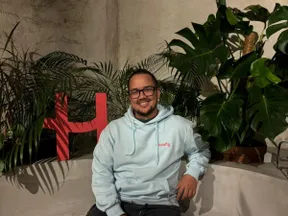
Key facts
- Role: Customer Support Manager
- Background: Computer systems engineering
- Holafly values he lives by: Transparency; Making things happen
From tattoo studio logistics in California to leading global, remote-first tech support operations at Holafly, Patrick shares how we build trust across teams and keep travelers connected 24/7.
When Patrick was looking for his next job opportunity, he did what most of us do: he opened LinkedIn and started scrolling. He was working in customer success for tattoo studios in the US when he came across a posting for a Customer Support Manager at Holafly and decided to apply.
“It was an easy transition,” he says, “because I already came in with proven methodologies from several years of experience.”
Before touching a single support protocol, he spent his first weeks just learning the product itself: what an eSIM is, how it’s installed, how it’s activated, what needed to be improved and why. Coming from a computer systems engineering background, he was intrigued by the idea of working with a new technology and being part of its evolution.
“I married Holafly, literally. I want to be here until we reach our dreamed-of goals.”
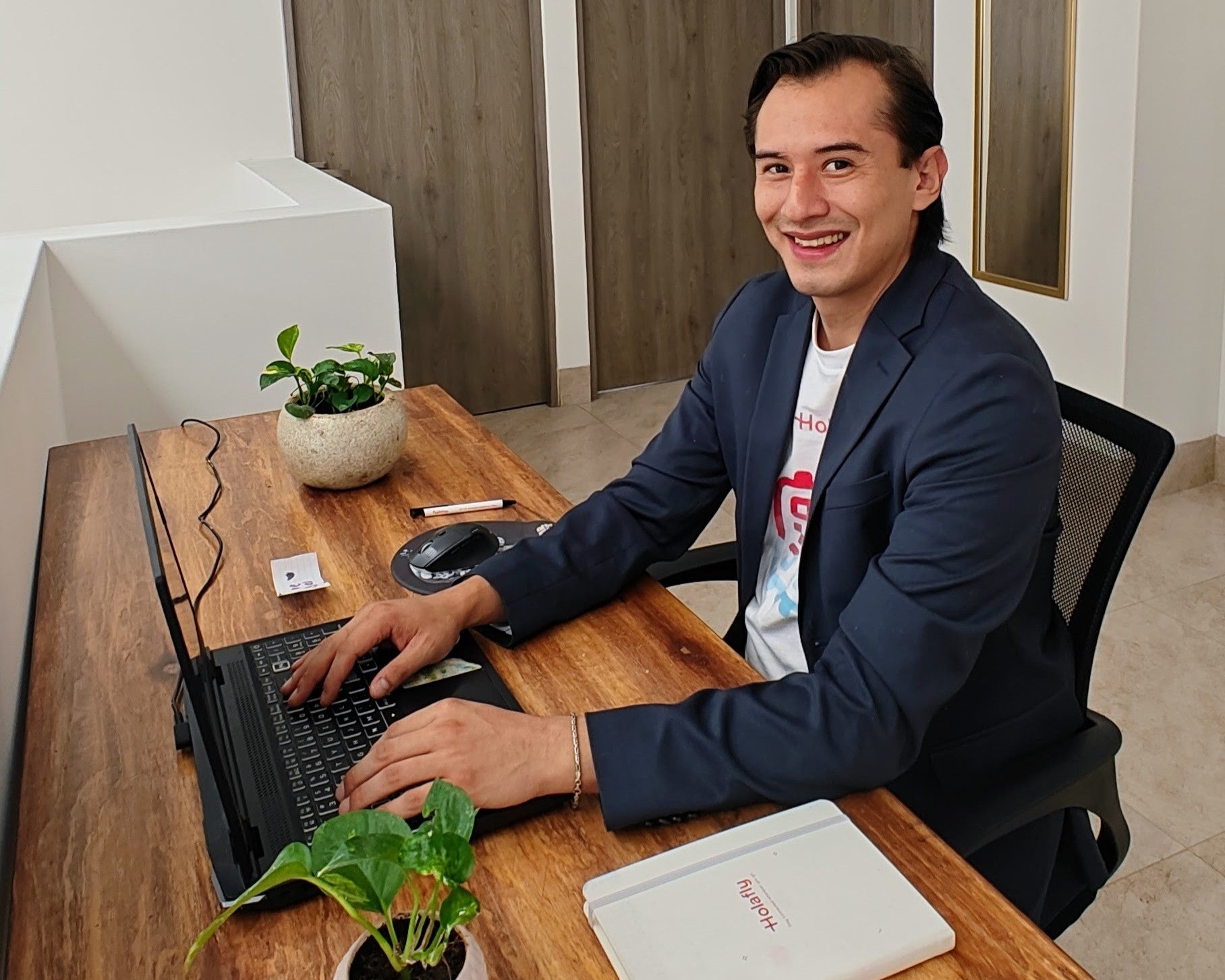
It’s not a bug fix. It’s someone’s honeymoon.
Ask most people what a customer support team does and they’ll probably mention fixing bugs and answering tickets; but Patrick sees it differently.
“Peace of mind,” he says. “As a customer, you always expect whatever you buy to be good quality, fairly priced, and to actually work. And if it doesn’t, that peace of mind disappears and you get frustrated.”
He recalls one case in particular: a customer was traveling through Europe on their honeymoon when a major outage brought down the local telecom infrastructure. The incident was completely outside Holafly’s control, but the customer was still left without a connection.
“We work with several different operators, we don’t depend on just one,” Patrick explains. “So within minutes we migrated them remotely to another data network, without them having to do anything on their end. They stayed connected for the rest of the honeymoon.” A trip like that doesn’t happen twice, he adds, and a connection issue shouldn’t be the thing that gets in the way of it.
Built by the team, for the team
Running quality support across multiple time zones and shifts is hard on its own. Add a fully remote, multicultural team, and small gaps can turn into real ones fast. That’s what Patrick ran into early on, and it became one of the toughest parts of his job as a leader: building a culture of operational excellence in a team that never sits in the same room.
“The challenge wasn’t writing new protocols,” he says. “It was getting people to actually adopt them without losing the agility we already had.” Instead of commanding change from the top, he went through each protocol with the team, mapped out where the gaps were, and let people flag what wasn’t working based on what they were seeing with users every day. People adopt change far more naturally when they help build it, he says, and handling times improved globally as a result.
That same instinct, trusting the people closest to the problem to fix it, is what led to the launch of the CS Global Toolbox: a set of tools that helps agents cut down handling time. It wasn’t built by IT or by leadership; it came from one of the team’s own Subject Matter Experts (SME).
“That’s what stood out about it,” Patrick says. “Seeing the team improve its own ability to spot issues and propose real solutions, that’s something I’m genuinely proud of.”
Off the clock
Ask Patrick what he’s like outside of support, and the same curiosity that drives his work shows up in stranger places: he’s into quantum computing purely for the challenge of it, building circuits just to see how they behave. Long before that, he was managing tattoo studios in the US and Japan, coordinating VIP logistics that were just as intricate in their own way. “Never got a tattoo myself,” he laughs, “even with everything I saw in there.”
But that same mind needs an off switch too, so before every workday there’s a quieter ritual: meditation. “It helps me slow down before diving into a day that moves fast, working with teams across so many time zones,” he says.

1.000 people later, still the same team
Two years ago, a simple change could take Holafly’s support team one to two weeks to roll out; today it takes one to two days. That kind of speed usually costs something, but Patrick is sure that the culture hasn’t been it.
“We’re around 1.000 people now, and it’s not like we treat each other differently, or the level of respect or dedication toward each other has dropped.”
If you ask him what it takes to build a career in support, the list is short: honesty, transparency, and an actual drive to help people. “I want people who aren’t afraid of making a mistake, because they know they’re backed by a huge amount of information and protocols that help them.”
Preparing for what you can’t predict
In the telecom industry support means accepting early on that a lot of what breaks is outside your control, like regional outages, geopolitical disruptions or a provider going down in a country you can’t do anything about.
“The reason we exist isn’t just because customers have problems,” Patrick says. “It’s because global connectivity fails sometimes. These technologies are still being built. They’re not set in stone.”
Right now he’s focused on getting to “zero friction”, simplifying the whole process behind diagnosing and solving a technical connection issue. “The goal is for that to become instant and invisible for the traveler,” he says, “so they don’t have to think about anything technical for it to just work.”
The advice he’d give his old self
If Patrick could give his younger self one piece of advice, it would be simple: keep learning.
“Study a lot. Don’t feel intimidated by how much this industry has to teach you, especially when it comes to AI and the technical side of things.”
But the thought he keeps coming back to is less about what to learn and more about what happens when you put that knowledge into practice:
“There’s something beautiful about making things work. It’s hard to explain, but there’s something incredibly freeing about going through a complex situation, solving it with your team, and knowing that if something similar happens again, you’ll know what to do.”

Patrick’s story is one of many at Holafly: people who grow by taking on complex problems, learning as they go, and figuring out how to make things work together. For those interested in the work behind the scenes, you can explore the opportunities available on our Careers Page.