Key facts
- Role: Customer Care Manager
- Background: Business Administration and Customer Experience
- Holafly values she lives by: Be brave and make things happen
Before joining Holafly, Karen had built her career around customer experience, post-sale support and customer reviews. When the company she was working for shut down, she started looking for her next opportunity and came across a Customer Experience opening at Holafly on LinkedIn. What caught her attention was that the role sat close to the kind of work she’d been doing throughout her career, even though the environment was completely new to her: she’d never worked in travel tech, having spent most of her career in pharma and outsourcing.
She decided to send her resume anyway. The interview that followed lasted almost three hours, including technical tests and a detailed walkthrough of the operation. By the end of the conversation, she was asked for a decision. She said yes, and joined Holafly in May 2022, starting in chat support. At the time, the company was still in the early stages of its transition to eSIM, with a support team of fewer than ten people. Starting in chats gave Karen the chance to get to know the customer journey and the operation firsthand before moving into a leadership role.
From in-person beginnings to remote work
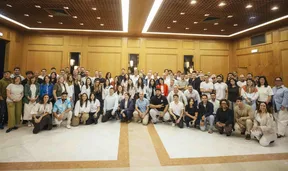
Customer Care today looks a lot different than it did in 2022, but the way Karen built it explains a lot about how it holds together now. Around 40 people report to her, and close to half still work in-office, a deliberate choice she made early on.
“You build the team’s culture much more solidly,” she says of starting in person, “results show up faster, communication flows better.”
With time, the company grew globally, and remote work became a part of the new culture. This required adapting to different cultures, figuring out how to manage people she couldn’t see day to day and building trust from afar.
Most of it, she says, got worked out through trial and error: “this works, this doesn’t.” Having built the in-person foundation first, she believes, is exactly what made that later transition easier than it would have been otherwise.
Taking initiative when the process needed to change
Ask Karen for a project that made her proud of the team recently, and she doesn’t reach for something polished. She goes straight to a challenge: in early 2025, the refund process was under pressure, and some customers were waiting longer than expected for their cases to be resolved. At the time, much of it was still manual, which made it difficult for the team to keep up with the volume. “We had to take the leap, bring a proposal forward and say, ‘we did this,’” she says.
Working with a colleague from the Data department, Karen’s team found a way to streamline the process, bringing different parts of the operation together and finding a practical way to move cases forward while the wider process was being improved. The solution gave the team a faster way to respond and eventually became part of a more structured approach to handling refunds.
It worked. Response times were reduced six times and Holafly’s Trustpilot score successfully reached 4.7. All of it took more than a year of consistent work; a challenge that Karen now identifies as the biggest milestone of her time leading the team.
Share ideas, even if you’re not sure they can work
Care started almost as a blank page when Karen first joined, and she has tried to keep it feeling that way even as the team has grown past 40 people. In the early days, brainstorming sessions and open proposals were just how things got built, mostly because there wasn’t yet a “right way” to compare a new idea against.
That openness became policy rather than accident. Every new person who joins still hears some version of the same message: if you see something in the operation that could be better, say it, propose it, even if you’re not sure it can be done.
That philosophy runs through how the team actually works day to day. Team leads meet with their groups every two weeks, mixing operational check-ins with more personal moments, deliberately, so the relationship isn’t only about casework.
When someone’s skills line up with a project the team needs, Karen tries to hand it to them directly, “this person can build this,” rather than assigning it elsewhere. “People tend to show up differently,” she’s noticed, “when they’ve had a hand in shaping something rather than just executing it.”
Customer Care starts with the team
Karen describes empathy as something that has to run in two directions at once: toward the customer and toward the people on her own team. She doesn’t see the two as separate skills. For her, the way a team treats its own members inevitably shapes the way they treat customers.
That starts with making room for people to be themselves, not just employees. When someone on the team is going through a difficult moment, Karen believes the first response should be understanding. Over time, she has seen how that kind of support can shape the way people approach their work and the way they treat customers.
On the customer-facing side, empathy is backed up by something more structural: QA guidelines, regular training and alignment across the team. But she’s clear that the harder part isn’t the process. It’s making sure people genuinely understand why their work matters, and how it shapes both the individual customer’s experience and Holafly as a whole.
Delivery, courage, and a team that still gets its hands dirty
Asked to describe her team in one word, Karen doesn’t hesitate for long: “delivery or willingness, if I had to pick just one word.” She traces that back to how Care was built, when many things had to be done by hand and without the tools the team has today. That experience shaped a team that’s used to finding solutions and stepping in when someone needs help.
When thinking about which of Holafly’s values best represents Care, her answer is just as direct: “Making things happen, and courage.”
That same mindset shapes her advice to anyone hoping to join the team: “Speak up, always let your work quality speak for you, and do things at 100% or more, no matter how small the task is.”
Work, balance, and a little “pueblear”
Karen calls herself a workaholic without much hesitation, and the gym is her main way of pulling herself out of that mode when she can. These days, her schedule has an extra layer: she’s working through a diploma in user experience services, taking classes in person and making time for something outside of work that keeps her learning.
Weekends, when her schedule allows, are for what people in Medellín call pueblear, short trips to nearby towns, often to see the waterfalls locals call charcos.
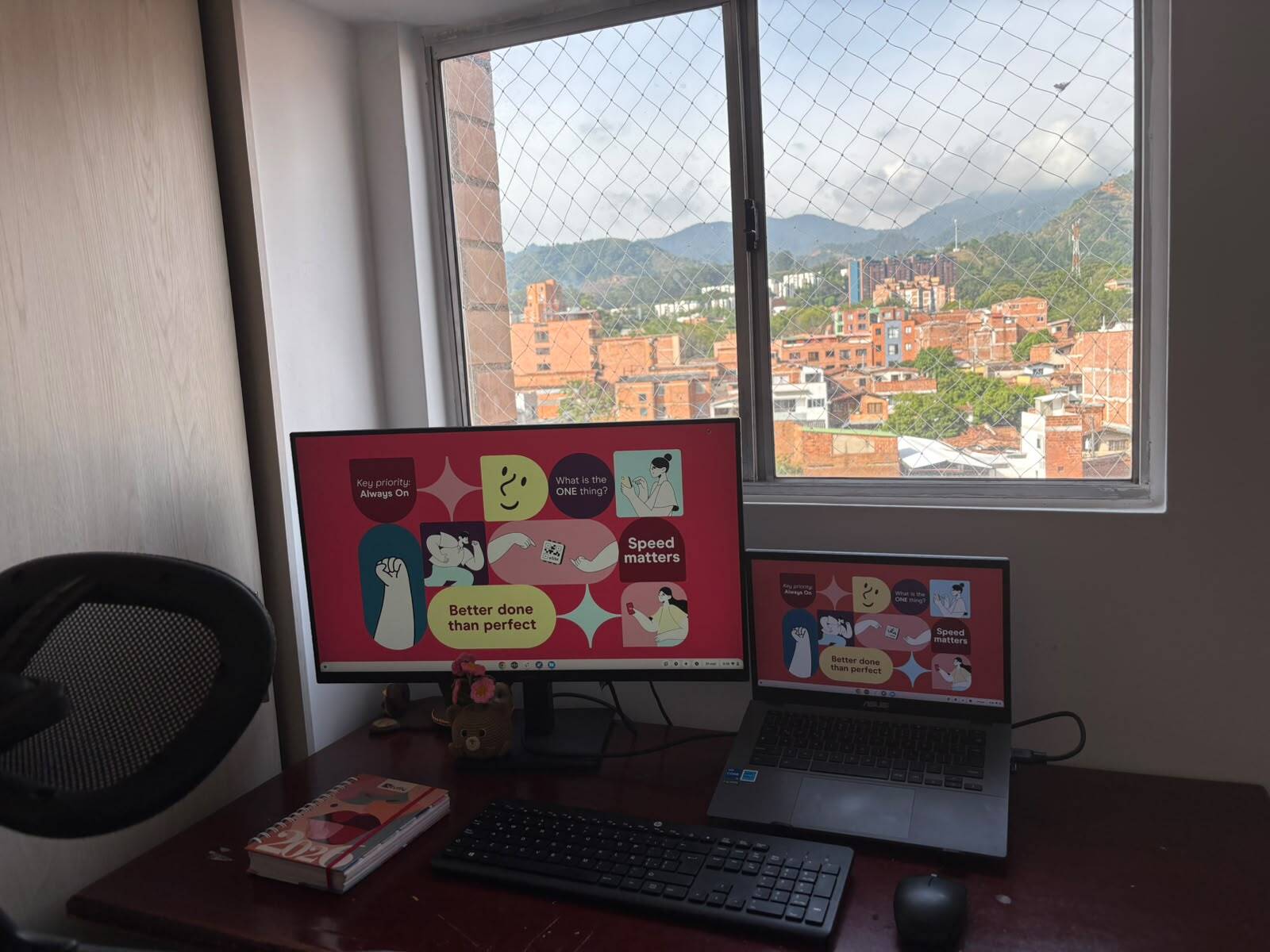
She also enjoys having the option to work from the office a couple of days a week. After years of working in person, and later adapting to remote work as the company grew, she has found that a mix of both works well for her. For Karen, being around the team in person still brings a different kind of energy, while the flexibility of remote work has become part of how she works today.

If Karen’s way of building, learning and making things happen sounds like your kind of work, take a look at our open roles on the Careers Page.