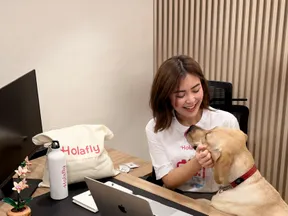
Key facts
- Role: Head of Subscriptions
- Working from today: Bali, Indonesia
- Top remote hub: Bali, for its time zone and infrastructure
- All-time favorite destinations: Hong Kong, Seoul, and always back home to Alicante
Not long ago, Cayetano Ivañez, Caye to his colleagues, was living in Madrid and working remotely from home. On paper, his job gave him flexibility, but in practice, he couldn’t work from outside Spain. He had always loved traveling, and he kept imagining what it would be like to actually work from anywhere in the world.
That longing for adventure and new experiences eventually led him to Holafly, where he joined to build the subscription model, a product designed for digital nomads who live and work on the move. So the first thing he did was become one of them: he packed his bags and set off for four months in Asia. “How am I supposed to work on this,” he remembers thinking, “if I don’t live it myself?”
Taking his first steps as a digital nomad
Caye didn’t take it easy when he first decided to become a nomad. In four months, he went all out, traveling through around nine countries in Asia, all while developing Holafly’s subscription model. Asked to sum up those first months in one word, he laughs: “Nonstop. Completely nonstop.”
Along the way, he discovered a way of living that few people around him had tried before, and with no one to tell him how to do it, he figured it out on the go. “We don’t have parents, or people we admired as kids who lived this way,” he says. “It’s something those of us living like this are discovering for the first time.”
About two years after that first experience, Caye is now back in Asia, but at a very different pace. This time, he’s returning to places he already knows, and it feels different. “I feel like I’m seeing it with more awareness,” he says. “Being more present.”
For him, coming back is part of the journey too. “Every time you go back, it’s better, because you know people,” he says. “The fears you have at the start, about where to go or whether it’s safe, start to fade.”
A routine that always makes time for the sunset
Caye’s days run on a schedule that might surprise people who work nine to five. Since much of his team is in Europe, he works mostly in the afternoon and at night. Mornings, however, belong to him: he picks a place for breakfast (sometimes with a little help from Instagram) and goes for a workout afterward. If there’s time, he spends a while at the beach before starting work.
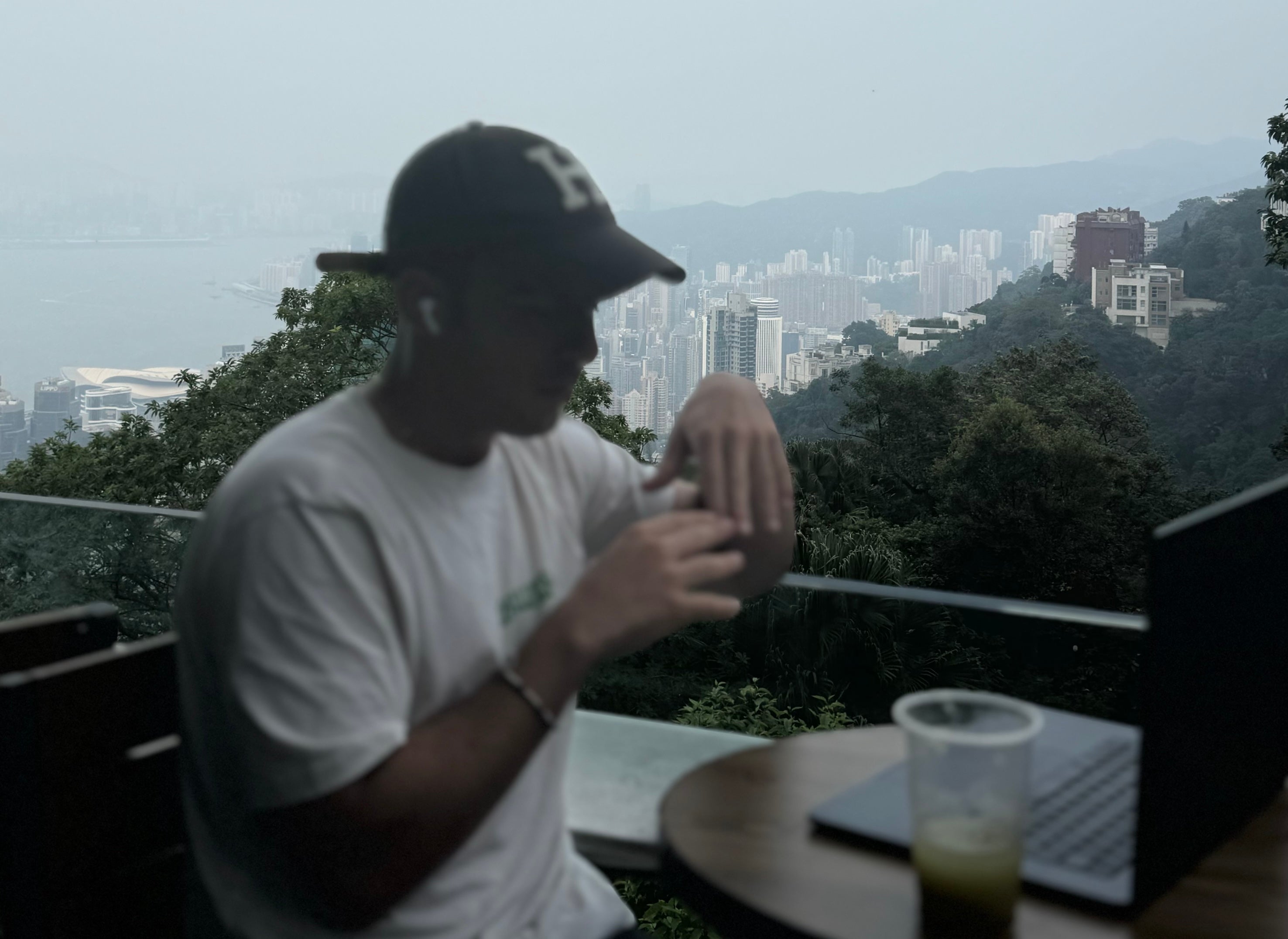
His setup isn’t conventional either: instead of an office, he usually works from a café with a good view, with just a laptop, a notebook he always carries, a bottle of water, and wired headphones. And, for some reason, he says, there’s usually some chewing gum nearby too.
The one thing that can’t be missing from his routine is the sea. Growing up in Alicante, on Spain’s Mediterranean coast, taught him that when you feel overwhelmed, you go and look at the water.
“Work can be stressful,” he says, “but when you look ahead and see the sea, it gives me a lot of peace.”
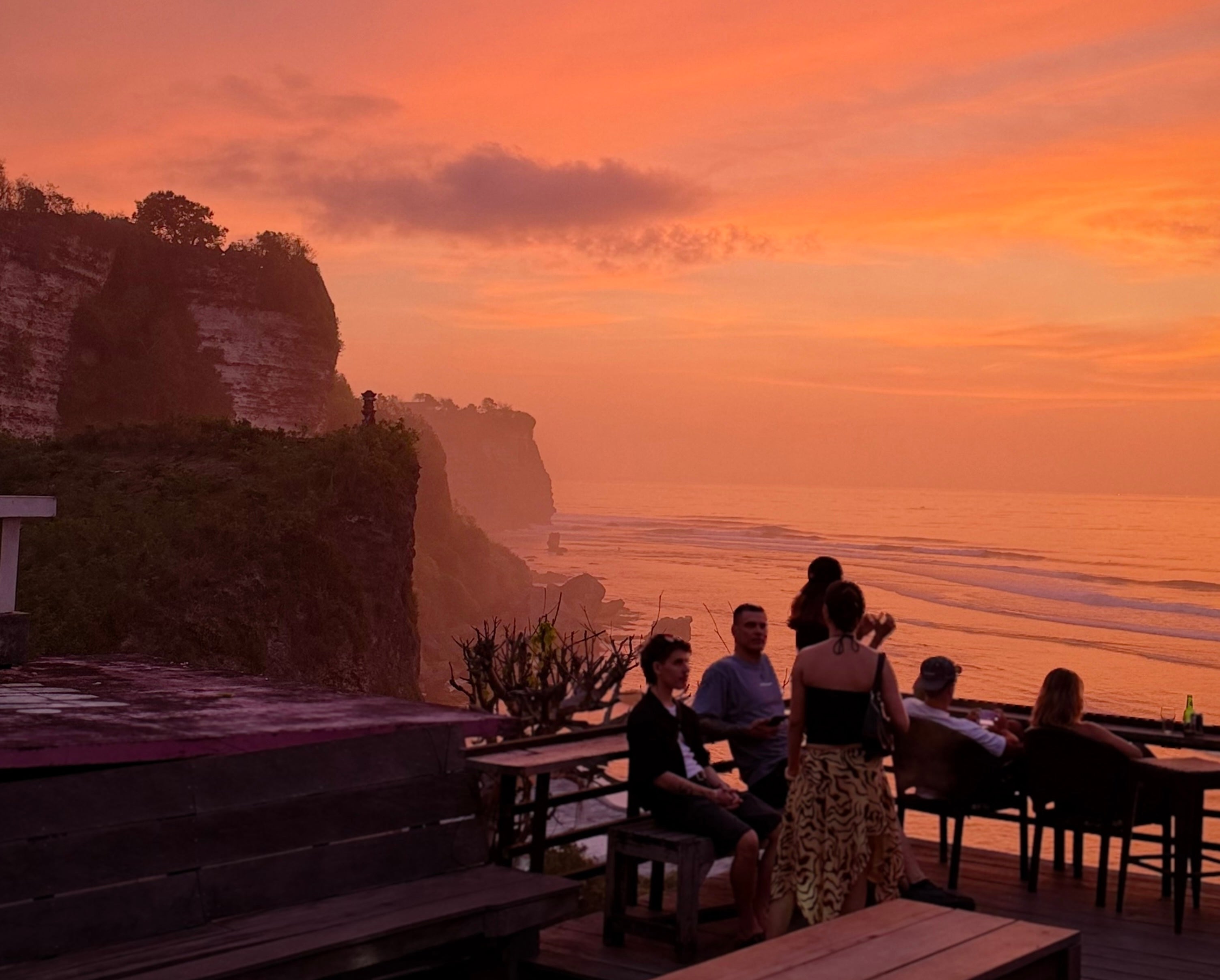
That’s why, around six every evening, he stops whatever he’s doing to watch the sun go down in the water. “Watching the sunset here is a whole thing,” he says. Then he gets back to work and keeps going into the night.
Finding his people in a nomad lifestyle
Caye is honest about one part of remote life that doesn’t always show up on social media: it can be lonely. “I know what people say: sure, but you’re in Bali with a pool behind you,” he laughs. “That’s true. But it’s also true that it’s lonely.”
By the time the workday ends, it’s often late, and the social life of nomad hubs has already moved on. So he builds small moments of connection into his day, mostly at the gym or in cafés. “Even a quick ‘hey, how are you?’ is already something good for your head,” he says.
Those everyday moments are also what set nomad life apart from tourism. For Caye, the difference between visiting a place and living in it comes down to attitude: nomads rarely follow a checklist of sights, they set up a life, and that brings connections a tourist would never make.
When he spent time working from Medellín, he became friends with his barber, his gym trainer, and a driver he got along with, even when he already knew people living in the city. “If you’re a tourist, you don’t worry about where to get a haircut,” he says. “But if you live somewhere, you do.”
Sometimes, those connections come in the most unexpected ways. On a previous trip to Lombok, an island in Indonesia, a young vendor approached him and two friends on the beach. One of them jokingly asked him to take them fishing, and he said yes. That day, they ended up having dinner with his family, learning to eat fish the local way, and singing karaoke. For the next few days, he showed them around the island in a tiny 4x4. “It was spectacular,” Caye says.
Shared culture and a team that knows what it’s like
You might think that working from the other side of the world makes it hard to feel part of a team. For Caye, it’s the opposite. Holafly is a remote-first company, with colleagues spread across many countries and time zones, so working far from each other is how the team operates. What makes the difference is the effort to stay close.
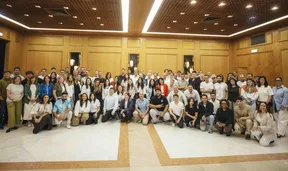
Caye meets his colleagues in person every couple of months, often in Lisbon, and some of them have even traveled with him along the way. In fact, a colleague joined him on that first trip across Asia, and others have spent weeks working alongside him in Colombia and Panama.
That shared experience, and the work culture behind it, matters. Many of his teammates have lived as nomads themselves, so nobody questions whether someone working from a different country is taking the job seriously.
“We understand each other really well,” he says. “It gives us a bond that goes beyond not being in the same place.”
When the line between employee and customer blurs
Choosing the nomad lifestyle meant living the same life as the travelers who use the product, so almost everything Caye experiences becomes input for his work. One night in Bangkok made that very clear.
He was leaving a shopping mall with a friend around 10:30 p.m. when his phone lost its data connection, and his friend’s phone had run out of battery. With no map, they tried to find the train station from memory and ended up walking for three hours across the city, until Caye finally managed to connect to the Wi-Fi of a café that had already closed for the night, from its parking lot.
The frustration stuck with him, and so did the lesson. “I don’t want this to happen to anyone,” he remembers thinking. Experiences like that one shaped how his team thinks about subscriptions: travelers shouldn’t be left stranded when they need their phone the most.
Other lessons come from simply talking to people. In Bali, Caye discovered groups of nomads who return every year to the island “the way some people have a hometown.” Insights like that change how he thinks about when and how travelers plan their trips.
And some things, he says, you can only understand by living them. “Reading in a report that nomads feel lonely isn’t the same as living it,” he says. When you’re alone in a house thousands of kilometers from home you get the emotional side of the story too.
“Being in the shoes of the person you’re building for doesn’t just give you knowledge,” he says. “It gives you their perspective.”
Knowing where to come back to
After years of moving around, Caye has learned the importance of having somewhere to return to. “Leaving without a reason to come back is a great way to get lost,” he says. “When you know where home is, you enjoy being away so much more.”
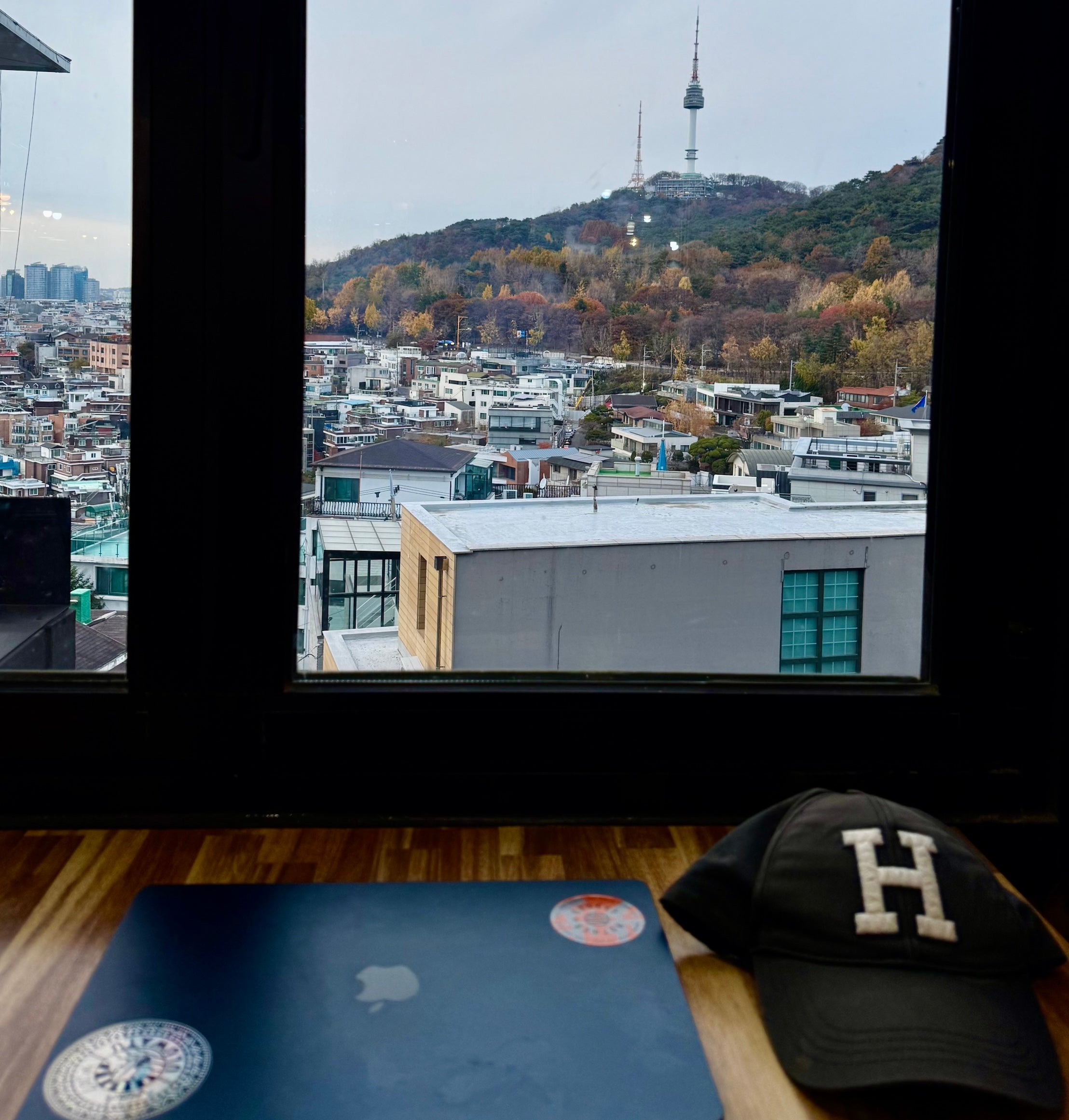
Ask him for his favorite place, and the answer depends on what for: Bali for work, with its solid infrastructure for nomads, but for perspective, Hong Kong and Seoul open your eyes to a different culture. However, the place he always wants to go back to is his hometown Alicante. “I want to see my sea, my city, my food,” he says. “It took me time to understand that.”
Knowing where home is also helps him feel steady around the world, and that sense of balance is at the heart of his advice for anyone starting out. Working remotely means spending a lot of time on your own, so taking care of yourself becomes part of the job. That’s why he recommends therapy as a source of support.
“When you work remotely, you need to know what’s good for you,” he says. “You have to take care of yourself, and sometimes you have to learn how.” For Caye, it all comes back to the same idea: “You can’t work well if you’re not well.”
Living this way still brings questions, he admits, but he’s optimistic that it will feel much more natural for those who come next. “In ten years,” he says with a smile, “people will say: look, my uncle Cayetano lived like that.”
Some lessons you can only learn on the road. If you’re excited to live the experiences you build for, check out our open roles on the Careers Page.